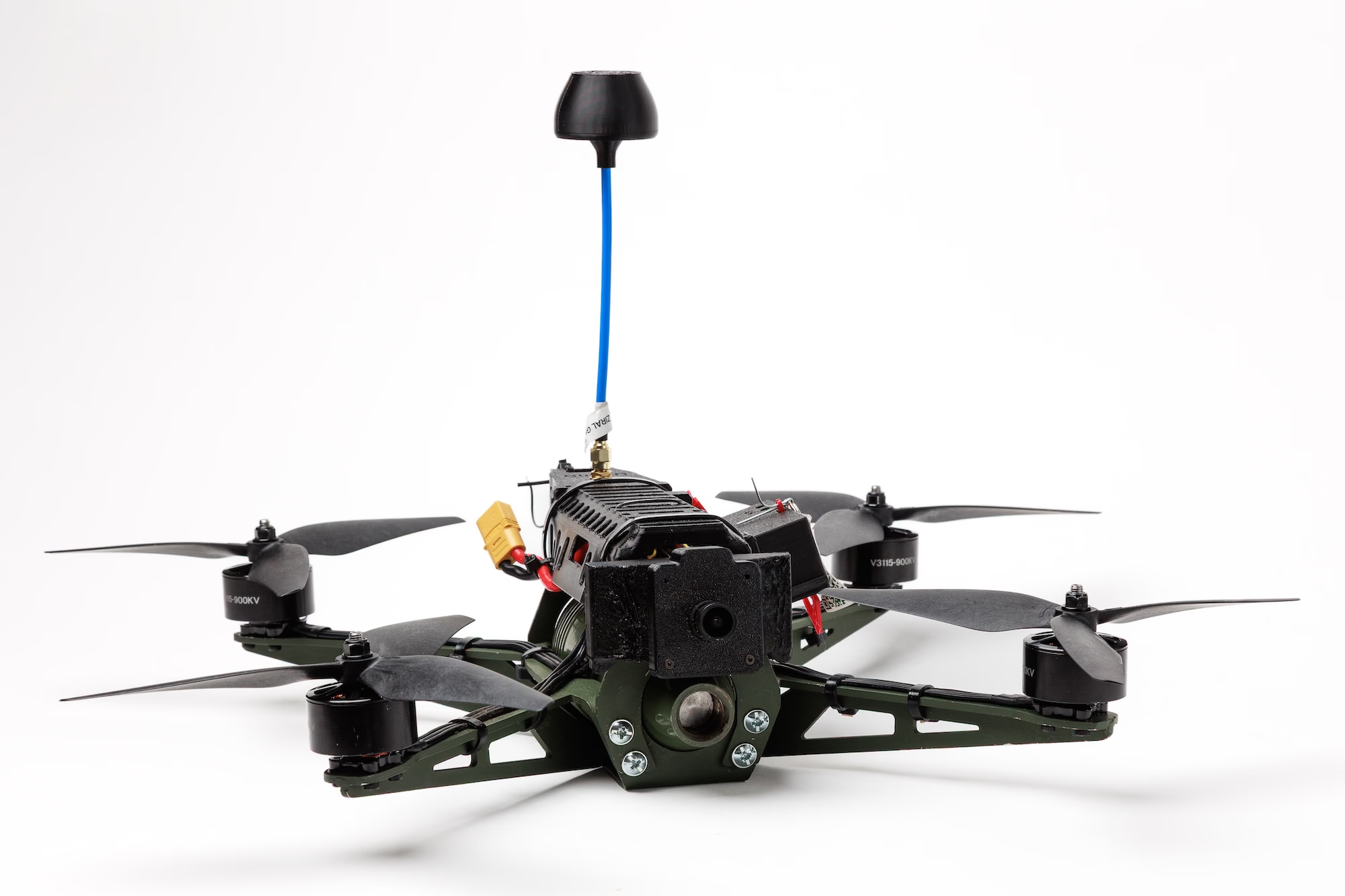
Two up-and-coming Ukrainian defence startups have collaborated to develop a UAS model that they claim is 2-4 times more effective in airstrikes, due to being especially resilient to electronic warfare (EW). Ukrainian Armor has built a variant of its UB60D FPV drone that integrates the TFL-1 terminal guidance system from The Fourth Law.
The new system has now officially passed codification, which opens the door to large-scale procurement of the variant by the Ukrainian Armed Forces.
The UB60D is an FPV drone built around a 60mm mortar shell. Unlike many other FPVs, which need to be assembled and armed in the field, the UB60D comes with the warhead pre-installed, reducing time to deployment. It is the second FPV with TFL-1 integration to be codified, according to The Fourth Law.
“Autonomous FPV drones have already become a real alternative to fiber-optic drones. Amid the current fiber-optic supply crisis, more manufacturers and units are shifting toward autonomous solutions because they are more cost-effective, can operate at greater distances, and are significantly less dependent on scarce components. This is no longer a ‘Plan B’ but a key direction for modern battlefield evolution,” said Yaroslav Azhnyuk, CEO of The Fourth Law, in a statement.
In recent weeks, Russian Telegram channels have been raising the alarm over significant leaps in Ukrainian drone technology and the presence of Ukrainian drones at operational depth.
Autonomous capabilities are central to enabling these deeper strikes, as reaching those areas requires passing through layered EW defenses.
It is unclear where Russia may be right now in its own drone autonomy development, specifically newer UAVs that will work better in EW environments, or in EW that is more targeted at the newer generation of drones like the one from Ukrainian Armor built to evade current EW techniques. Russia has been a major buyer of Chinese fiber-optic cables – which some believe might indicate that Russian is further behind in the EW race.
“The UB60D, equipped with autonomous terminal guidance, substantially increases target engagement probability even under active countermeasures. As a manufacturer, our mission is to equip the Defense Forces with solutions that tangibly enhance combat capability and can be rapidly scaled in accordance with evolving operational requirements,” said Vladyslav Belbas, CEO of Ukrainian Armor, in a statement.
The TFL-1 terminal guidance system is not exclusive to codified platforms. Part of TFL’s unique selling point is its extensibility and adaptability. The module is compatible with dozens of drones and available for separate purchase, and it’s been used elsewhere in that way.
What codification unlocks, however, is large-scale procurement of the UB60D with TFL-1 already integrated and ready to deploy. At the time of writing, it runs for about $50 per module on the Brave1 Marketplace.