The UK has been under pressure to modernise its military amid an increasingly heated geopolitical climate and a rapidly evolving technological landscape. Today, the Ministry of Defence announced its latest effort to meet that challenge: a low-cost anti-drone system for the Middle East, which it described as designed to destroy targets for a “fraction of the price” of the missiles that are currently being used in the region.
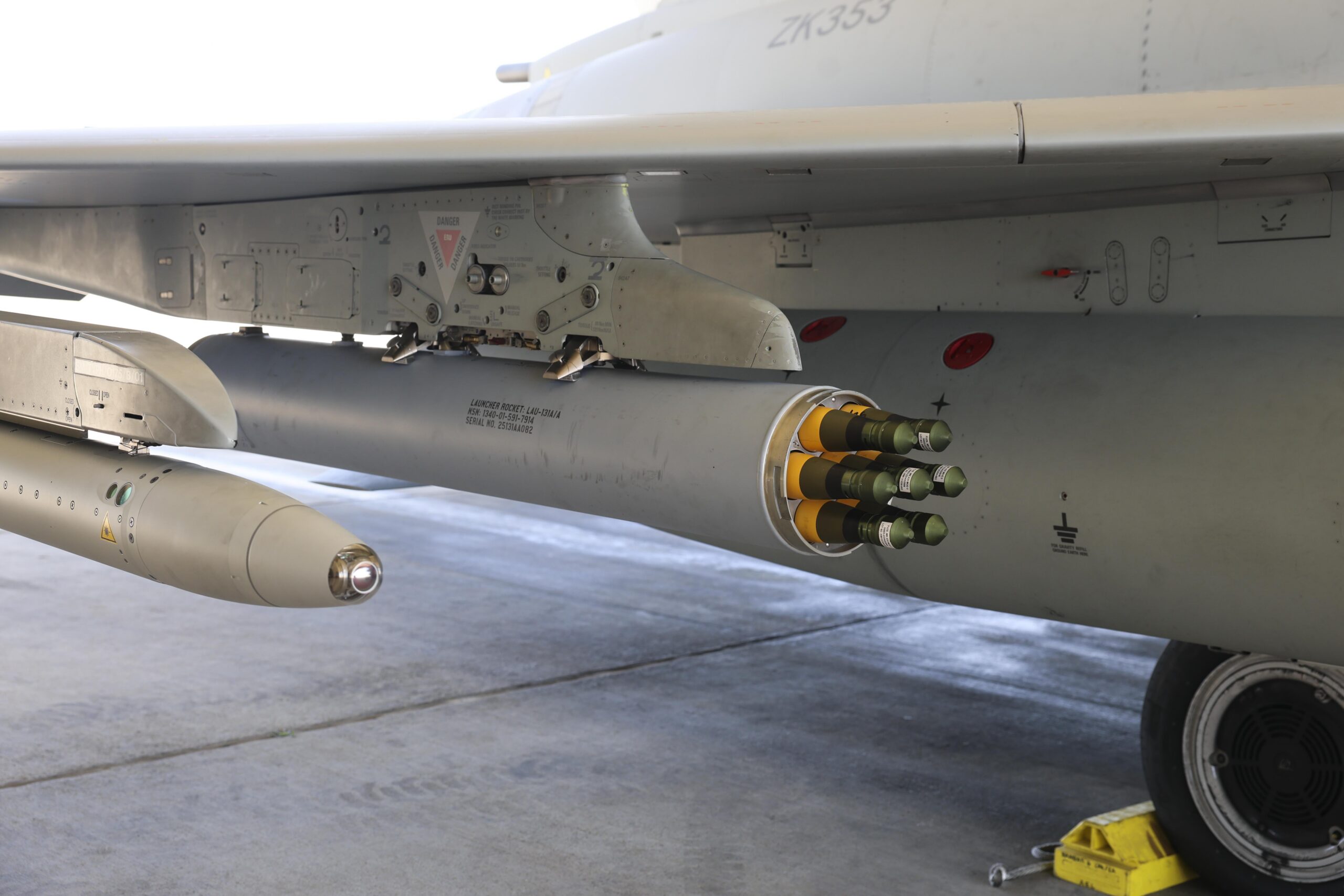
The Advanced Precision Kill Weapon System (APKWS), as it is called, was co-developed by defence contractors BAE and QinetiQ. Designed to be fitted on Typhoon fighter jets, it is already deployed on nine of these for the RAF, the MoD said.
The UK has not been actively running offensive operations in the region, but it has let the US and Israel use its bases, and so the UK military is using nine Squadron RAF Typhoon fighter jets to defend those bases, as well as other UK interests and to help allies in the region, as well as in other hotspots globally.
“This has been a superb effort working with industry to test and deploy this system in a matter of months, which will help the RAF shoot down many more drones at a much lower cost,” said Minister for Defence Readiness and Industry Luke Pollard MP, in a statement. “Our Typhoon fleet is the backbone of UK and NATO air defence, with the RAF protecting European’s Eastern flank from Russian drone incursions and defending our partners across the Middle East.”
The introduction of the new system is a significant step in how the country is shifting its defence posture.
The wars in Ukraine and Iran and the wider Middle East have highlighted how critical AI and other new technology have become to modern warfare. In the case of drones, they are faster and cheaper to produce, and often more agile and smarter than missiles — giving much smaller forces a stronger fighting chance against their foes.
That’s played to Ukraine’s advantage against Russia, but also to Iran’s advantage in the Middle East, where it has been using its Shahed drones to effectively shut down the very strategic Strait of Hormuz and continue to wreak havoc elsewhere, even as the US and Israel have pummelled Iran and its people on their home turf.
Meanwhile, in the UK, the beleaguered government had been getting slammed by military experts for months over how slow it has been to respond to new and technologically-powered threats that started to become apparent especially after the war started in Ukraine.
That criticism became even more pointed in March and April after attacks that started in Iran began spilling into UK interests, and the UK responded with more big spending on expensive legacy equipment.
As one critic writing here put it, “The award of a £1 billion contract to Leonardo for 23 medium-lift helicopters equates to a whopping £43.5 million per unit. For the same money, UK defence could have had 50,000 of Iran’s Shaheds, if the Islamic Republic were open to expanding their export market. Not only was the decision to award this contract in contradiction to the UK’s own strategy of moving the force make-up away from ‘exquisite’ military capabilities and towards ‘consumable,’ but when have we seen reports of helicopters having an impact on the battlefields of Ukraine or Iran?”
The response has been a deliberate march, but movement nonetheless.
The MoD noted that the introduction of the APKWS from procurement to deployment took less than two months. That included a successful test strike in March against a ground-based target as well as air-to-air firing evaluation to better simulate drone attacks.
The MoD has also been trickling out a number of other “defence tech” advances. In early April, the UK said it would be buying a “significant number” of Skyhammer interceptor missiles from Cambridge Aerospace in a multi-million pound deal. Also that month, the British Army announced a deal with ARX Robotics for the startup to supply it with uncrewed ground vehicles. The MoD is additionally apparently brokering meetings between Gulf states and a select group of startups and defence contractors to help those countries procure their own defence tech to defend themselves. (The list of companies includes those working on APKWS.)
And the MoD last week announced progress on another drone procurement project: it has shortlisted four companies for a tender to build “wingmen” support drones to work alongside its Apache helicopter fleet. (The shortlist includes Anduril Industries (UK) Ltd, BAE Systems Operations Ltd, Tekever Ltd and Thales UK Ltd.)
One of the other longstanding criticisms has been that the UK is not spending enough on defence, and that the percentage of GDP should be at least 3% (even if it means cuts elsewhere). Today’s announcement reaffirms that spend is still not there and currently has no plans to be. The government aims to get defence spending to 2.6% of GDP by 2027, from around 2.4% currently.