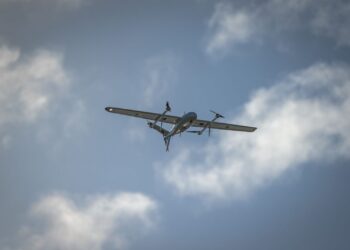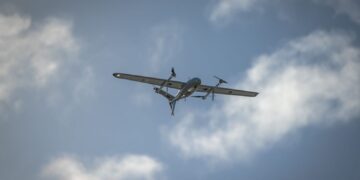
Ukraine’s defense tech sector has proven its products on the battlefield. But the question for investors is whether any of this battlefield validation converts into investable businesses. A new report from PitchBook dives into the details. Here are some of the more notable takeaways:
By the numbers
PitchBook said that $57.2 million was invested into Ukrainian defense tech in 2025, spread over 28 disclosed deals. The figure doesn’t take into account investments where the amounts were not made public, nor investments that were made without any publicity at all, nor the many significant defence tech companies that have never raised outside funding; yet directionally the figure is a small sum compared to the $510 billion in venture capital invested into privately-backed startups in the same period globally – the majority in the United States.
To be fair, Ukraine started from virtually nothing, it’s carrying this all out under heavy clouds of war with Russia, and maybe most importantly, it’s been growing fast. In 2023, just $0.2 million had been invested across six deals. By 2024, that number had jumped to $37.9 million across 20 deals, and then $57.2 million by 2025. Again, these are just venture rounds that have been disclosed. Brave1 and Kyiv School of Economics (KSE) estimates, which also fold in grants alongside priced rounds, roughly double those disclosed figures.
PitchBook cites KSE data published earlier this year that estimates the total “funded market” for defence tech in Ukraine in 2025 – that is, the purchased value of what these companies are producing in aggregate – and at $6.8 billion, it is a much bigger figure. At about $6.3 billion, UAVs account for the vast majority of that amount, with just $250 million for unmanned ground vehicles and $220 million for electronic warfare.
Production capacity, meanwhile, is much larger than funded demand. In 2025, it was closer to $35 billion, and the researchers estimate that it potentially could grow to as much as $55 billion in 2026. The larger figure presumes a larger export market this year.
One customer
Right now, however, rather than a diversified commercial customer base, there is just one buyer. All the demand for Ukrainian defense tech comes from the Ministry of Defence using monies from public budgets, donor-financed procurement, and unit-level purchasing.
Many Ukrainian defense tech companies work with individual military units directly. Soldiers log combat evidence in DELTA, Ukraine’s battlefield situational-awareness system, and earn ePoints they spend in the Brave1 Market on drones, robots, and EW kits. It is an excellent mechanism for facilitating fast procurement in wartime, but it is not a system that can be replicated with exports, where multi-year, bulk order contracts are the norm.
Supply chain
While Europe continues to seek out supply-chain resilience, the demand in Ukraine outstrips all of that and it’s shopping from the biggest hardware producer in the world, although the proportions are gradually coming down. China accounted for 97% of all unmanned-aircraft imports to Ukraine in 2022. By 2025, it had fallen to somewhere between 38% and 89%, depending on whether you are looking at systems, components, value, or volume.
A system can be Ukrainian in design while still relying on foreign-origin inputs. Motors, optics, thermal cameras, batteries, circuit boards – those are the specific parts still running through Chinese suppliers in volume. Domestic manufacturers are beginning to onshore some production. Motor-G, for example, says it ships 200,000 drone motors a month, about 17% of domestic demand, and Vyriy has built an all-Ukrainian FPV drone. But Chinese components remain ubiquitous.
This puts Ukraine in an uncomfortable position. China-sourced components are almost impossible to compete with on price, “and mass China-free production is likely years away,” the report notes.
But depending on them for supply means Ukraine has to depend for supply on a country that is politically aligned with Russia. It also is problematic for Ukraine’s nascent export market: regulations in the US and other NATO countries increasingly limit China-sourced components in defense equipment over security issues.
Some companies like DoD Solutions are now taking a two-tiered approach, sourcing components from China for cheap, need-it-now products (chips, in DoD’s case) and keeping Chinese components out of more advanced, expensive products that are targeted at eventual export.
Enablers as a thesis
The report highlights that drone airframes are easy to produce and easier to copy. Enablers and components, however, are less so. Thus, jamming-resistant navigation, secure communications, autonomy software, and target recognition that keeps working under electronic warfare conditions are the more investable parts of the ecosystem, PitchBook says.
For example, Swarmer’s swarm software has logged more than 100,000 missions and demonstrated a 25-drone swarm operating in a GNSS-denied environment. Himera, which makes tactical radios, landed its first NATO contract in October 2025.
At the same time, Kvertus, which makes jammers and EW gear at a reported pace of 5,000 units a month, has raised little or no disclosed venture funding. Same story for Infozahyst. Both are operationally significant.
Indeed, that mismatch between what is proven on the battlefield and what is actually funded runs through nearly every category in the PitchBook report. Many of the most operationally relevant companies still have little or no disclosed venture funding.
Ground robots
PitchBook notes that among the most overlooked categories, ground robotics (UGVS) is seeing a lot of traction. Deliveries went from about 2,000 units in 2024 to 15,000 in 2025 to 25,000 in the first half of 2026 alone. Tencore’s TerMIT platform alone accounted for more than 2,000 of those 2025 deliveries and they are taking on more features and functions.
“The product stack is becoming a combined-arms toolkit,” the report notes.
UGV’s are growing in number, yet communications and navigation remain bottlenecks: a UGV that cannot reach its destination under EW, terrain, and operator-pressure conditions is not yet a scalable battlefield substitute.
Exports
Things are rapidly evolving. On July 1, 2026 the Ukrainian government approved a more formal Drone Deal mechanism for transferring Ukrainian weapons, technology, and technical documentation to partner countries, aiming to issue export permits within 30 days of an application.
That could make exports less theoretical. On July 7, Zelensky said Ukraine had signed three more drone deals, with Denmark, Estonia, and the Netherlands, bringing the total to nine.
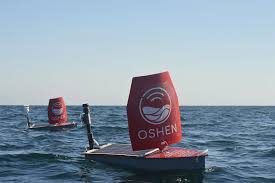
Per the pitchbook report, maritime and interceptor drones are the most export-ready products, and demand is strong.
But these exports are not without risk. Co-production and incorporating abroad can shift IP, tax base, and control out of Ukraine, even as it opens up money and markets that would not otherwise be reachable. That tradeoff does not have a clean resolution in the report, and it probably does not have one in practice, either.
What to watch
PitchBook’s list of what needs to happen next is short and specific: a financing round that clears $50 million, a second disclosed exit after Swarmer, export contracts that convert into accepted deliveries rather than signed intentions, and Ukrainian companies keeping the IP and the revenue instead of losing both to a foreign holding structure.
None of that has happened at sufficient scale yet, Pitchbook notes. Ukraine has built an institutionalized defense tech base. But it has not yet built the durable, exportable industry to match its battlefield record.