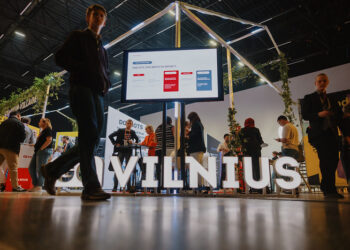
Tallinn was awash with defence events, and rain, for Estonian Defence Week. On the first day alone the Tehnopol Defence Innovation Day saw around 900 attendees from 42 countries pour into Tallinn’s cultural centre on the edge of the old town. Many more joined many more events over the week from a total of 56 countries at last count.
It’s fair to say that the conference set a precedent for what followed. The overriding theme this week in Tallinn was collaboration, not competition. As the Estonian capital filled up with industry, investors and government officials talks on procurement pace, supply chain issues and pitches took centre stage.
If Martin Herem felt he was dropped into a baptism of fire last week when he took over the position of Estonia’s Minister of Defence, after former minister Hanno Pevkur resigned over a botched deal, then having Estonia Defence Week on his second week in office must have felt like someone pouring fuel on the fire. The former General of Estonia’s armed forces seemed to take it in his well-practiced stride.
The why
The gloves really came off in the closed-door sessions. Are we developing tech to win the war and protect Europe’s future? Well, together is better. Learning from those who are dealing with the aggressor on the frontline today, listening to their needs and looking at what they are building themselves, not only informed the audiences but also reminded them, that behind the photo ops, shiny new toys and headline deals, there is a human reason for this. And that reason is already making the long trip back to the frontline.
Another conversation from the closed doors session was about how governments prepare the public. One commenter said they found that by being publicly frank and honest instill confidence, which is half the battle of public preparedness. Could we see better collaboration between governments, media and the public in regards to resilience? Watch this space.
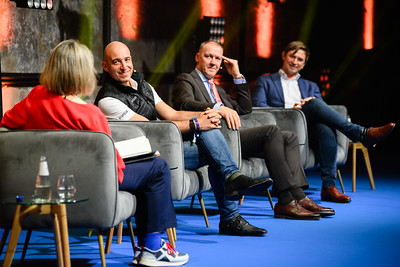
with Martin Karkour, CRO of Quantum Systems; Veiko-Vello Palm, Member of the Management Board of Frankenburg Technologies; and Rait Maasikas, CEO of UP Catalyst. Image: Eiko Lainjärv
A smorgasbord of announcements
As with many of these defence expos, we saw plenty of handshaking, partnerships and collaborations happen this week.
The Finnish defence lab NestAI announced it is expanding to Estonia. The new set-up will include at least 25 engineers and other specialists, as well as a new R&D centre. “Estonia is the right place to build because operational needs, technical talent, and political will are all present in one country,” the company said in a statement.
Resilience Media visited Lendurai’s office in Tallinn to grab an exclusive on its partnership with Israel’s Uvision. Lendurai will develop software capabilities based on its Neocortex autonomy technology and Uvision will lead on integrating these into its advanced unmanned systems. The deal has great potential for the Estonian startup as Uvision was awarded, (alongside US-based integrator Mistral Inc) a multi-year Indefinite Delivery, Indefinite Quantity (IDIQ) contract with the US Army. That’s a nice pie to get a slice of.
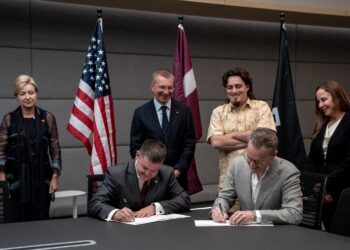
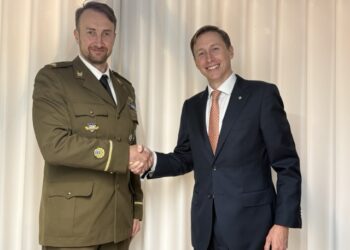
Major Ivo Peets, Commander of the EDF’s Force Transformation Command (FTC) had a very busy week between stage presentations and cooperation deal signing. Two defence tech funds signed cooperation deals with FTC – Archangel the European defence-focused venture capital fund investing in early-stage companies and Estonia’s Darkstar. The latter appears to have been a formalisation of an already blossoming relationship.
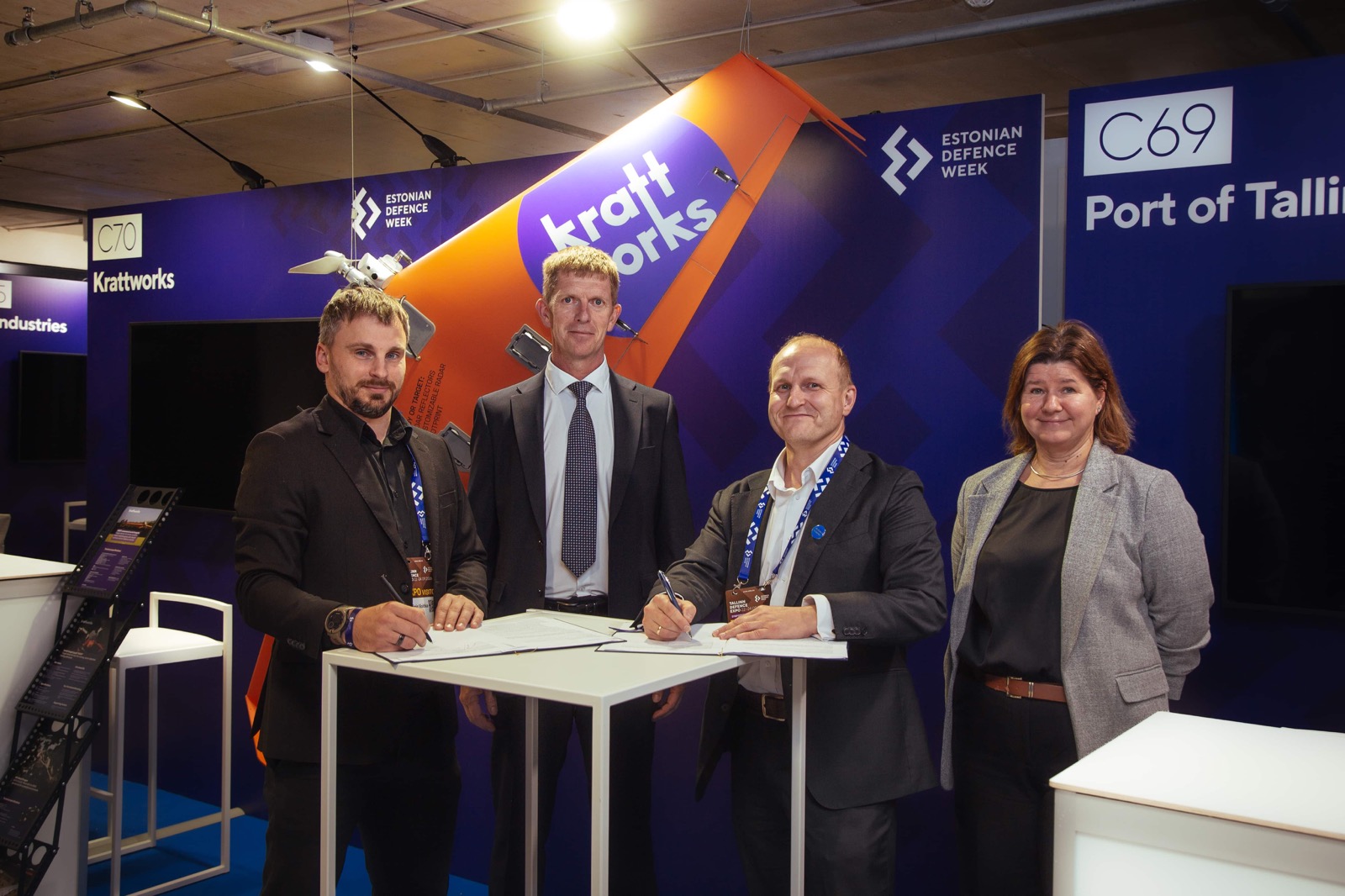
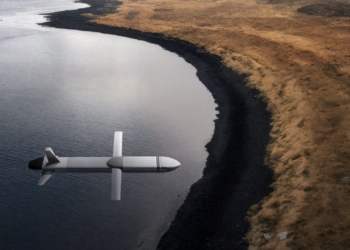
Two Estonian defence companies announced they have signed a Memorandum of Understanding (MoU). Munitions firm Wolfram Europa and drone manufacturer Krattworks have partnered to jointly develop and mass-produce specialised warheads for autonomous defence systems and uncrewed aerial vehicles (UAVs).
“We are integrating sovereign European explosives manufacturing with next-generation drone technologies to close the defence capability gap,“ said Magnus-Valdemar Saar, CEO of Wolfram Europa.
Previously, a similar arrangement was signed with Paris-based Harmattan AI. The warheads will be produced in Wolfram Europa’s €200 million complex, currently under development near Jēkabpils, Latvia. Resilience Media reported on the new investment last month.
The Estonian Defence and Aerospace Industry Association added prime Lockheed Martin to its stable of defence members. The EDIA credits itself as ‘uniting more than 200 companies across Estonia’s defence and aerospace industry to create better opportunities for its members in defence and security markets, while contributing to Estonia’s defence capabilities, security and economic development.’
“Lockheed Martin joining EDIA shows that Estonia’s defence industry is increasingly part of the international defence industrial ecosystem. Our goal is to turn that growing international interest into practical cooperation and new opportunities for Estonian companies,” said Kalev Koidumäe, CEO of EDIA.
Defence Business Lab send off
Ten teams from the 2026 Defence Business Lab cohort, an incubator programme early-stage defence tech programme co-organised by Sparkup Tartu Science Park and Tehnopol, with support from the Ministry of Defence, demonstrated their products to a room full of investors and industry peers to cap off their programme. Poised for investment the teams who have graduated from the business lab are:
MindChip is developing an AI-based autonomous ship captain to make maritime navigation and vessel control smarter and more independent.
Skypiercer – affordable last-layer counter-drone close protection, or C-UAS, widely accessible
Sonic Dynamics – fast unmanned aerial vehicles.
Towerhouse OÜ – simulation and training solutions for aviation and the defence sector.
Cata Strato – modular solutions for neutralising hostile drones.
Arx – drone platform designed to counter Shahed-type drones.
Kappazeta – remote sensing solutions based on AI-driven data analysis.
Anti-troll – supports StratCom units in countering disinformation campaigns with agents based on LLMs.
Stickelback Robotics – semi-submersible maritime drone platform.
Passer Systems – a navigation module for unmanned aerial vehicles, or UAVs
Three alumni companies from the NATO DIANA Estonian Accelerator also took the opportunity to impress the crowd DATAMBIT, SkyFi and IS-Wireless.