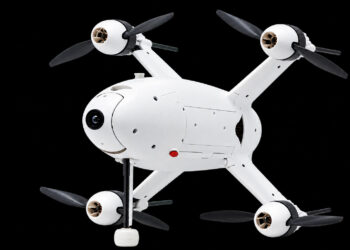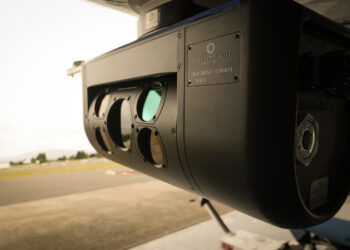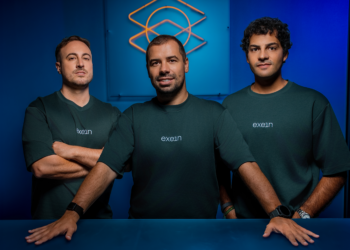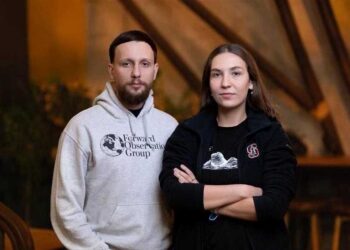
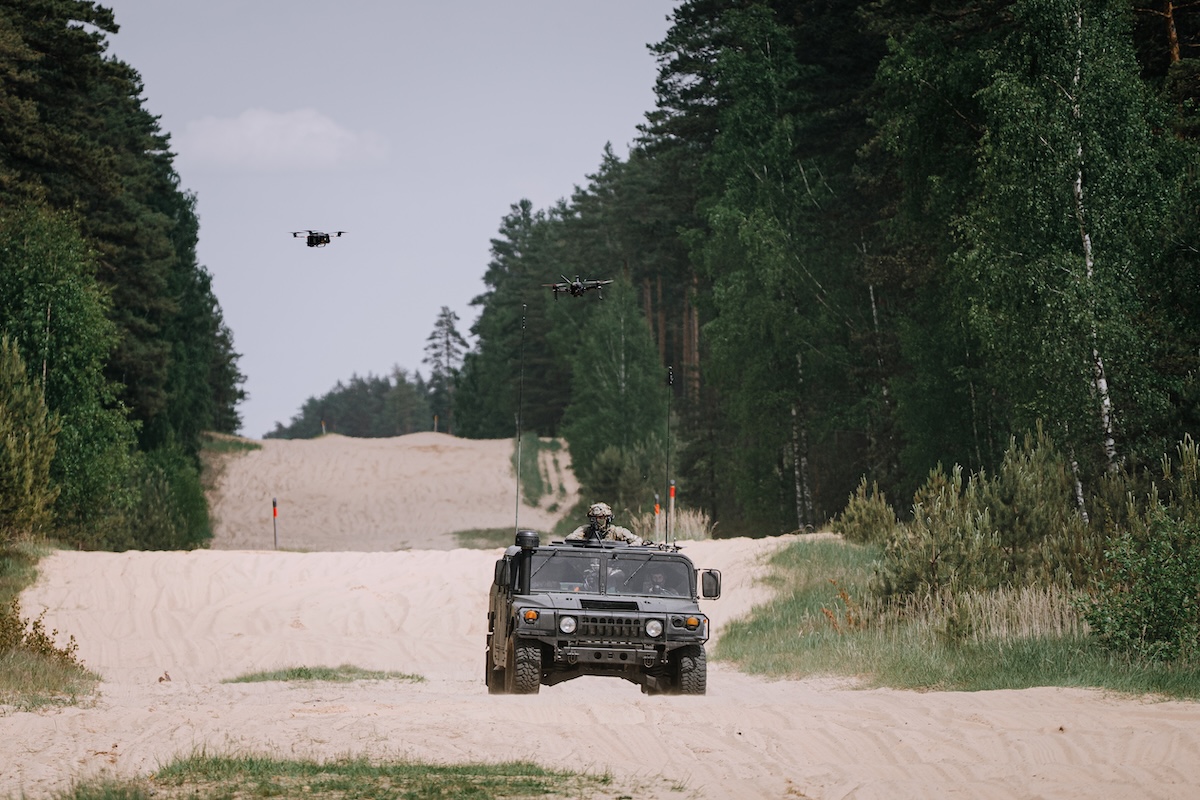
Robotics company XTEND is betting that the future of military robotics will be defined less by individual machines than by the software connecting them.
The company, which is headquartered in Tampa, Florida, went public on the New York Stock Exchange in September under the ticker XTND. The company backed into a public construction company that It says it has deployed more than 12,500 robotic systems across 30 countries, with its technology validated in five combat zones. Interestingly, the company started out as a VR gaming company, focusing on creating 3D simulations for players. Over the past year the company has moved definitively into the defence space.
At the centre of XTEND’s business is XOS, its proprietary operating system for physical AI. The software connects human operators, autonomous capabilities and robotic hardware through a common interface. The aim is to allow military personnel to command entire missions rather than individually pilot each robotic system.
XTEND currently supports more than 20 robotic product families through XOS. Its approach addresses a growing problem for militaries buying autonomous systems from multiple manufacturers: how to operate different platforms without introducing additional software, training and operational complexity.
In September, XTEND announced a strategic partnership with German drone manufacturer Quantum Systems to integrate XOS into its MOSAIC UXS ecosystem. The partnership reflects a broader push towards interoperability across military robotic platforms.
The company has also secured substantial US defence business. In October, XTEND received a $40.5 million order for 6,000 STRIKER systems following its performance in the second round of the US Drone Dominance Program.
Manufacturing is another important part of XTEND’s expansion. Its XFAB production network spans the US, Israel, Latvia, Singapore and the UK. In August, the company reported producing seven different robotic platforms across five manufacturing facilities within a single week, all running the same operating system.
The distributed manufacturing model comes as NATO members seek to expand domestic defence production capacity and reduce dependence on foreign supply chains.
XTEND’s ambitions extend beyond selling drones. By developing software that can operate across multiple robotic platforms, the company is positioning itself as an infrastructure provider for military autonomy. By going public in the U.S. the company is also showing the world a game plan for VC-funded companies who want the resources and cash to become a potential prime.