When Chancellor Scholz declared a Zeitenwende — a watershed — in February 2022, some were skeptical. Germany’s defence spending had hovered between 1.1% and 1.3% of GDP for over a decade. Four years on, this moment proved to be a turning point: 65% of Germans support defence spending of between 3% and 3.5% of GDP, and the country is meeting NATO’s 2% target and has pledged to reach the new NATO 3.5% benchmark by 2029 — six years ahead of schedule. Paying for this required a constitutional amendment, negotiated by Friedrich Merz, before he became chancellor, that exempts defence spending above 1% of GDP from the debt brake. By opening the way for ~€400 billion in additional borrowing between 2026 and 2029, a country that practiced strategic restraint for decades now promises to lead Europe with the scale of its commitment to defence, security and resilience.
The transformation of Germany’s fiscal turning point into a whole of nation deterrent and a vibrant source of resilient economic growth is not yet complete, but the past four years hold lessons for other nations seeking to build an effective defence, security and resilience (DSR) economy – one that can innovate, scale and finance defence technologies as well as secure and resilient systems in communications, infrastructure, energy and manufacturing.
How States Set the Ambition
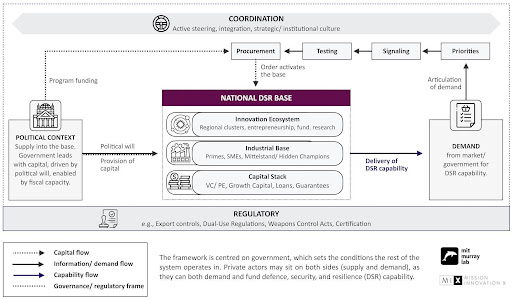
The first lesson is that while necessary, bigger budgets and political will are an input, not an outcome and not sufficient to drive change. Rather, outcomes arise when three systems that comprise the national DSR economy – the regional innovation ecosystems that generate startups with novel solutions to DSR problems, the industrial base that can produce those solutions at scale, and a capital stack that can provide finance every step of the way from early ideation (which is typically funded by venture capital) to growth capital and later stage – are activated and connected. And, when those systems are strongly linked to clear prioritised demand (signals) and procurement i.e. revenue.
Three systems, one foundation
The first system in the DSR economy is the series of regional innovation ecosystems. Across vibrant regions such as Munich, entrepreneurs, risk capital, universities, corporates and government generate novel ideas and start ambitious ventures.
Even before 2022, Germany had many of the resources such ecosystems need: a base of deep-tech founders, world-class research institutions and some early-stage risk capital. On this foundation a cohort of innovation-driven enterprises has grown to support DSR ambitions prompted by the US experience with e.g. Anduril, and amplified by the war in Ukraine and the Germany Zeitenwende call to arms.
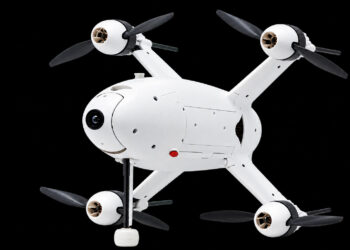
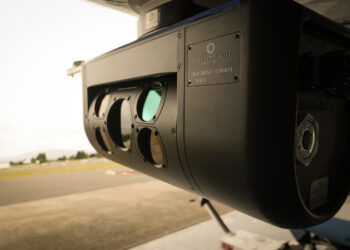
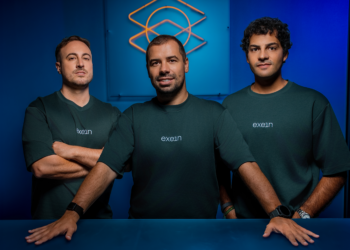
Startups including Helsing, Isar Aerospace, Quantum Systems, ARX Robotics, Stark, and Hypersonica make Munich one of Europe’s most dynamic DSR ecosystems. The Rhineland and the Ruhr, with their land systems; and the Baltic coast around Kiel, with its maritime industry, follow – albeit at a distance.
Among universities, most apart from a few exceptions such as TU Munich remain distant and wary of the DSR mission. For example, more than 70 universities and research institutes are bound by civil clauses. Society has moved; institutions are slower.
To drive successful innovation ecosystems, universities, early-stage investors and entrepreneurs must continue to see defence and security as a legitimate, whole-of-nation effort backed by aligned rules.
The second system is the industrial base. Capabilities at scale do not come from start-ups until they are deeply integrated into production lines and supply chains. This requires prime contractors, existing industrial leaders, Tier 1 and below suppliers and a skilled workforce.
The Zeitenwende has drawn many Mittelstand firms into a sector they had long avoided. SMEs account for around 40% of value added and almost 50% of employment in Germany’s security and defence industry, and their share is considerably higher once the deeper tiers of the supply chain are counted. Yet production capacity remains tight: the Kiel Institute estimates that output would need to rise roughly fivefold from 2025 levels to shift the balance of power with Russia.
To support change, the government must connect industrial capacity to start-up innovation ecosystems. For example, a reliable multi-year contract is at once a demand signal for a start-up, and a capacity signal for a supplier.
The third system is the capital stack, and it is the least developed. According to Dealroom, venture capital for German defence start-ups for 2026 rose from $362 million in 2023 to $3.5 billion as of October 2025, and now $3.6 billion as we approach December. Yet Germany still attracts less than 3% of G7 venture capital, despite generating almost 10% of the group’s economic output.
Furthermore, many banks continue to regard DSR start-ups and SMEs as hard to finance: suppliers typically pay 8% or more on loans, against an average of 5.3% for Mittelstand firms. Capital is moving, but at a slow pace.
To drive capital up the stack the focus must expand from early-stage venture capital – which usefully supports early stage ideas, to growth-scale capital that supports testing and the build out of scaled production, and later working capital that adds the financing of partnerships, inventory and supply chain contracts.
The state as market-maker
Three systems alone do not make a market. To activate these three systems the government must do more than commit to spend. It must be effective as a market maker in two ways.
First, as a unique (and at times sole) customer for defence solutions, i.e. really buying effectively. And second, as the institution signaling a requirement for and willingness to pay for security and resilience, i.e. insisting upon domestic or allied supply chains, or mandating security standards.
Patriotism is no substitute for a robust, profitable business model, not least because defence investments are highly asset-specific and security and resilience has traditionally not been rewarded. No founder or investor commits scarce resources to DSR capability without reliable demand: not simply a “demand signal” but rather a path to clear contractual revenue, and clarity about requirements for secure and resilient infrastructure and supply chains that drive market behaviors.
For defence buying, the German federal government is sending increasingly clear signals via the Bundeswehr’s new Military Strategy, although the list remains overly long and poorly prioritised.
With procurement of around €85 billion in 2025, Germany bought more than any other European state and some contracts now go to start-ups as well, and alongside large platforms.
However, as we have written elsewhere, spending on innovation as a percentage is lower than in the past (against a backdrop of rising spending).
Since February 2026, a new procurement acceleration law has also made it easier to pay start-ups and Mittelstand suppliers in advance, to ease their liquidity. But this law alone achieves little.
When a supplier receives an advance payment of 10% of the contract value from the Bundeswehr’s procurement office, the office often requires an advance payment guarantee from the supplier’s bank. Because the bank then carries the default risk and must hold more capital against it under the Basel rules, it asks for the guarantee to be fully cash-collateralised. The money meant to finance production ends up in a blocked account as collateral.
The remedy is not more procurement rules but public guarantees that take this risk off the bank’s balance sheet. This is precisely the missing link between (venture) capital for ideas and the backing of production-ready investments to meet procurement contracts, a gap that national banks such as KfW struggle to bridge.
In the realm of security and resilience, market signals remain weak. Some decisions – such as the Bundeswehr’s preference for German and European providers over Palantir in certain procurement assessments – signal a growing emphasis on technological sovereignty. The EU’s SAFE procurement rules likewise demonstrate a commitment to strengthening European and trusted partner-country supply chains.
As a case in point, Isar Aerospace has more contracts from foreign governments for its satellite launch slots than from the German government. And more broadly, signs that security and resilience are valued as weak. Recent changes include Federal Government plans to facilitate long-term supply agreements and joint financing for raw materials with key allies, and the strengthening of partnerships with Australia, Brazil, Chile, Canada and South Africa by the Federal Foreign Office, the Ministry for Economic Affairs and the Development Ministry.
However, transparency in supply chains remains a challenge. When it comes to security, Germany enforces higher cyber resilience through its revised BSI Act (BSIG) implementing the EU’s NIS2 Directive, alongside directly applicable EU rules under the Cyber Resilience Act (CRA) and Germany’s KRITIS Dachgesetz (Critical Entities Resilience Directive). However, insurance markets and banking have yet to incentivise these changes through lower premiums for reduced exposure.
Six lessons for other nations
What follows for countries that want to rearm their DSR economies, not just their militaries?
Ambitious political commitment is essential: Germany’s Zeitenwende was a statement of intent that oriented an entire nation, its innovators and its entrepreneurs. Together with the deliberate cultivation of cultural and institutional conditions that legitimise defence, such commitment helps lift the normative (and legal) constraints on dual-use research and entrepreneurship.
Budgets must make defence spending credible: Necessary but not sufficient, a credible budget forces ministries and other government buyers to define and prioritise their capability requirements – in effect, a defence investment plan that makes choices. Innovators will then follow.
Innovation ecosystems matter: Germany is expanding its ecosystems (Munich above all) as sources of innovation-driven start-ups, which since the Zeitenwende have shifted attention toward DSR and away from traditional sectors such as digital and consumer. Different ecosystems will support distinctive aspects of the DSR prioritization, and nations are unlikely to be expert across the piece.
DSR innovation must be coupled to the industrial base: A few strong industrial champions now work with DSR start-ups, lowering market-entry barriers that favor incumbent primes. Yet regulatory and institutional frictions still limit market access, and coordination among primes, start-ups and public users remains weaker than Germany’s economy and defence require.
A DSR-focused capital stack beyond early-stage VC is necessary: Germany had some early-stage risk capital, but chronic financing mismatches persist, compounded by complex ESG considerations, regulation and the wider weakness of scale-up finance. Addressing these gaps requires blended finance instruments and credit guarantees, drawing on financing models long employed by multilateral development banks to mobilise private capital and mitigate investment risks.
Procurement reform must emphasise revenue not just contracts for defence and wider market making for security and resilience: Germany has begun buying small, low-cost, high-volume systems and commercial solutions alongside large platforms, but it still lacks pace and a commercial attitude toward the DSR market. Other nations must reform procurement to buy rapidly, especially from start-ups and SMEs. And at the same time, other nations should also explore how to ensure that firms pay for security and resilience and are rewarded for doing so.
Unfinished – and all the more instructive for it
After decades of enjoying the peace dividend, the Zeitenwende has brought real change to Germany but remains unfinished. Germany’s path shows that even deeply entrenched structural and cultural constraints can shift at scale when political will and fiscal capacity come together. Whether this becomes a lasting, innovation-driven transformation and whether the DSR economy becomes a source of security and prosperity depends less on the level of spending than on the ecosystems, industrial base and financing structures that continuously generate, absorb and scale essential capabilities and new technologies.
What holds for Germany holds across Europe, Canada and beyond. And while the US has been on the journey to build a strong DSR economy at least since 2015, lessons from Germany still hold, especially when it comes to security and resilience.
For all allies and partners, stepping up should allow nations to activate a strong DSR economy that drives security and prosperity and also keeps ambitious entrepreneurs and skilled industrial workers in the domestic workforce. Put differently, a defence dividend can be realised if all three systems of the DSR economy are leveraged and linked, and then guided through careful market making. However, making a whole-of-nation effort and only-my-nation effort would be short sighted.
Much as alliances such as NATO lean into collective strength by leveraging each nation’s unique contribution, so building differentiated DSR economies leans into unique sources of nations’ comparative advantage.
Innovation ecosystems are typically highly differentiated. Across Europe, Munich excels in autonomy, Copenhagen in quantum, Oxford/Bristol in advanced materials and compute. The industrial base is less highly specialised and more widely distributed across nations, allowing for a more national-level approach to production.
However, we find pockets of expertise that are hard to replicate: Czechia in munitions, Türkiye in industrial scaling, Germany in integrated supply chains. Lastly, financing is even more international. Investors sitting in London explore ideas across Europe. Those in Poland might source companies locally but also from points as far as Tel Aviv and Tokyo. For this third system – the capital stack – our decision-makers must wrestle with how to leverage their financial strengths – to create wealth, while not giving into protectionist measures that eventually stymie more than they support.
Together, allies across Europe and beyond have a tangible economic interest in translating higher defence spending into domestic innovation, industrial capacity and growth. The ECB puts the GDP multiplier of defence spending at between 0.2 and 1.4 – at the upper end where spending is investment-led. And these data are based on the traditional defence sector: today’s innovation-driven DSR economy is likely to have a higher multiple. More than economic, the returns to collective security and to wider resilience are likely to be substantial.
Spending more is necessary. Spending differently and at times collectively – through risk pooling rather than debt mutualization – is decisive, and, in complex political systems and geopolitical times, probably the hardest part.
This article draws on the recent MIT Sloan Working Paper “Germany, from Zeitenwende to a Defense, Security & Resilience (DSR) Economy” (October 2026), written by the authors with Dr Phil Budden and Laurenz Schöffler.
*Said D. Werner is a Research Affiliate at the MIT Sloan School of Management, the Center for Economic Security in London, and a Mercator Fellow on International Affairs.
**Dame Fiona Murray is the William Porter (1967) Professor of Entrepreneurship at the MIT Sloan School of Management. She chairs the NATO Innovation Fund and is a vice chair of the U.K. Ministry of Defence’s Defence Industry Joint Council.