
The most senior member of Estonia’s ministry of defence has resigned over a procurement controversy involving buying ammunition for Ukraine.
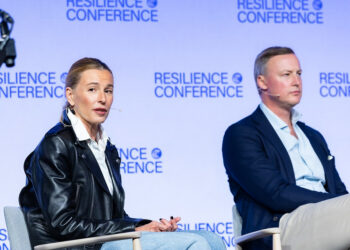
Hanno Pevkur (pictured right) said on Wednesday evening, 2 September, that he would be stepping away from the role after an investigation revealed that the ministry, under his watch, had spent around €70 million on product that was initially late and ultimately not suitable for use. Estonia’s Ministry of Defence confirmed his departure shortly after Pevkur’s public announcement.
 Estonia’s parliament is still in summer recess. A replacement is likely to be appointed when it resumes, on 14 September.
Pevkur had been in the role since July 2022. Getting appointed shortly after Russia kicked off its full-scale invasion of Ukraine, his time in the role was effectively defined by that conflict.
As a prominent neighbour of Russia along the Eastern Flank, Estonia became significantly more focused on its own defence in response to Russia’s aggression. Under Pevkur, the country boosted its defence spend to 5% of the country’s GDP in line with NATO guidance.
It also leveraged its growing technology industry to dive deep into defence and resilience tech, with a number of companies hatching and operating out of the country. (In fact, the permanent secretary of defence at the time of the purchases, Kusti Salm, is now the CEO of one of those companies, the interceptor startup Frankenburg Technologies.)
And, like a number of other Western countries, Estonia became heavily involved in the fast and furious scramble to provide urgent assistance to Ukraine with funding and military supplies. That included acting as a broker in deals for equipment to send to the country.
Estonia acted decisively, sending around €500 million in equipment to the country by November 2024. Pevkur was very public about what Estonia was buying and donating. The controversial contract in question stems from those activities.
Some of the details of what exactly went wrong are still in dispute, and there are investigations going on both at the national and European level, but the bigger picture seems to be this: The government, via the Estonia Centre for Defence Investments (ECDI), made a series of purchases from Datasel — an Indian-owned, Italian-based supplier — for artillery shells totalling around €70 million using EU funds related to frozen Russian assets.
But according to reports from the country’s National Audit Office and Estonian media, the vendor was not properly vetted in advance, the supplies took a long time to arrive, and the supplies that have arrived up to now are not what was ordered and are unusable.
Datasel appears to be contesting the allegations. In the meantime, there are still questions about the details and the outcome. There are disputes about the precise amount of frozen-asset funds that were allocated. Some also believe that Estonian taxpayers will be on the hook if the funds or what they were intended to buy are not recovered. It’s also not fully clear who masterminded this bad deal on the buyers’ side, and separately who may ultimately be responsible for it.
‘It was a jungle out there’
While procurement black holes and other financial mis-dealings may well get traced to corruption or other nefarious activities — the picture painted here so far is that the Estonian government mismanaged this deal and acted too quickly to thoroughly vet the seller. Pevkur said that as the senior-most person in the ministry, he had to step down as a result of it.
“Although the minister does not count socks and ammunition or conduct contract negotiations, the National Audit Office’s criticisms, primarily concerning the activities of the Defense Forces and the Center for Defense Investments, raise the question of political responsibility,” he said. “I therefore believe it is right to take political responsibility today for the entire defense sector and hand over the defense minister’s baton at a time suitable for the prime minister.”
But speaking to Resilience Media, Meelis Oidsalu, former Ministry of Defence employee and security expert, said that without proper context, the botched deal becomes somewhat exaggerated in the eyes of the mainstream media and wider Estonian public.
“Our Ministry of Defence should have explained the situation on the ammunition market in 2024 much more clearly. It should have explained that, at the time, dealing with companies that might appear shady was not necessarily unusual. It was a jungle out there, and there was a logic behind using project-management or intermediary companies. If you are dealing with a third country whose government has not decided to supply or sell ammunition directly to Ukraine, your only option may be to procure it indirectly rather than from the ammunition manufacturer itself. In such cases, some form of intermediary is necessary. So this was not an abnormal setup for that period,” he said.
Pevkur failed to explain this context and failed to inform the public early on about a high-risk procurement project that had gone wrong, Oidsalu continued. Instead, he tried to classify the relevant information, perhaps hoping that a court ruling would eventually resolve the matter and make the problem go away.
“But without proper framing, the case was taken out of context to some extent by the media, making this type of deal appear highly unusual or even bizarre, whereas in the circumstances it may not have been,” he said. “Most of the risky transactions involving third-country suppliers and intermediary companies worked. Ukraine received the ammunition it needed. So I think there is a lesson here for Estonian politicians, and for the defence sector more broadly, about how to handle controversies of this kind.”
It might have been the case that Pevkur could have ridden out this storm. He has always been a very popular and trusted politician in the eyes of the public, but with the elections looming in a six months time and Reform trailing in the polls, Pevkur’s resignation feels very much like a political sacrifice.
As for who is next to take up the position, it’s anyone’s guess. By all accounts, it sounds like the shoes will be an uncomfortable fit: the Government has decided this week that the Minister of Defence will be subjected to a monthly report on what is being done to address the defence forces storage management problems. Oidsalu described it as a “humiliating process.”
And this week the Estonian Prosecutor’s Office said that on 13 October, 2025 it had opened criminal proceedings to investigate the Ministry of Defense’s area of administration and its finances. This particular investigation was initiated off the back of inaccuracies found in the inventories reported in 2024.
“No separate criminal proceedings have been opened based on the National Audit Office audit published on August 28 [2026], which concerns the 2025 report. We are analysing the circumstances and information presented in this year’s audit as part of the criminal proceedings opened in 2025,” said Prosecutor General Astrid Asi, according to ERR.
We’ll update this post as we learn more.