In this episode of Resilience, I speak with Gediminas Guoba, CEO of the Lithuanian drone company Granta Autonomy. The company began as a manufacturer of fixed wing reconnaissance UAVs but has grown into a developer of critical drone components including data links designed to operate in electronic warfare environments. After Russia’s full scale invasion of Ukraine, Granta began deploying its systems there and working closely with Ukrainian forces to improve jamming resilience and battlefield performance. Guoba discusses how the company developed drones capable of operating above Russian jammers, why direct presence in Ukraine is essential for rapid engineering iteration, and how lessons from the war are shaping the next generation of UAV systems in Europe. I think his answers regarding potential war in Europe and the drone problem in Iran are valuable enough that I’ve prepared an edited transcript.
John Biggs: Granta has been quite busy. You guys have had a long and interesting road. Why don’t you tell us what you guys are building?
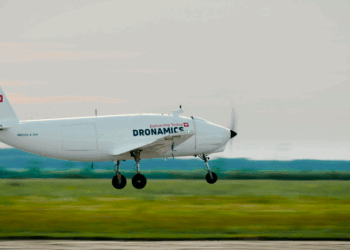
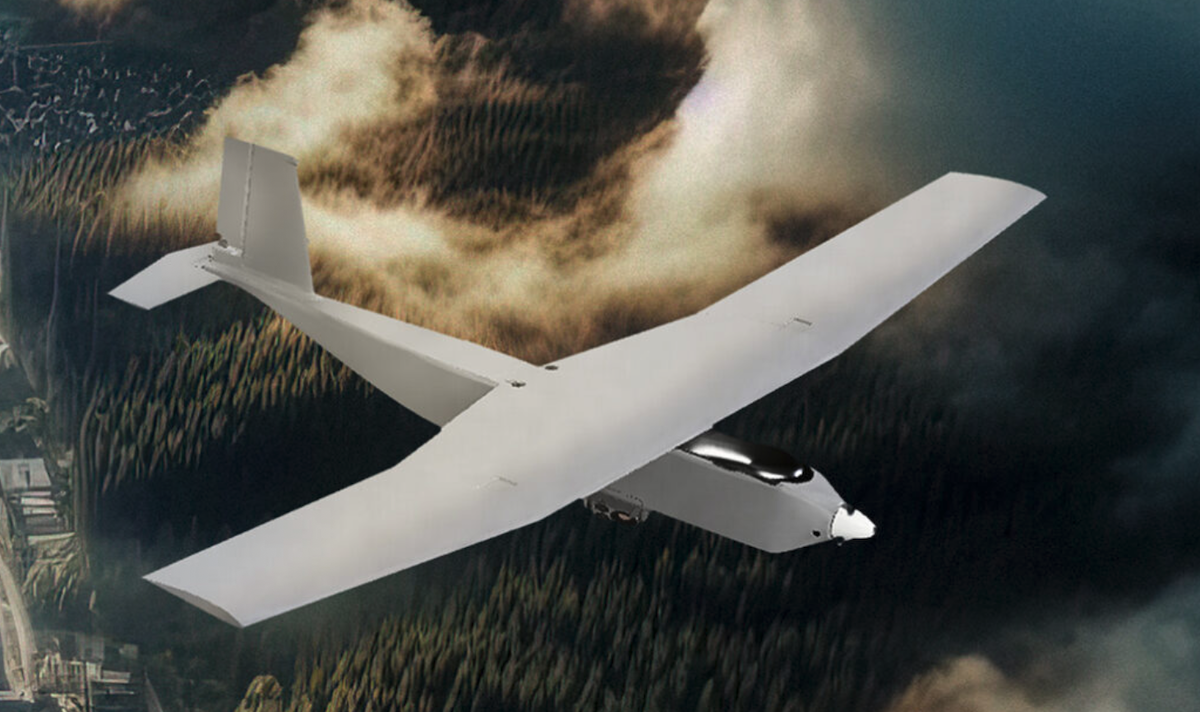
Gediminas Guoba: First of all, we are a drone manufacturer. We started as a reconnaissance drone manufacturer but fixed wing type UAVs, and in general fixed wings are our primary focus. But what is different about Granta Autonomy is that we are not only a drone manufacturer, we also design, build, and develop the most critical components for drones, including data links and camera gimbals. These days you can’t go anywhere or do reconnaissance without both components. Myself and the other co-founder of Granta Autonomy started the company in 2014. It was very obvious that Russia was very good at electronic warfare, so we started to work on data links because we are engineers and this is in our blood. So we started to explore the electronic warfare area. Later, in 2022, after the full scale invasion, we started to send our UAVs to Ukraine with our data links and camera gimbals. We started to get feedback. Of course we needed to do extra development. But we proved that our data link works. We have jamming resilience. We are still capable of doing reconnaissance above Russian jammers. Even more, all our knowledge and expertise in UAVs allowed us to be one of two companies in Europe that still operate in Ukraine. Most companies were removed from the official UAV manufacturer lists in Ukraine because they could not be fast enough to provide workable drones or drones that bring value.
So we are not only a drone manufacturer, we are also a critical components manufacturer.
John Biggs: So your drones are essentially unjammable based on current techniques?
Gediminas Guoba: As an engineer I can’t say unjammable. I like to say jamming resilient. That’s more precise. But in general, yes, we don’t have issues flying above jammers and doing operations there.
John Biggs: So to be one of the few drone manufacturers that Ukraine supports is a heavy responsibility. What are you doing to maintain that edge for them?
Gediminas Guoba: First of all, the most important thing is to be honest with yourself. If something doesn’t work, then it doesn’t work and you need to do everything necessary to improve it. That was especially true in the beginning. We had many issues, many questions, and many new feature requests, and we still get them. But at the same time there are other important things like having a company there, having people in Ukraine, and having engineering support there. That is critical because sending UAVs back and forth from NATO countries to Ukraine takes a lot of paperwork and time. So having people there, having engineers on the front lines working there, is important. Our engineers from Lithuania go to Ukraine. We work there, we analyze the radio spectrum, we study how the enemy works, and many other things to understand how we should develop our product and what the next priorities should be. Presence there and working there is probably the most important thing to provide useful assets.
John Biggs: What do you think needs to be done for the current situation with Iran? It sounds like the US and some allies might be dealing with what is happening in Ukraine. What needs to be done on the drone front to make larger countries as resilient as Ukraine?
Gediminas Guoba: That is a very good question because Ukraine has huge motivation to improve their technologies. The war is in their yard, in their streets. So they not only have huge motivation to stop it, but having front lines next to your home also allows engineers and companies to do very quick iterations and see what works and what doesn’t. They are in a completely different situation. They have completely different access to information and confirmation. I can’t really say that we have a chance in Europe to do something similar unless we are there. If our people and our companies work there, not here in NATO countries but there, that is where the most important information and experience comes from.
John Biggs: What’s next for Granta? Are you raising money? Are you building new factories?
Gediminas Guoba: We are constantly growing because we grow not only in people but also by increasing the portfolio of our products. We started with ISR drones. Last year we launched a loitering munition. That loitering munition already received attention from the armed forces of Ukraine and we received orders. So we are already manufacturing loitering munitions for Ukraine. Counter UAS is also a very important area. We started working on it a few years ago, suspended the project, and now we have continued it. We will keep focusing mostly on fixed wings because that is our expertise and where we are strongest. We will increase the portfolio in that area.
John Biggs: What do you think will happen in the next few months? Do you think the war expands? Are you worried about it in Lithuania?
Gediminas Guoba: Not for now, because it feels like Russia has a lot of work to do in Ukraine. What we can do is support Ukraine and learn from their lessons, but learning by being there. I don’t think Russia is capable of opening another front. But other countries could start doing something unexpected. We now have war involving Iran. Who knows what might happen with China in a few years. There can be threats from other countries, but I don’t think Russia can open a second front.