Friday 23 January, 2026
[email protected]
Resilience Media
  • About
  • News
  • Resilience Conference
  • Guest Posts
    • Author a Post
  • Subscribe
No Result
View All Result
  • About
  • News
  • Resilience Conference
  • Guest Posts
    • Author a Post
  • Subscribe
No Result
View All Result
Resilience Media
No Result
View All Result

Why Germany’s Defence Startups Are Looking Elsewhere

25% want to go to the U.S.

Resilience MediabyResilience Media
April 30, 2025
in News
Share on Linkedin

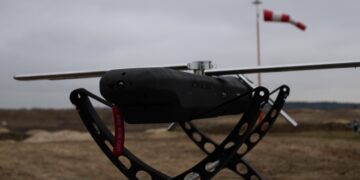
There’s been a quiet boom in German defence tech since the war in Ukraine began. Startups are building software, AI, and drone systems for military use. But even as their numbers grow, many founders say they wouldn’t launch in Germany again.

You Might Also Like

Dispatch from Davos: Tech sovereignty looms large

Inside Dronamics bid to become the unmanned logistics carrier for future conflicts

AI in cybersecurity remains a tool for understanding, not response

According to a recent Handlesblatt report, only about a third of German defence startup founders would choose to build their company here if they had the chance to start over. That’s the takeaway from a Bitkom survey of 44 startups working in defence. The rest? They’d head elsewhere: 25% to the U.S., 16% to another EU country, and 18% to somewhere else entirely.

Their reasons: a stagnant economy, heavy regulation, and lack of private capital. But what really stands out is how many say they feel ignored. A full third of respondents said they don’t feel appreciated in Germany.

Low Priority

The mood is pessimistic. Most founders don’t believe Germany is equipped to defend itself. One in four rated the country’s readiness as “very low.”

Still, a few German companies have gained serious ground. Helsing, based in Munich, is now one of Europe’s most valuable defence AI startups, worth an estimated €5 billion. Quantum Systems, which makes military drones, may soon join the unicorn club with a $1 billion+ valuation. Other rising players include Arx Robotics and Alpine Eagle, which launched in 2023 and focuses on counter-drone technology.

Bitkom president Ralf Wintergerst said startups like these must play a central role in rebuilding Germany’s military, alongside traditional defence firms.

Funding Gaps

Germany has made some moves. Defence spending is now mostly exempt from the country’s debt cap, and the EU has proposed a €150 billion defence fund. But founders doubt much of that will reach them.

They want faster procurement, less bureaucracy, and better access to military buyers. Many startups don’t survive long enough to get into formal government procurement pipelines. Some suggest changes to national security clearance laws and want a public-facing marketplace where startups can connect with innovation units inside the military—something that already exists in the U.S.

They’re also asking for more live testing and trial sites, so products can be evaluated in real-world scenarios. At least one location—Erding Air Base—is being converted to support that kind of work.

And of course, money matters. Founders want the government to take startup investment seriously. They point to France’s Fonds Innovation Défense and the Netherlands’ SecFund as models. France is even looking into letting retail investors put money into defence startups.

That said, given the high costs of employment and even materials in Germany it’s no wonder startups are heading where they can find savings. The result, however, is a Germany ill-prepared for what’s next.


Tags: BitkomGermanyHelsingRalf Wintergerst
Previous Post

Helsing Leads New Alliance to Strengthen Europe’s Undersea Defences

Next Post

The lights went out: It’s time to get serious about energy security

Resilience Media

Resilience Media

Start Ups. Security. Defense.

Related News

Finland’s president, Alexander Stubb, at the 56th World Economic Forum in Davos.

Dispatch from Davos: Tech sovereignty looms large

byPaul Sawers
January 23, 2026

A recurring theme emerged from the chatter at the World Economic Forum (WEF) in Davos this week, with questions around...

Inside Dronamics bid to become the unmanned logistics carrier for future conflicts

Inside Dronamics bid to become the unmanned logistics carrier for future conflicts

byJohn Biggs
January 22, 2026

https://youtu.be/aYt1Av6ojwQ Dronamics started as a cargo drone company, and it is now betting that the same airframe can do much...

Laptop screen showing a search bar.

AI in cybersecurity remains a tool for understanding, not response

byCarly Page
January 22, 2026

Despite industry hype around autonomous defence, new research shows security teams spent 2025 using AI mainly to explain and contextualise...

view of Earth and satellite

Space could become the next battlefield

byPaddy Stephens
January 21, 2026

Future great power conflict is unlikely to be limited to the land, seas and skies. Great powers also rely on...

Rheinmetall and Auterion Announce New NATO-Wide Military Hardware-Software Partnership

Auterion conducts live fire swarm drone strike test

byJohn Biggs
January 20, 2026

Munich- and Virginia-based Auterion says it has completed what it describes as a first for the small drone space in...

blue and yellow striped country flag

Palantir and Ukraine’s Brave1 have built a new AI “Dataroom”

byIngrid Lunden
January 20, 2026

Palantir, the US data analytics giant, has been a regular presence in Ukraine helping with its defence against Russia since...

us a flag on pole near snow covered mountain

Dominion Dynamics raises $15M to build a new arctic defence prime in Canada

byIngrid Lunden
January 19, 2026

The US has become a somewhat unpredictable neighbour to Canada, with President Trump’s threats of annexation and spiking tariffs looming...

Twentyfour Industries emerges from stealth with $11.8M for mass-produced drones

Twentyfour Industries emerges from stealth with $11.8M for mass-produced drones

byIngrid Lunden
January 19, 2026

Make way for another drone startup in the European defence tech ecosystem. Twentyfour Industries is today emerging from stealth armed...

Load More
Next Post
The lights went out: It’s time to get serious about energy security

The lights went out: It's time to get serious about energy security

Tekever Commits £400M to UK Drone Manufacturing After RAF Contract Win

Tekever Commits £400M to UK Drone Manufacturing After RAF Contract Win

Most viewed

InVeris announces fats Drone, an integrated, multi-party drone flight simulator

Harmattan AI raises $200M at a $1.4B valuation from Dassault

Twentyfour Industries emerges from stealth with $11.8M for mass-produced drones

Hydrosat raises $60M for its thermal satellite imaging tech

Palantir and Ukraine’s Brave1 have built a new AI “Dataroom”

Defense Unicorns lives up to its name: $136M round lifts valuation past $1B

Resilience Media is an independent publication covering the future of defence, security, and resilience. Our reporting focuses on emerging technologies, strategic threats, and the growing role of startups and investors in the defence of democracy.

  • About
  • News
  • Resilence Conference
  • Guest Posts
  • Subscribe
  • Privacy Policy
  • Terms & Conditions

© 2026 Resilience Media

No Result
View All Result
  • About
  • News
  • Resilence Conference
  • Guest Posts
  • Subscribe
  • Privacy Policy
  • Terms & Conditions

© 2026 Resilience Media

This website uses cookies. By continuing to use this website you are giving consent to cookies being used. Visit our Privacy and Cookie Policy.