Tuesday 10 March, 2026
[email protected]
Resilience Media
  • About
  • News
  • Resilience Conference
    • Resilience Conference Warsaw 2026
    • Resilience Conference Copenhagen 2026
    • Resilience Conference London 2026
  • Guest Posts
    • Author a Post
  • Subscribe
No Result
View All Result
  • About
  • News
  • Resilience Conference
    • Resilience Conference Warsaw 2026
    • Resilience Conference Copenhagen 2026
    • Resilience Conference London 2026
  • Guest Posts
    • Author a Post
  • Subscribe
No Result
View All Result
Resilience Media
No Result
View All Result

Tytan Teams Up With Axon to Build Out Its Drone Wall

Ecosystems are rapidly forming around startups that aim to deliver end-to-end solutions to large defence buyers

Resilience MediabyResilience Media
October 15, 2025
in News, Startups
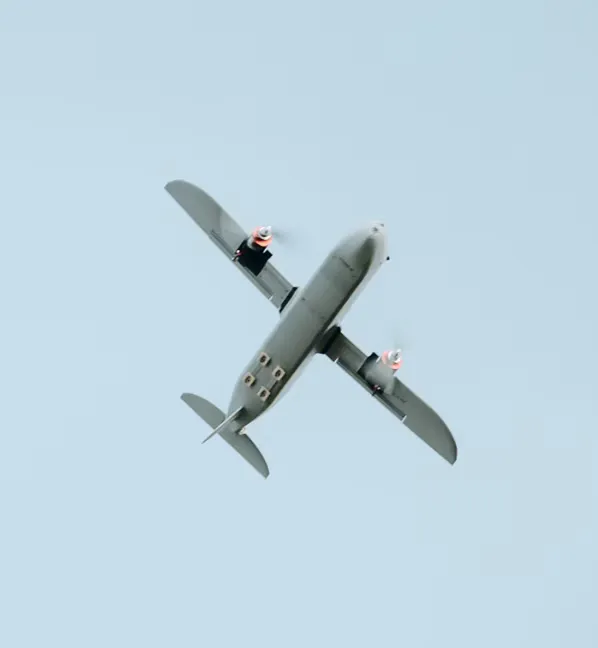
The Tytan Interceptor. Credit: Tytan Technologies

The Tytan Interceptor. Credit: Tytan Technologies

Share on Linkedin

There’s been a lot of talk about drone walls in recent months as countries in Europe seek to counter the adversarial threat of Russia, after several of its unmanned aerial vehicles appeared into Western airspace. Now, Tytan Technologies — one of the bigger startups developing these kinetic interceptor defence systems — is announcing a partnership to expand its ecosystem to rise to that challenge.

You Might Also Like

Lux Aeterna raises $10 million to build reusable, returnable satellites

Trojan force: Hidden backdoors may lurk inside AI models, report says

Isembard raises $50M, plans to open 25 ‘AI-powered factories’

Munich-based Tytan and Axon division Dedrone said they will collaborate on hardware and software solutions targeting a wider range of UAVs. The deal is significant for a number of reasons:

— Tytan is on the radar. The startup’s services are in demand. Earlier in October, it inked a major deal with the German government, reportedly worth hundreds of millions of euros, which will see Tytan supply the Bundeswehr (Germany’s armed forces) with a kinetic defence system to take down drones. Tytan’s system — comprised of software, ground stations and interceptor drones — targets both UAVs used for reconnaissance and strike drones equipped with weapons.

On the plus side, given drones are only ramping up in usage — deliveries of these, to be deployed in swarms, number in the range of high tens of thousands, hundreds of thousands and multiple millions. On the minus side, Tyton’s initial agreement with the German military covers only “class 2” drones weighing between 150 kg and 600 kg, which brings us to another reason why today’s Dedrone news is significant.

— It’s all about ecosystems. As Dedrone describes the Tytan deal, it will be supplying “AI-powered sensor fusion and technology” that will work with Tytan’s kinetic interceptors. The idea will be to create an end-to-end solution that will cover detect, track, identify and mitigate capability that will be able to target not just group 2, but also groups 1 and 3 drones, covering a wider range of weights and flying altitudes, in line with directives around how to better secure “unified airspace.”

The bigger picture here is that the defence market has been long dominated by legacy, large Prime suppliers. Defence startups, however, are seeing an increasing amount of traction. That’s because, as warfare gets more advanced and technological, these smaller and younger companies are the ones that are building faster and tapping into innovations in areas like AI and hardware development.

But startups are typically only able to address some aspects of a larger solution, so these companies are leaning into building partnerships — larger ecosystems — to present more complete pitch to would-be buyers. This deal between Axon’s Dedrone division and Tytan is an example of that in action.

— Show me the money. One detail about vendor deals is that while they might get announced in public, the solutions typically have yet to be delivered, and payments yet to be received. That means deals can still fall through at the end of the day. One of the fail points for any startup is having the capital to make and maintain a product to meet demand, which begs the question of where Tytan is sitting in terms of its own runway.

To date, it looks like the company has never disclosed how much it has raised according to PitchBook data. Its investor list is small at just six backers, including OTB Ventures, D3 from Ukraine, and Germany’s Magnetic, with the last financing dating to April 2025.

We’ve heard from a couple of sources that the company may have raised (or is raising) more money, and that it may even have a round in progress right now with some significant investors involved. We’ll be reaching out to try to learn more.

We have also asked Axon — the company behind Taser and many other public safety solutions — which is publicly traded in the US with a current market cap of nearly $56 billion, if it might be backing Tytan as a strategic investor given the partnership, and we will update this post as we learn more.

In the meantime, watch this space, and these skies.

Tags: AxonGermanyTaserTytan
Previous Post

HyperBunker Raises €800K To Build Data Bunkers For The Digital Battlefield

Next Post

NATO Turns to Oracle and Druid Software for Secure Battlefield 5G Connectivity

Resilience Media

Resilience Media

Start Ups. Security. Defense.

Related News

Lux Aeterna raises $10 million to build reusable, returnable satellites

Lux Aeterna raises $10 million to build reusable, returnable satellites

byJohn Biggs
March 10, 2026

Lux Aeterna, a Denver based space infrastructure startup, just raised a $10 million seed round led by Konvoy Ventures with...

Credit: Mcmurryjulie via Pixabay

Trojan force: Hidden backdoors may lurk inside AI models, report says

byPaul Sawers
March 10, 2026

What if an AI model carried hidden instructions that only activate when triggered by a particular input? That’s the subject...

The launch of Isembard’s innovative approach to manufacturing

Isembard raises $50M, plans to open 25 ‘AI-powered factories’

byIngrid Lunden
March 9, 2026

Isembard, a London startup that’s built a platform to help hardware makers in defence, aerospace and robotics manufacture components and...

shallow focus photo of flag of United States of America neon light

Trump cyber strategy outlines tougher stance on cybercrime and adversaries

byCarly Page
March 9, 2026

The White House last week published a new national cyber strategy promising a more assertive response to digital threats, signalling...

high angel photography of football stadium

Augur, a ‘grey-zone’ national security startup, raises $15M

byIngrid Lunden
March 9, 2026

Augur, a London national security startup co-founded by Palantir alums that is building an AI-based analytics platform to “read” data...

Ukrainian autonomy company The Fourth Law unveils an anti-Shahed drone

Ukrainian autonomy company The Fourth Law unveils an anti-Shahed drone

byJohn Biggs
March 6, 2026

Ukraine-based autonomy company The Fourth Law has unveiled Zerov, an autonomous interceptor drone built to engage long-range strike UAVs in...

Ukraine’s autonomous weapons makers push for industrial scale

Ukraine’s autonomous weapons makers push for industrial scale

byLuke Smith
March 6, 2026

In the past five months in Ukraine, Major Maksym Gromov's unit launched 608 autonomous Lupynis drones against Russian adversaries. Four...

asphalt road between trees

Munich Security Conference got the urgency right. The hard part comes next

byRobin Dechant
March 6, 2026

A few weeks on from the Munich Security Conference, something many of the Resilience Media community no doubt attended, I...

Load More
Next Post
NATO Turns to Oracle and Druid Software for Secure Battlefield 5G Connectivity

NATO Turns to Oracle and Druid Software for Secure Battlefield 5G Connectivity

Uwe Horstmann Takes the Reins as Stark CEO

Uwe Horstmann Takes the Reins as Stark CEO

Most viewed

InVeris announces fats Drone, an integrated, multi-party drone flight simulator

Uforce raises $50M at a $1B+ valuation to build defence tech for Ukraine

Auterion, the drone software startup, eyes raising $200M at a $1.2B+ valuation

Twentyfour Industries emerges from stealth with $11.8M for mass-produced drones

Senai exits stealth to help governments harness online video intelligence

Harmattan AI raises $200M at a $1.4B valuation from Dassault

Resilience Media is an independent publication covering the future of defence, security, and resilience. Our reporting focuses on emerging technologies, strategic threats, and the growing role of startups and investors in the defence of democracy.

  • About
  • News
  • Resilence Conference
    • Resilience Conference Copenhagen 2026
    • Resilience Conference Warsaw 2026
    • Resilience Conference 2026
  • Guest Posts
  • Subscribe
  • Privacy Policy
  • Terms & Conditions

© 2026 Resilience Media

No Result
View All Result
  • About
  • News
  • Resilence Conference
    • Resilience Conference Copenhagen 2026
    • Resilience Conference Warsaw 2026
    • Resilience Conference 2026
  • Guest Posts
  • Subscribe
  • Privacy Policy
  • Terms & Conditions

© 2026 Resilience Media

This website uses cookies. By continuing to use this website you are giving consent to cookies being used. Visit our Privacy and Cookie Policy.