Thursday 12 March, 2026
[email protected]
Resilience Media
  • About
  • News
  • Resilience Conference
    • Resilience Conference Warsaw 2026
    • Resilience Conference Copenhagen 2026
    • Resilience Conference London 2026
  • Guest Posts
    • Author a Post
  • Subscribe
No Result
View All Result
  • About
  • News
  • Resilience Conference
    • Resilience Conference Warsaw 2026
    • Resilience Conference Copenhagen 2026
    • Resilience Conference London 2026
  • Guest Posts
    • Author a Post
  • Subscribe
No Result
View All Result
Resilience Media
No Result
View All Result

Kilowatt War: Changing The Energy Reality on the Frontline

A guest piece on the silent, stealthy, and decentralised power critical for frontline resilience, by Ivar Kruusenberg, founder and CEO of PowerUP Energy Technologies

Resilience MediabyResilience Media
July 8, 2025
in Guest Posts, News
Share on Linkedin

Watching the events unfold in Ukraine has given me a profound sense of urgency, and a much clearer understanding of what truly keeps a nation standing. This isn’t just another war; it’s what I call the “Kilowatt War.”

You Might Also Like

Scout Ventures raises $125 million to expand investment in defence and dual-use tech

The dangerous economics of drone warfare

The signal is the weapon: How mobile networks became infrastructure for modern war

Russia’s attacks on Ukraine’s power grid have turned energy into a central battleground. We’ve seen cities go dark for hours every day, vital services strained, and daily life turned upside down. By mid-2024, over half of Ukraine’s power generation was gone. This isn’t just about blowing things up; it’s a calculated move to break a country. The message is clear: if you rely on a central power grid, you’re vulnerable. This crisis makes finding strong, local power sources an absolute top priority for modern defence.

Hydrogen isn’t new to the military. For over a hundred years, it’s been used for observation, from Civil War balloons to World War I. Engineers also saw its power as a fuel, even flying a U.S. Air Force bomber on liquid hydrogen in the 1950s. And, of course, hydrogen fuel cells powered the Apollo and Space Shuttle missions, giving clean electricity and even drinking water. Yes, it also has a darker side, powering thermonuclear bombs.

But this long, varied history shows militaries have always known hydrogen’s potential. Today, it has a new, critical role: keeping soldiers going.

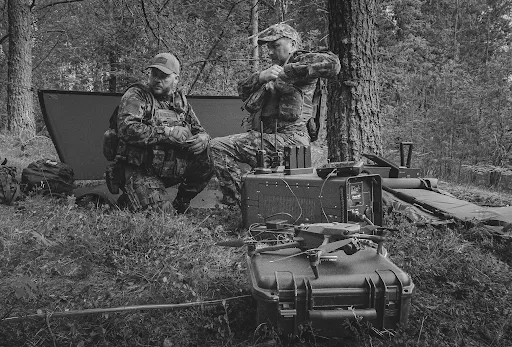
Modern armies run on diesel, and this dependence is a huge weakness. The U.S. Army knows its long, fragile fuel supply chain is a big risk in any major conflict. Getting fuel to the front lines is incredibly dangerous; in Iraq, one person was lost for every 24 fuel convoys. On the battlefield, diesel generators are a problem. They’re loud and hot, making units easy targets for modern sensors and drones. They also need constant fixing and waste fuel when not running at full power, which often leads to breakdowns. The situation in Ukraine really shows this on a national scale. As Russia hits the main power grid, civilians turn to diesel, forcing the military to compete for a fuel that’s already hard to get. It’s a clear example of how attacking energy infrastructure can indirectly cripple an army.

I am certain that part of the answer to the diesel problem is in hydrogen fuel cells. Unlike a generator that burns fuel, a fuel cell makes electricity through a quiet chemical reaction between hydrogen and oxygen. It only produces water and a little bit of heat. This makes them perfect for modern warfare. They’re nearly silent and have a much smaller heat signature, making units far harder for the enemy to find. Plus, they’re more reliable, with fewer moving parts to break down.

This isn’t some far-off idea; this technology is ready now. Companies like PowerUP make portable hydrogen generators that are ideal for frontline use, and NATO forces have already tested them. A small, portable unit, like our 1kW model, weighs less than 25 kg and is as quiet as a normal conversation. It can power crucial gear like radios, drones, and medical equipment, giving small units the energy they need to stay hidden and effective without the noise and heat of a diesel generator.

The biggest challenge with hydrogen has always been logistics: how do you get big hydrogen tanks to the front? The real game-changer is to stop shipping hydrogen and start making it right where it’s needed. New technologies make this possible. One way is electrolysis, using portable systems with solar or wind power to split water – even moisture from the air – into hydrogen. Imagine a unit that can be airdropped and produce both hydrogen fuel and drinking water from the air. Another method uses a safe, stable aluminium powder that instantly releases hydrogen gas when mixed with any available water.

These breakthroughs change everything. Instead of relying on risky fuel convoys, units can now “live off the land” and create their own energy. This allows small, stealthy teams to operate for longer periods deep in enemy territory, finally cutting the “tether of logistics” that has held armies back for centuries.

The war in Ukraine is a powerful, although painful wake-up call. In today’s conflicts, energy is a weapon. Relying on old diesel generators and fragile power grids is a recipe for disaster. Hydrogen fuel cells offer a clear, strong advantage: they provide stealth power: silent, and reliable, directly helping soldiers survive and fight effectively. With new tech quickly solving the old transport problems, the path forward is clear. We, as a global community, must act now: get these systems to Ukraine, invest heavily in on-demand generation, and update our military energy policies. The future of warfare will be powered differently. These lessons are being learned the hard way on the Ukrainian frontline; it’s our duty to learn and apply them.


Ivar Kruusenberg, PhD, a serial entrepreneur, is a founder and Chief Executive of PowerUP Energy Technologies. He holds a PhD in chemistry focused on fuel cells from the University of Tartu, with post-doctoral work at UC Berkeley, and possesses nearly two decades of experience in the field. Dr. Kruusenberg works closely with governments on hydrogen strategy development and previously founded the successful scaleup UP Catalyst. His company, PowerUP Energy Technologies, founded in 2016, innovates in hydrogen fuel cell technology. Before his work in deep tech, Ivar was an Estonian national snowboarding champion.


Tags: Ivar KruusenbergPowerUP Energy TechnologiesUkraine
Previous Post

Digest 31: Resilience Conference 2025: Defence Tech Leaders to Watch — Early Bird Tickets End July 31

Next Post

Poland’s SR Robotics Raises €8.4M to Expand Dual-Use Underwater Robotics Program

Resilience Media

Resilience Media

Start Ups. Security. Defense.

Related News

Scout Ventures raises $125 million to expand investment in defence and dual-use tech

Scout Ventures raises $125 million to expand investment in defence and dual-use tech

byJohn Biggs
March 11, 2026

Scout Ventures has closed its fifth fund with $125 million in commitments, according to an announcement released March 10. The...

birds flying over the field

The dangerous economics of drone warfare

byJan-Hendrik Boelens
March 11, 2026

Modern air defence is entering a dangerous economic inversion: in many cases, it now costs far more to destroy a...

The signal is the weapon: How mobile networks became infrastructure for modern war

The signal is the weapon: How mobile networks became infrastructure for modern war

byJohn Biggs
March 11, 2026

Mobile World Congress (MWC) has been around since 1987. The conference, part trade fair, part consumer electronics expo, and part...

Hadean, the AI battle simulation startup, closes bridge round ahead of a Big B

Hadean, the AI battle simulation startup, closes bridge round ahead of a Big B

byIngrid Lunden
March 11, 2026

London-based Hadean began life several years ago as an AI gaming startup working on VR and video simulations, but it...

Hackathon-ing our way to a new defence ecosystem

Hackathon-ing our way to a new defence ecosystem

byFiona Alston
March 11, 2026

It takes a village to raise a child, but when it comes to building the next generation of defence in...

Lux Aeterna raises $10 million to build reusable, returnable satellites

Lux Aeterna raises $10 million to build reusable, returnable satellites

byJohn Biggs
March 10, 2026

Lux Aeterna, a Denver based space infrastructure startup, just raised a $10 million seed round led by Konvoy Ventures with...

Credit: Mcmurryjulie via Pixabay

Trojan force: Hidden backdoors may lurk inside AI models, report says

byPaul Sawers
March 10, 2026

What if an AI model carried hidden instructions that only activate when triggered by a particular input? That’s the subject...

The launch of Isembard’s innovative approach to manufacturing

Isembard raises $50M, plans to open 25 ‘AI-powered factories’

byIngrid Lunden
March 9, 2026

Isembard, a London startup that’s built a platform to help hardware makers in defence, aerospace and robotics manufacture components and...

Load More
Next Post
Poland’s SR Robotics Raises €8.4M to Expand Dual-Use Underwater Robotics Program

Poland’s SR Robotics Raises €8.4M to Expand Dual-Use Underwater Robotics Program

Building Digital Sovereignty: How Valarian Is Quietly Rewiring Secure Infrastructure for NATO and Beyond

Building Digital Sovereignty: How Valarian Is Quietly Rewiring Secure Infrastructure for NATO and Beyond

Most viewed

InVeris announces fats Drone, an integrated, multi-party drone flight simulator

Uforce raises $50M at a $1B+ valuation to build defence tech for Ukraine

Auterion, the drone software startup, eyes raising $200M at a $1.2B+ valuation

Twentyfour Industries emerges from stealth with $11.8M for mass-produced drones

Senai exits stealth to help governments harness online video intelligence

Palantir and Ukraine’s Brave1 have built a new AI “Dataroom”

Resilience Media is an independent publication covering the future of defence, security, and resilience. Our reporting focuses on emerging technologies, strategic threats, and the growing role of startups and investors in the defence of democracy.

  • About
  • News
  • Resilence Conference
    • Resilience Conference Copenhagen 2026
    • Resilience Conference Warsaw 2026
    • Resilience Conference 2026
  • Guest Posts
  • Subscribe
  • Privacy Policy
  • Terms & Conditions

© 2026 Resilience Media

No Result
View All Result
  • About
  • News
  • Resilence Conference
    • Resilience Conference Copenhagen 2026
    • Resilience Conference Warsaw 2026
    • Resilience Conference 2026
  • Guest Posts
  • Subscribe
  • Privacy Policy
  • Terms & Conditions

© 2026 Resilience Media

This website uses cookies. By continuing to use this website you are giving consent to cookies being used. Visit our Privacy and Cookie Policy.