
Friday 20 March, 2026
[email protected]
Resilience Media
  • About
  • News
  • Resilience Conference
    • Resilience Conference Warsaw 2026
    • Resilience Conference Copenhagen 2026
    • Resilience Conference London 2026
  • Guest Posts
    • Author a Post
  • Subscribe
No Result
View All Result
  • About
  • News
  • Resilience Conference
    • Resilience Conference Warsaw 2026
    • Resilience Conference Copenhagen 2026
    • Resilience Conference London 2026
  • Guest Posts
    • Author a Post
  • Subscribe
No Result
View All Result
Resilience Media
No Result
View All Result

MIT’s Security Systems Course Builds Real Tools—and Real Partnerships—for the Modern Battlefield

The military and academia are coming together in unexpected ways.

John BiggsbyJohn Biggs
May 30, 2025
in News
Share on Linkedin

A classroom in MIT’s Building 1 isn’t where you’d expect to find a Navy SEAL, a Marine Corps general, a Ukrainian drone executive, and an MIT undergrad debating how to counter Chinese military advances. But that’s exactly what happens in Course 15.362/6.9160—Engineering Innovation: Global Security Systems.

You Might Also Like

Announcing the Resilience Conference Warsaw Agenda

HyImpulse eyes first European launch from SaxaVord as UK space ambitions gather pace

The UK is setting up meetings between Gulf states and defence tech startups

This isn’t theory. This is defence prototyping in real time.

The course, now in its second year, pairs MIT students with active-duty military mentors to design mission-relevant technology. The objective: build functioning prototypes for real-world problems facing U.S. and allied forces. It’s hands-on, interdisciplinary, and built around urgency—traits that resonate with both engineers and operators.

“MIT has these incredibly fruitful relationships with the Department of Defense going back to World War II,” says Keselman. “We developed advanced radar systems that helped win the war and launched the military-industrial complex, including organisations like MIT Lincoln Laboratory and MITRE. It’s in our ethos, it’s in our culture, and this is another extension of that. This is another way for MIT to lead in tough tech and work on the world’s hardest problems. We couldn’t do this class in another university in this country.”

MIT featured Keselman and his class in the official MIT News.

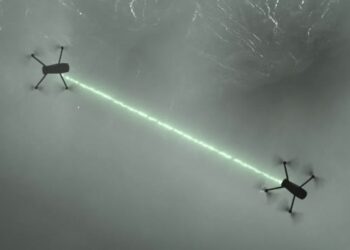
Students are grouped across disciplines and campuses—MIT engineering undergrads, Harvard Kennedy School grads, Sloan MBAs. Each team is matched with mentors from the military or law enforcement, including units like Delta Force, Massachusetts State Police, and U.S. Air Force Special Operations. Their goal this year: develop counter-drone systems using AI, edge sensors, and realistic manufacturing pathways.

The motivation is high. One team demoed a system that listens for the audio signature of drone motors—designed to only flag a threat when it hears the specific pitch of an electric UAV. Another team explored a countermeasure designed for autonomous watercraft. The common thread: mission-ready concepts, not speculative science.

This year’s project brief came with serious stakes. It asked students to address early detection and mitigation of autonomous threats—both aerial and maritime—without access to sensitive defence information or existing black-box platforms. The result? A wave of new ideas ready to scale.

“Nothing motivates MIT students like a real-world problem that matters,” said A.J. Perez, a lecturer in the School of Engineering and co-founder of the course. “At the core of this challenge is how to protect a person from an autonomous attack. That’s as real as it gets.”

Last year’s class proved this model works. One student project aimed at solving a Navy lithium-ion battery problem on submarines attracted $2 million in DoD funding and is now under development for U.S. Special Operations Command (USSOCOM). The program’s success has prompted discussion about extending it to a year-long format to support deeper tech transition.

What makes the course stand out isn’t just the tech. It’s the access. Congressman and Marine Corps General Jake Auchincloss visited the class to speak on strategic realignments in defence spending. Students pushed back, including one from Army Special Forces and another on the board of a Ukrainian drone company. It was, in every sense, a live-fire debate—on policy, hardware, and priorities.

The class is built on MIT’s long-standing defence ties. From radar in World War II to the establishment of MIT Lincoln Laboratory, the school has a legacy of integrating advanced research with national defence. This course builds on that tradition—directly, practically, and with a bias toward deployment.

More than 70 students enrolled this spring. The course doubled in size from its first year, with participants from 15 departments and three institutions. Many are veterans or current reservists. The rest are drawn by the complexity and relevance of the work.

“We realised there was a lot of interest in national security at MIT beyond the ROTC cadets,” Keselman said. “National security is obviously important to a lot of people, but it also offers super interesting problems you can’t find anywhere else. I think that attracted students from all over MIT.”

Tags: A.J. PerezJake AuchinclossMIT
Previous Post

Digest 25: Latitude59 in Estonia: Startups Defending NATO

Next Post

From Labs to Battlefields: The Drone Tech Shaping the Future of European Defence

John Biggs

John Biggs

John Biggs is an entrepreneur, consultant, writer, and maker. He spent fifteen years as an editor for Gizmodo, CrunchGear, and TechCrunch and has a deep background in hardware startups, 3D printing, and blockchain. His work has also appeared in Men’s Health, Wired, and the New York Times. He has written nine books including the best book on blogging, Bloggers Boot Camp, and a book about the most expensive timepiece ever made, Marie Antoinette’s Watch. He lives in Brooklyn, New York. He runs the Keep Going podcast, a podcast about failure. His goal is to share how even the most confident and successful people had to face adversity.

Related News

Announcing the Resilience Conference Warsaw Agenda

byLeslie Hitchcockand1 others
March 19, 2026

We are excited to announce the agenda for Resilience Conference Warsaw, 15 April 2026. This is the first conference of...

HyImpulse eyes first European launch from SaxaVord as UK space ambitions gather pace

HyImpulse eyes first European launch from SaxaVord as UK space ambitions gather pace

byCarly Page
March 19, 2026

German aerospace startup HyImpulse has signed a launch agreement with SaxaVord Spaceport in Scotland to carry out the next flight...

a view of a city from the top of a building

The UK is setting up meetings between Gulf states and defence tech startups

byIngrid Lunden
March 18, 2026

The last few weeks have seen the UK stepping up its direct military engagement in the Middle East to defend...

Sille Pettai steps down from CEO role at SmartCap

Sille Pettai steps down from CEO role at SmartCap

byFiona Alston
March 17, 2026

Big news in European defence tech investment. Sille Pettai, the CEO of SmartCap -- the Estonian state-owned investment fund --...

100 Startups to Watch in 2026

100 Startups to Watch in 2026

byLeslie Hitchcockand1 others
March 17, 2026

Defence has long been the domain of primes. The war in Ukraine has changed that by introducing the tech sector...

person on top of brown steel frame

How Ukraine is transforming its battlefield data into a world-first AI training hub

byThomas Macauley
March 16, 2026

After four years effectively as an all-in-one laboratory, training ground and live arena for technology to fight its own war,...

US and UK ballistic missile defence capabilities brought into focus as Iran lashes out against region

US and UK ballistic missile defence capabilities brought into focus as Iran lashes out against region

byTom Pashby
March 12, 2026

The ballistic missile defence capabilities of the US, UK and other allies have been put to the test as the...

Scout Ventures raises $125 million to expand investment in defence and dual-use tech

Scout Ventures raises $125 million to expand investment in defence and dual-use tech

byJohn Biggs
March 11, 2026

Scout Ventures has closed its fifth fund with $125 million in commitments, according to an announcement released March 10. The...

Load More
Next Post
From Labs to Battlefields: The Drone Tech Shaping the Future of European Defence

From Labs to Battlefields: The Drone Tech Shaping the Future of European Defence

Dispatches from Kyiv and Lviv: Ukraine’s European Integration by Other Means

Dispatches from Kyiv and Lviv: Ukraine’s European Integration by Other Means

Most viewed

InVeris announces fats Drone, an integrated, multi-party drone flight simulator

Uforce raises $50M at a $1B+ valuation to build defence tech for Ukraine

Auterion, the drone software startup, eyes raising $200M at a $1.2B+ valuation

Twentyfour Industries emerges from stealth with $11.8M for mass-produced drones

Senai exits stealth to help governments harness online video intelligence

Palantir and Ukraine’s Brave1 have built a new AI “Dataroom”

Resilience Media is an independent publication covering the future of defence, security, and resilience. Our reporting focuses on emerging technologies, strategic threats, and the growing role of startups and investors in the defence of democracy.

  • About
  • News
  • Resilence Conference
    • Resilience Conference Copenhagen 2026
    • Resilience Conference Warsaw 2026
    • Resilience Conference 2026
  • Guest Posts
  • Subscribe
  • Privacy Policy
  • Terms & Conditions

© 2026 Resilience Media

No Result
View All Result
  • About
  • News
  • Resilence Conference
    • Resilience Conference Copenhagen 2026
    • Resilience Conference Warsaw 2026
    • Resilience Conference 2026
  • Guest Posts
  • Subscribe
  • Privacy Policy
  • Terms & Conditions

© 2026 Resilience Media

This website uses cookies. By continuing to use this website you are giving consent to cookies being used. Visit our Privacy and Cookie Policy.