Friday 23 January, 2026
[email protected]
Resilience Media
  • About
  • News
  • Resilience Conference
  • Guest Posts
    • Author a Post
  • Subscribe
No Result
View All Result
  • About
  • News
  • Resilience Conference
  • Guest Posts
    • Author a Post
  • Subscribe
No Result
View All Result
Resilience Media
No Result
View All Result

MIT’s Security Systems Course Builds Real Tools—and Real Partnerships—for the Modern Battlefield

The military and academia are coming together in unexpected ways.

John BiggsbyJohn Biggs
May 30, 2025
in News
Share on Linkedin

A classroom in MIT’s Building 1 isn’t where you’d expect to find a Navy SEAL, a Marine Corps general, a Ukrainian drone executive, and an MIT undergrad debating how to counter Chinese military advances. But that’s exactly what happens in Course 15.362/6.9160—Engineering Innovation: Global Security Systems.

You Might Also Like

Inside Dronamics bid to become the unmanned logistics carrier for future conflicts

AI in cybersecurity remains a tool for understanding, not response

Space could become the next battlefield

This isn’t theory. This is defence prototyping in real time.

The course, now in its second year, pairs MIT students with active-duty military mentors to design mission-relevant technology. The objective: build functioning prototypes for real-world problems facing U.S. and allied forces. It’s hands-on, interdisciplinary, and built around urgency—traits that resonate with both engineers and operators.

“MIT has these incredibly fruitful relationships with the Department of Defense going back to World War II,” says Keselman. “We developed advanced radar systems that helped win the war and launched the military-industrial complex, including organisations like MIT Lincoln Laboratory and MITRE. It’s in our ethos, it’s in our culture, and this is another extension of that. This is another way for MIT to lead in tough tech and work on the world’s hardest problems. We couldn’t do this class in another university in this country.”

MIT featured Keselman and his class in the official MIT News.

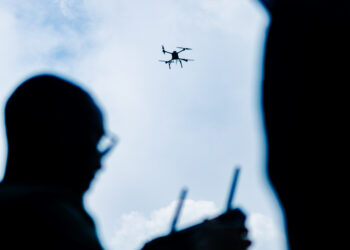
Students are grouped across disciplines and campuses—MIT engineering undergrads, Harvard Kennedy School grads, Sloan MBAs. Each team is matched with mentors from the military or law enforcement, including units like Delta Force, Massachusetts State Police, and U.S. Air Force Special Operations. Their goal this year: develop counter-drone systems using AI, edge sensors, and realistic manufacturing pathways.

The motivation is high. One team demoed a system that listens for the audio signature of drone motors—designed to only flag a threat when it hears the specific pitch of an electric UAV. Another team explored a countermeasure designed for autonomous watercraft. The common thread: mission-ready concepts, not speculative science.

This year’s project brief came with serious stakes. It asked students to address early detection and mitigation of autonomous threats—both aerial and maritime—without access to sensitive defence information or existing black-box platforms. The result? A wave of new ideas ready to scale.

“Nothing motivates MIT students like a real-world problem that matters,” said A.J. Perez, a lecturer in the School of Engineering and co-founder of the course. “At the core of this challenge is how to protect a person from an autonomous attack. That’s as real as it gets.”

Last year’s class proved this model works. One student project aimed at solving a Navy lithium-ion battery problem on submarines attracted $2 million in DoD funding and is now under development for U.S. Special Operations Command (USSOCOM). The program’s success has prompted discussion about extending it to a year-long format to support deeper tech transition.

What makes the course stand out isn’t just the tech. It’s the access. Congressman and Marine Corps General Jake Auchincloss visited the class to speak on strategic realignments in defence spending. Students pushed back, including one from Army Special Forces and another on the board of a Ukrainian drone company. It was, in every sense, a live-fire debate—on policy, hardware, and priorities.

The class is built on MIT’s long-standing defence ties. From radar in World War II to the establishment of MIT Lincoln Laboratory, the school has a legacy of integrating advanced research with national defence. This course builds on that tradition—directly, practically, and with a bias toward deployment.

More than 70 students enrolled this spring. The course doubled in size from its first year, with participants from 15 departments and three institutions. Many are veterans or current reservists. The rest are drawn by the complexity and relevance of the work.

“We realised there was a lot of interest in national security at MIT beyond the ROTC cadets,” Keselman said. “National security is obviously important to a lot of people, but it also offers super interesting problems you can’t find anywhere else. I think that attracted students from all over MIT.”


Tags: A.J. PerezJake AuchinclossMIT
Previous Post

Digest 25: Latitude59 in Estonia: Startups Defending NATO

Next Post

From Labs to Battlefields: The Drone Tech Shaping the Future of European Defence

John Biggs

John Biggs

John Biggs is an entrepreneur, consultant, writer, and maker. He spent fifteen years as an editor for Gizmodo, CrunchGear, and TechCrunch and has a deep background in hardware startups, 3D printing, and blockchain. His work has also appeared in Men’s Health, Wired, and the New York Times. He has written nine books including the best book on blogging, Bloggers Boot Camp, and a book about the most expensive timepiece ever made, Marie Antoinette’s Watch. He lives in Brooklyn, New York. He runs the Keep Going podcast, a podcast about failure. His goal is to share how even the most confident and successful people had to face adversity.

Related News

Inside Dronamics bid to become the unmanned logistics carrier for future conflicts

Inside Dronamics bid to become the unmanned logistics carrier for future conflicts

byJohn Biggs
January 22, 2026

https://youtu.be/aYt1Av6ojwQ Dronamics started as a cargo drone company, and it is now betting that the same airframe can do much...

Laptop screen showing a search bar.

AI in cybersecurity remains a tool for understanding, not response

byCarly Page
January 22, 2026

Despite industry hype around autonomous defence, new research shows security teams spent 2025 using AI mainly to explain and contextualise...

view of Earth and satellite

Space could become the next battlefield

byPaddy Stephens
January 21, 2026

Future great power conflict is unlikely to be limited to the land, seas and skies. Great powers also rely on...

Rheinmetall and Auterion Announce New NATO-Wide Military Hardware-Software Partnership

Auterion conducts live fire swarm drone strike test

byJohn Biggs
January 20, 2026

Munich- and Virginia-based Auterion says it has completed what it describes as a first for the small drone space in...

blue and yellow striped country flag

Palantir and Ukraine’s Brave1 have built a new AI “Dataroom”

byIngrid Lunden
January 20, 2026

Palantir, the US data analytics giant, has been a regular presence in Ukraine helping with its defence against Russia since...

us a flag on pole near snow covered mountain

Dominion Dynamics raises $15M to build a new arctic defence prime in Canada

byIngrid Lunden
January 19, 2026

The US has become a somewhat unpredictable neighbour to Canada, with President Trump’s threats of annexation and spiking tariffs looming...

Twentyfour Industries emerges from stealth with $11.8M for mass-produced drones

Twentyfour Industries emerges from stealth with $11.8M for mass-produced drones

byIngrid Lunden
January 19, 2026

Make way for another drone startup in the European defence tech ecosystem. Twentyfour Industries is today emerging from stealth armed...

Power outages and small checks: The perils of being a VC in Kyiv

Power outages and small checks: The perils of being a VC in Kyiv

byJohn Biggs
January 16, 2026

When I called Sasha Yatsenko, the power had just cut out. No sirens, no warning, just a few minutes of...

Load More
Next Post
From Labs to Battlefields: The Drone Tech Shaping the Future of European Defence

From Labs to Battlefields: The Drone Tech Shaping the Future of European Defence

Dispatches from Kyiv and Lviv: Ukraine’s European Integration by Other Means

Dispatches from Kyiv and Lviv: Ukraine’s European Integration by Other Means

Most viewed

InVeris announces fats Drone, an integrated, multi-party drone flight simulator

Harmattan AI raises $200M at a $1.4B valuation from Dassault

Twentyfour Industries emerges from stealth with $11.8M for mass-produced drones

Hydrosat raises $60M for its thermal satellite imaging tech

Palantir and Ukraine’s Brave1 have built a new AI “Dataroom”

Defense Unicorns lives up to its name: $136M round lifts valuation past $1B

Resilience Media is an independent publication covering the future of defence, security, and resilience. Our reporting focuses on emerging technologies, strategic threats, and the growing role of startups and investors in the defence of democracy.

  • About
  • News
  • Resilence Conference
  • Guest Posts
  • Subscribe
  • Privacy Policy
  • Terms & Conditions

© 2026 Resilience Media

No Result
View All Result
  • About
  • News
  • Resilence Conference
  • Guest Posts
  • Subscribe
  • Privacy Policy
  • Terms & Conditions

© 2026 Resilience Media

This website uses cookies. By continuing to use this website you are giving consent to cookies being used. Visit our Privacy and Cookie Policy.