Good afternoon from the team at Resilience Media
This week we have dedicated our coverage to Latitude59, Estonia’s tech conference. The main takeaways from our week in Tallinn? Defence needs to speed up procurement and smarten its investments, there should be less taboo around investing in pure defence startups, and better relations between the military and startups are critical to ensure founders are building genuinely useful technology. Read the full Dispatch from Latitude59 below.
In case you missed these pieces on Resilience Media last week, take a look:
- Lessons Lost Can’t be Learned: Ukraine’s Drone Warfare Ecosystem
- Kinnami: Resilient Data Infrastructure at the Edge
- Nicholas Nelson on His New Fund and Why Europe Needs Defence-First Startups, Not Dual-Use Hype
Don’t forget that applications close for Launch @ Resilience Conference on June 7. Apply here.
-Leslie, Co-founder, Resilience Media


Tallinn, the capital of Estonia, is 130 miles from the Russian border. The country is on edge, and the tech sector has played a big role in defence, both in creating new technologies and deploying investment capital.
Latitude59 started the same week as the Estonian Defence Force wrapped up Exercise Hedgehog which saw 16,000 troops from 14 nations take part in a major military exercise. It was also just days after Estonia tested its emergency siren and text alert system. Last week also saw the mayors of Tallinn, Riga and Vilnius form a new network to coordinate civil defence and emergency preparedness, including coordinated shelters, evacuation planning, and ensuring the continuous availability of essential services.
So, it is no surprise that defence was a dominant topic at Latitude59, Estonia’s flagship tech conference. The conference ran over 3 days, with 3,500 participants, and 14+ panels and side events focussed on defence.
-Fiona Alston, Resilience Media
Nicholas Nelson, co-founder of a new defence fund, Archangel, opened the conference with a keynote, telling the audience, “the time for being defence-curious or dual-use washing is over. Europe needs private capital to get off the sidelines and back defence-first companies.”
In a private briefing, the Estonian Minister of Defence, Hanno Pevkur, said “we will invest 5.4% in defence next year. We want to be a bee that can terrorise an elephant.” He also pointed out that the difference in fly-time between Estonia and Portugal for a Russian missile is just 8 minutes – this is a problem for the whole of Europe, not just the Eastern Flank.

A demo day held by the NATO DIANA Estonian Accelerator and Defence Estonia kicked off the defence tech meetings as founders pitched their products to investors, key players and media in North Tallinn. The demo day was attended by industry key players, media and 30 members of the NATO DIANA Board of Directors from across the alliance.
The Estonian NATO DIANA programme is run by Tehnopol Startup Incubator in cooperation with Sparkup Tartu Science Park. There are seven international dual use startups in the latest cohort.
Speaking at the event, Kadri Tammai, Regional Director of NATO DIANA said, “Today, we have money, readiness, and opportunities in the market, but there are still too few companies focused on defence. To rapidly strengthen our defence capabilities, we must not underestimate the significance of new innovative technologies alongside the traditional defence industry.”
On the conference panel titled, National Security v Innovation: Striking the Balance, speakers Dennis Gyllensporre, Board Chair of NATO DIANA; Raul Rikk, Development Director, Milrem Robotics; and Ivo Peets, Senior Planning Officer at the Estonian Defence Forces, emphasised the importance of innovative military systems and the need for shorter life cycles to adapt to changing technologies. They concluded that we need to become more realistic about what ‘military grade’ means. We are no longer looking for everything to last 30 years, and instead need it to work now and be able to adapt to rapid innovation cycles.

Investment Analyst from Ukraine’s Brave1, Kateryna Chaikivska, explained that in Ukraine, military units have budgets to buy what they need at that exact time, which has decentralised procurement. The downside is that units buy what they know, through word of mouth. To combat this, Brave1 announced the launch of a new marketplace a month ago, an ‘Amazon for DefenceTech’ with 1,100 products.
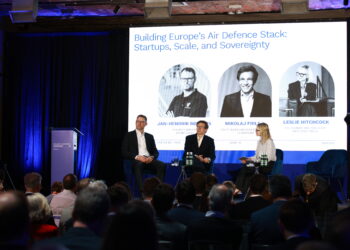
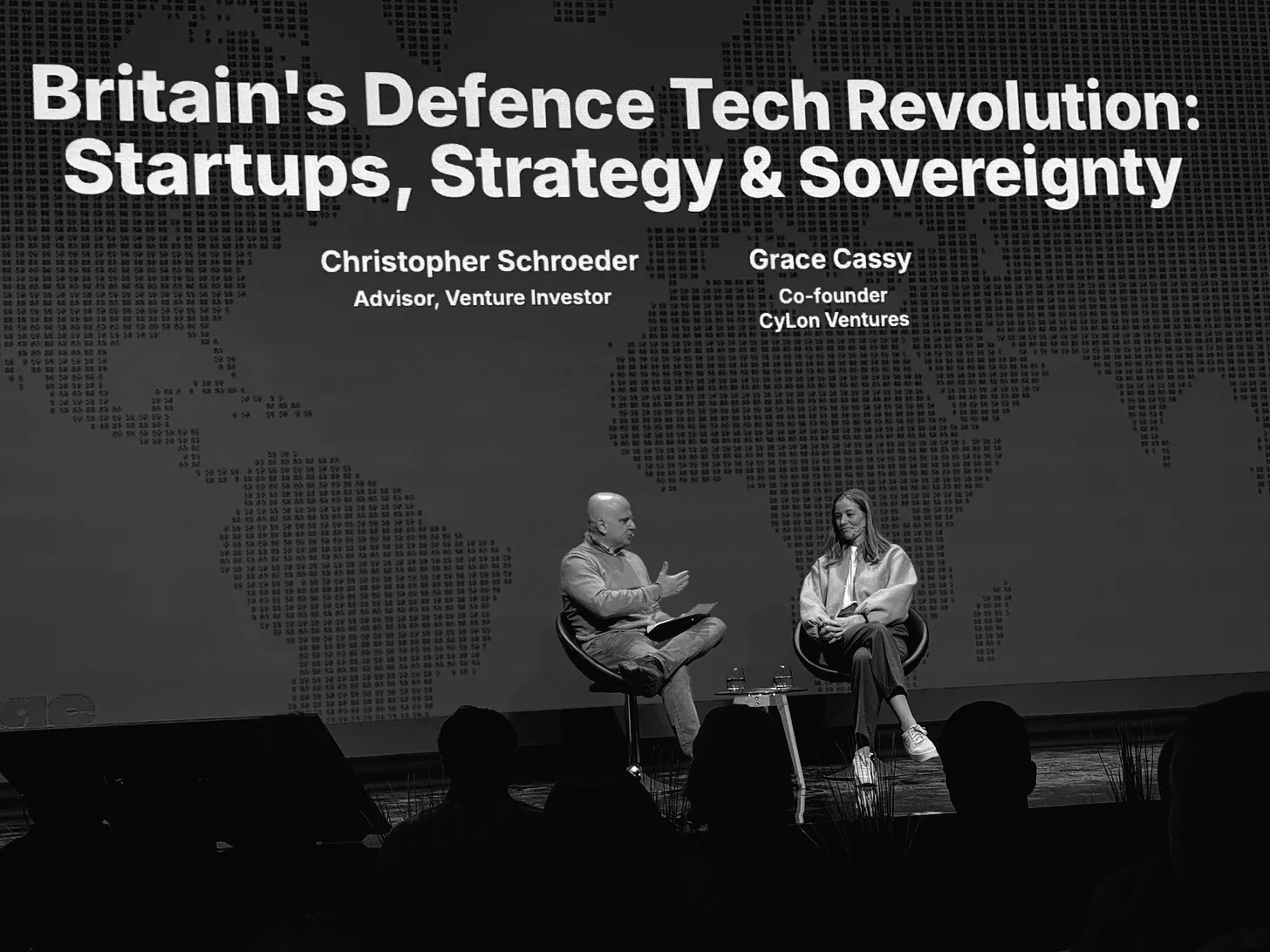
Grace Cassy took to Latitude’s main stage for a fireside discussion. She is an experienced cyber investor and government advisor who has been working on the Strategic Defence Review in the UK. She shared some insights into this work, in particular that procurement will have to speed up considerably, with the average time for major projects like ships and planes coming down from over seven years to nearer two years, and cutting-edge technology upgrades should take a few months. She wants to see political leadership to ‘force it into our system’ that they move this fast.
She also aired her concern that there’s a window in regards to capital, with huge enthusiasm from VCs for the defence tech space, but if they do not see startups getting meaningful contracts with military customers within about two years, they will give up on the sector and move on to the next opportunity.
Cassy said “I think VC’s have got a pretty short attention span and we need to show that you can do good business in this area in a short time.” She ended her panel telling the audience, “Don’t give up on defence. There are good people inside these defence forces who desperately want to work with you as well as your founders. You have to make a choice about where you build. Every single NATO member state wants you to come and build in their country…they want to build their industrial complex to a more diverse and deeper rooted situation… I would encourage you to go where you see real evidence that contracts are being let.”
On the main defence tech panel at the conference, founder of Estonian missile startup, Frankenburg Technologies, Kusti Salm observed that “we’re in a worse place than 2021 because what we’ve given Ukraine hasn’t been replaced,” he went on to add that “all the gaps in capability are single use, not dual-use.”
Later, on another panel, Salm claimed that there were ‘two grandiose’ lies that people believed about defence, “first is that the future of warfare is AI and the second one is that future wars will be autonomous.” His work with Frankenburg underlines his belief that kinetic weapons will remain a core part of warfare.
A side event on Ukrainian Defence Tech brought together Ragnar Sass, a leader in the Estonian and Ukrainian defence tech sector, and Kateryna Chaikivska from Brave1, along with Tichomir Jenkut, an investor at Presto Ventures, and moderator Serhii Kupriienko, founder and CEO of Swarmer. Key takeaways included some great insights:
“Pacifism is a privilege we don’t have”
“In Ukraine innovation is driven by the metric of survival”
“In Ukrainian defence tech, we have data by the next morning – this drives the incredibly fast innovation cycles.”
Chaikivska explained that “Ukraine takes a proactive approach to legislation. R&D is slowed down abroad by legislation. In Ukraine, if the law slows down prototyping we change the law.”
Kupriienko added that, “feedback is immediate in Ukraine. If your tech won’t work you find this out right away.”
Ragnar Sass talked about the way DarkStar supports startups, saying, “my Signal is on 24/7, I want to help these founders work for the next 10 years on defence.” He added that based on Ukraine, “every military unit should have a head of innovation and a CTO.”
The defence talks at Latitude wrapped up with a defence tech funding debate exploring the long-term benefits of defence investments and the need for smart investment. Margus Uudam, Partner at Karma Ventures and previous Deputy Secretary General of the Ministry of Finance in Estonia, warned of the hype cycle in defence tech saying investors need to get smarter in this area, “quite often not so competent investors become competent in the vertical where the money is – but at the same time, a lot of money is lost because of incompetent decisions.”
Lithuania’s Luna Robotics, were one of three winners in the startup pitch competition, with their advanced night vision technology. They took home investment led by LitBAN, with contributions up to €250,000.