Good afternoon from Resilience Media.
Ukraine celebrated its Independence Day this week, and rolled out quite a lot of announcements showing the strength of its defence technology as well as its relationships with key Allies.
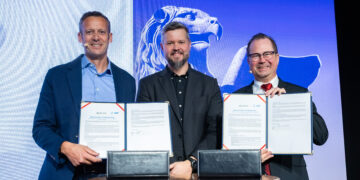
Most notably, the British and Ukrainian governments entered an agreement where the UK will train its AI systems on Ukraine’s Avengers AI Labs database. This is the type of announcement we love to see: traditional militaries benefitting from expertise Ukrainian has forged in war. Managing Editor Ingrid Lunden reports that the deal, signed by Prime Minister Andy Burnham and President Volodymyr Zelenskyy, signifies two important things:
The first is that Ukraine continues to be a very valuable centre for nations and enterprises that want to build defence technology, and specifically to train the AI models that will be powering much of this tech. (Even as we are increasingly seeing chilling evidence of how battlefield AI is evolving and being used in ever-more autonomous applications.)
The second is that the new UK government that took over July intends to continue working closely with the war-torn country as the threat from Russia continues to be felt throughout Europe.
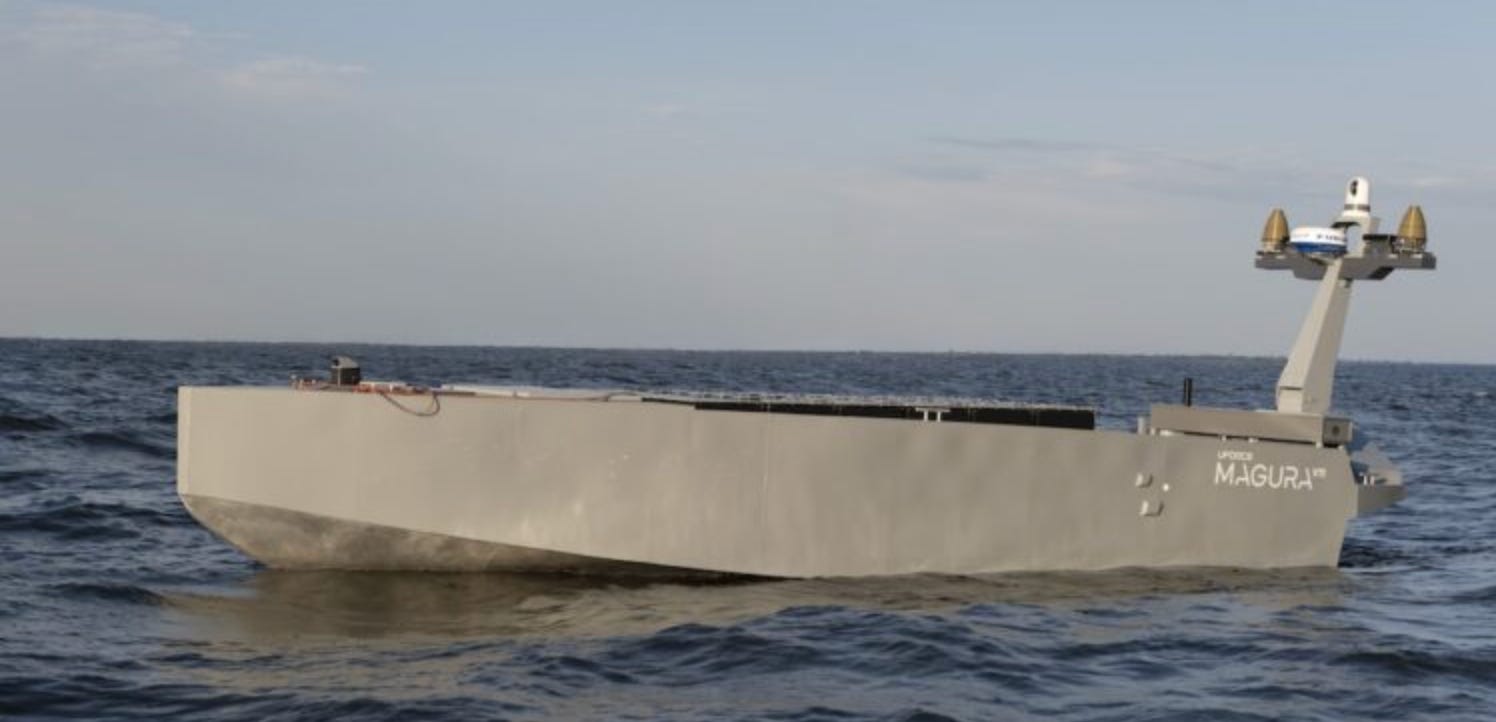
In more British-Ukrainian news, the London-based, Ukrainian-founded UFORCE unveiled its new MV11 in an uncrewed systems parade down the Dnipro River. Designed to serve as a logistics carrier, the large ocean-going boat can remain at sea for 7 days and has a payload of 2,200 kg.
And in other USV news, Stark released its first ocean-going product making it a multi-platform neoprime. Their Seeataub is a six-metre crewless boat, designed to conduct maritime reconnaissance while acting as a mobile sensor platform for the German Armed Forces’ Cyber and Information Domain Service.
We have set aside a limited number of complimentary tickets for Ukrainians working across defence, national security, technology, government, the military, investment, and resilience to join us in London on 5-6 October.
Ukraine has been central to Resilience Conference since its launch in 2024, and Ukrainian experience and innovation continue to shape how allied countries understand modern warfare. We want to ensure those voices are represented in the room. Places are limited and available through a short application process.
DEALS: Continuing the maritime theme, in the UK, Plymouth-based Oshen raised $5M to produce autonomous ocean robots to service defence and weather-related customers. Read more in our Deals section below.
GUEST POST: Last week, Meta founder Mark Zuckerberg released his AI manifesto, which advocates for the open distribution of AI platform, rather than concentrating the work in labs, research institutions, and government departments. Siliconroundabout founder Francesco Perticarari writes that what Zuckerberg describes is the playbook China employs — and that Europe should buy in. Read an excerpt in our Guest Post section below.
PEOPLE: Following the resignation of Sille Pettai in late June, SmartCap — the Estonian strategic investment fund — named Patrik Louko as its new CEO. The timing of the announcement comes as SmartCap has received scrutiny for how it manages its government money. Read more from our Baltic Reporter, Fiona Alston, here.
Elsewhere on Resilience Media:
- UK-based Tiberius begins formal testing of its Invictus missile
- Smaller satellites are getting sharper eyes
- [VIDEO] Arkenstone talks about the most boring parts of military manufacturing
- Inside Resilience Conference: Where Defence Tech Meets the Press
I’ll be back in your inboxes next week. Thanks for reading.
-Leslie Hitchcock, co-founder and Publisher, Resilience Media

DEALS 💰
Oshen raises $5M to scale autonomous ocean robots for defence missions
- Plymouth (UK)-based robotics company Oshen has raised $5 million to ramp up production of its autonomous ocean robots as demand grows from defence and weather agencies.
- The round was led by Lunar Ventures, with backing from AlbionVC, Twin Track and Concept Ventures.
- Oshen said the money will fund manufacturing expansion and build capabilities in passive acoustics, subsea infrastructure protection, and anti-submarine warfare.
- Its C-Stars are small wind- and solar-powered vessels designed to spend months at sea while collecting sensor data and sending it back via satellite.
- At around 1.2 metres long, they can be deployed by a single person and used in groups to cover large stretches of ocean.
GUEST POST ✍️

Zuckerberg just pitched China’s AI playbook to the West. Europe should buy it.
Francesco Perticarari, Guest Author
On 10 August, Mark Zuckerberg spent about 6,500 words arguing that the artificial intelligence field should be broadly distributed rather than concentrated in a handful of labs, government departments, or institutions.
He shipped an open-weight model alongside it and asked the US government to speed up energy and infrastructure buildout, and to stop treating model distillation as a sin. Philosophically, he talks about “superintelligence,” yet he doesn’t predict the field heading towards a single runaway system.
Instead, he points to, and advocates for, the diffusion – “distribute it widely” appears more than once in the essay – of smart, generative computing capabilities. This is a stark contrast to the direction advocated by leading frontier labs such as OpenAI and Anthropic, and may well lead to their commoditisation (not something Zuck would be quick to admit).
A future of commoditised smartness instead of a single AGI
Let me be clear about the obvious: Zuck is not doing this out of kindness. Meta has never held the frontier crown, but it does own distribution, so “cheap, open, everywhere” is simply the strategy under which Meta wins. However, while self-interest is often a feature of manifestos, it is not necessarily a disqualification.
Read past the messenger and the argument holds. In fact, it has been holding for six months, in the only dataset that doesn’t measure abstract “intelligence” benchmarks but rather what developers actually run: OpenRouter.
There, US models from Google, OpenAI and Anthropic held around 70% of token share in June 2025. Twelve months later they were near 30%, and Chinese open-weight providers now process roughly three times the weekly tokens of their American counterparts. Vercel’s enterprise gateway says the same: open weights took 29% of tokens routed in June 2026, against under 4% of spend. A third of the work, a twenty-fifth of the money.

Let’s rewind to see how we got here. The over-inflated Silicon Valley belief that software would be eating the world started cracking at the start of the decade and peaked around 2022. Growth slowed, valuations fell, people realised productivity was actually stagnating.
Then OpenAI released LLMs to the public with ChatGPT and everyone remembered opening an internet browser in the 1990s, once again feeling that technology was a powerful, limitless magic. Machine Learning officially became AI for everyone, and this time technology wasn’t just going to eat the world, it was going all the way to save it or, maybe, to take it over.