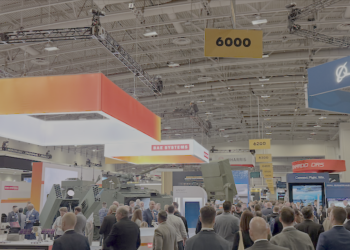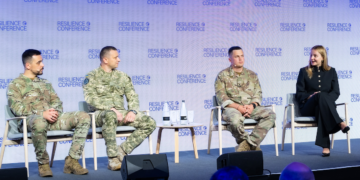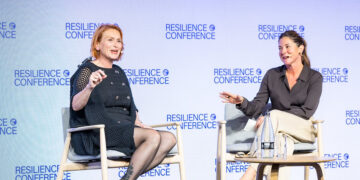
This week, representatives of the Nordic defence tech sector and beyond gathered in Copenhagen, at the TechBBQ conference, to discuss investment, procurement and market consolidation.
Resilience Media was on the ground for day one to listen in and meet people shaping the market, including at some of the satellite events that honed in on defence specifically, such as one organised by the Organisation for Defence Innovation in the New Nordics (known as ODIN), which provided a full programme of resilience and defence tech, covering B2B, capital management, procurement, supply chains, dual-use and Nordic defence cooperation.
And if defence still meets with closed doors in some parts of the tech world, that wasn’t in evidence at TechBBQ, where even HRH Prince Joachim showed up to say that “the technology we develop must help make our societies safer, better and more secure.”
Prime cooperation
There was much discussion about how startups and primes should be working together. In an early panel, Nicholas MacGowan von Holstein, managing director of BiFrost Defence, suggested that a startup should become “a very good integrator” and they should look to “fill the capability gap” of the primes.
Manuel Kliese, VP of business development at Rheinmetall, was on a later panel discussing when primes — Rheinmetall in particular — should be approached: it’s not until you have something to show them. “Rheinmetall’s minimum threshold is a working demo,” he said. “Field testing, especially in Ukraine, is a strong validation where feasible.”
Viktoria Yaremchuk, CEO and co-founder of Farsight Vision, requested that primes help build stronger sovereign infrastructure capabilities in Europe in areas such as satellites, data centres, data processing, and data protection: their size gives them a unique advantage in helping to support the ecosystem in that way.
One attendee, who asked to remain anonymous, noted to Resilience Media that while the discussions on stage were good, what generally lacks at defence events like these is government representation in the room. That is a recurring theme at many defence conferences, he added.
Stop the spray and pray
Tobias Billström, head of strategy and governmental affairs at Nordic Air Defence, was critical about cooperation between different suppliers and ultimately buyers. The industry has “the inability sometimes to… get things together,” he said. Not only could people learn more from Ukraine, but we should be looking more closely at how things have unfolded in Persian Gulf.
“There are some really important lessons coming out from that particular theatre, especially when it comes to protection of critical infrastructure, with the Iranians sending drones to disrupt the oil and gas refineries in the Emirates and Saudi Arabia as well,” he said.
The idea of dual-use was given a refreshing take from Blythe Crawford CBE, director of GRAIL at Tiberius Aerospace. The civil sector and the defence sector are underpinned by the same things, he said: energy, data, and comms.
“I’ve moved away from the term dual use, and I now look at horizontally scalable technologies because they are portable across multiple sectors,” he said.
The conversation was wrapped up with a warning that we need to get smarter with our VC funding. Investors should not take a “spray and pray” approach.
“We give enormous amounts of money to basically anyone who is even close to innovation or tech or something,” said Billström, suggesting that often, “money ends up in a large proportion into the middlemen, guys who don’t build things.”
Nordic defence strengthens with new collaboration
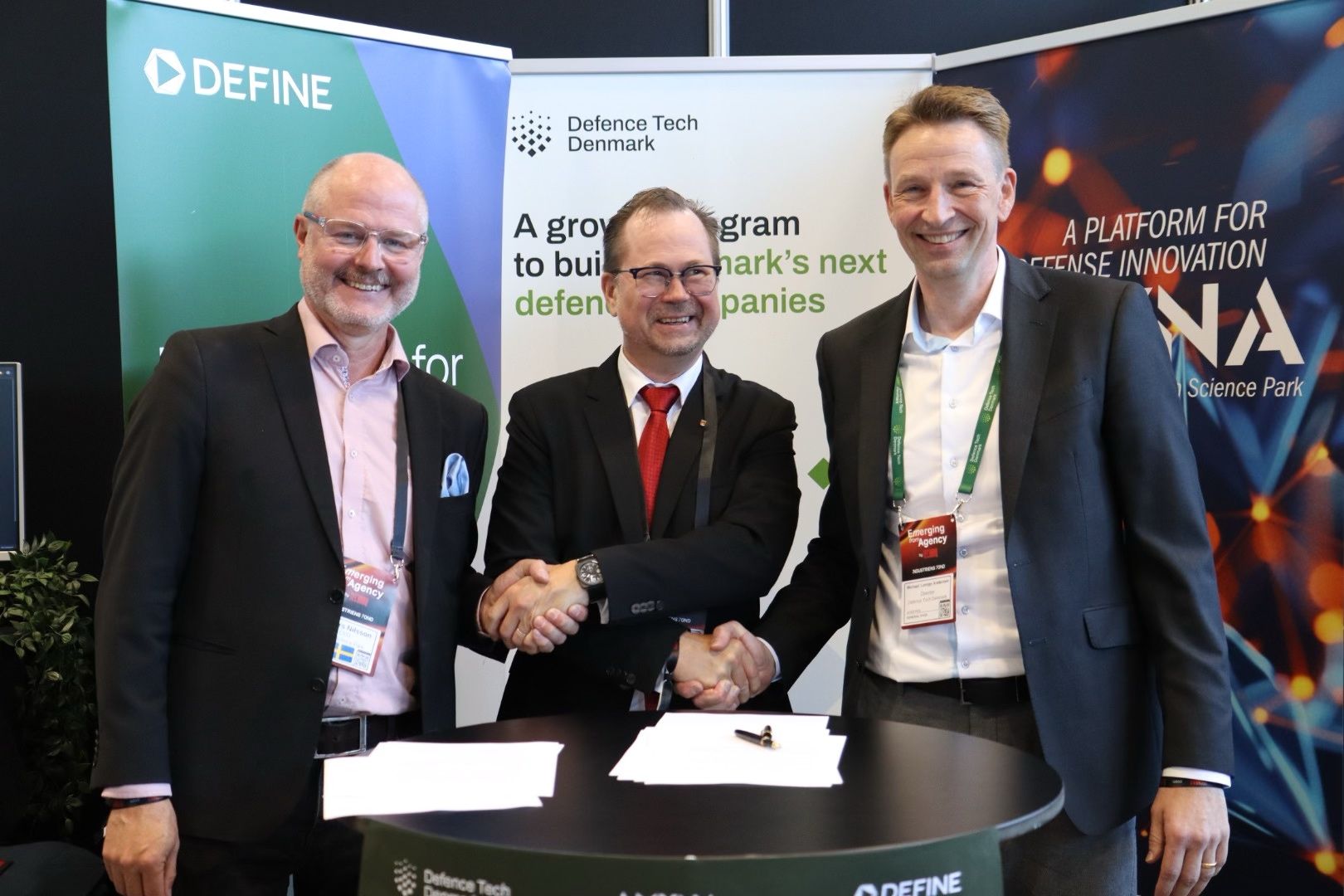
Ccalls for more cooperation are not being ignored. During the event, entities from Denmark, Finland and Sweden signed a memorandum of understanding to strengthen defence ties in the Nordics. The Nordic Defence Innovation MoU was signed by Defence Tech Denmark, DEFINE (Finland), and AMYNA (Sweden).
By joining forces, the trio hope to create better opportunities for startups and SMEs, accelerate innovation, strengthen their respective defence industries, and build a more resilient Nordic ecosystem.
To be clear, there have already been a number of cross-border efforts to lay out and nurture defence clusters and collaborations. Finland hosts the NATO Innovation Range; Denmark has built an Ukraine-focused commercial model; and Sweden, Lithuania and ODIN already had an established partnership. This is an even bigger picture effort.
“We are developing a truly connected New Nordics defence ecosystem further,” DEFINE’s Teemu Seppälä told Resilience Media.
There are around 70 defence tech companies in the collected portfolio, and the programme is aimed at increasing collaboration between them and with the Nordic defence forces, “creating a smoother and more integrated Nordic defence home market for the benefit of both industry and defence forces,” Michael Lentge Andersen, director of Defence Tech Denmark, told Resilience Media. “Collectively, the collaboration represents one of the most ambitious and widespread acceleration initiatives of the Nordic countries within the defence sector.”