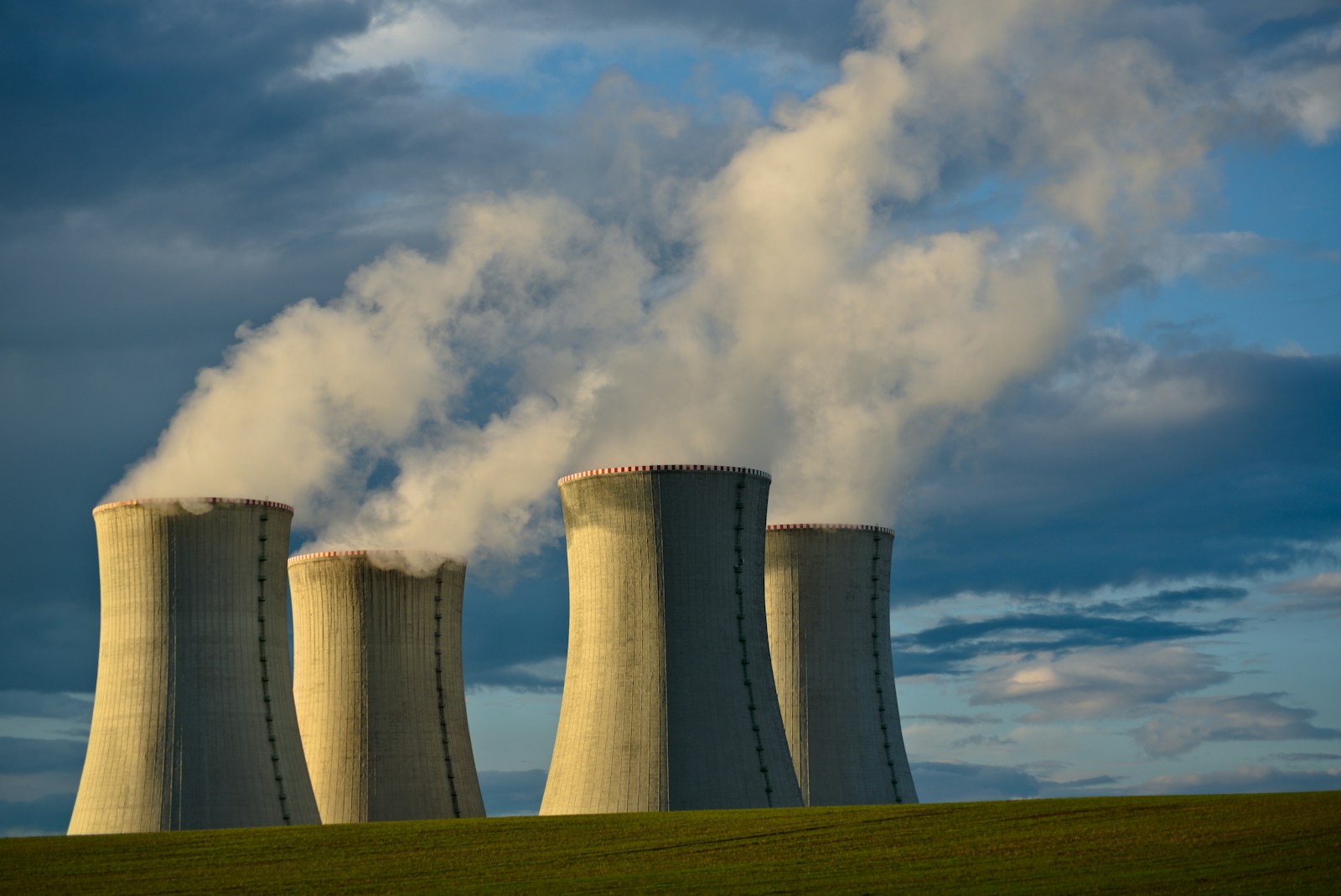
The threat of radiation incidents has shot up the agenda in recent years, in particular due to Russia’s use of nuclear blackmail – and more recent physical threats like the hypersonic missiles fired in January – in Ukraine.
Nuclear blackmail covers the threat – implied or otherwise – of exposing a population to dangerous levels of radiation either through the use of nuclear weapons or through the malicious release of nuclear materials to the environment from defence or civilian sources, such as dirty bombs and nuclear power plants.
Russia’s deliberate targeting of the Zaphorizia Nuclear Power Plant (ZNPP), its attacks against the Chernobyl nuclear sarcophagus, and heightened readiness of its nuclear forces, means governments have had to wake up to the risk of their citizens being exposed to dangerous levels of radiation.
Start-up says its tech would protect people from radiation
In response to the threat of radiation exposure faced by people in Ukraine and beyond, Luxembourg-based start-up USIL Therapeutics says it is developing ‘radioprotective technology.’ It claims to have spent €10 million so far on research and development, and that it is in discussions with Ukrainian authorities around how to implement it. (We have reached out to the company to ask about who finances it and how much it has raised.)
“Our technology protects the body from the cascade of damage that follows high-dose ionising radiation,” Valentin Wiedling, chief development officer and co-founder of USIL Therapeutics, told Resilience Media.
“Radiation causes massive oxidative stress, destroys fast-renewing tissues, and can push the body into multi-organ failure, cellular dehydration, and death by septicemia (blood poisoning).”
Wiedling points to the death of Alexander Litvinenko as a high profile example of the consequences of Acute Radiation Syndrome (ARS).
USIL Therapeutics’ product is intended to protect against this.
“We developed a small molecule that preserves cell integrity, stabilizes critical organs, and supports recovery. It works both before and after exposure,” Wiedling said.
He described the field version as an intramuscular auto-injector, similar in usability to an EpiPen. The hospital version meanwhile is an intravenous infusion for extended care. Both products use the same active ingredient and represent the same medical countermeasure, formulated at different concentrations for different operational settings.
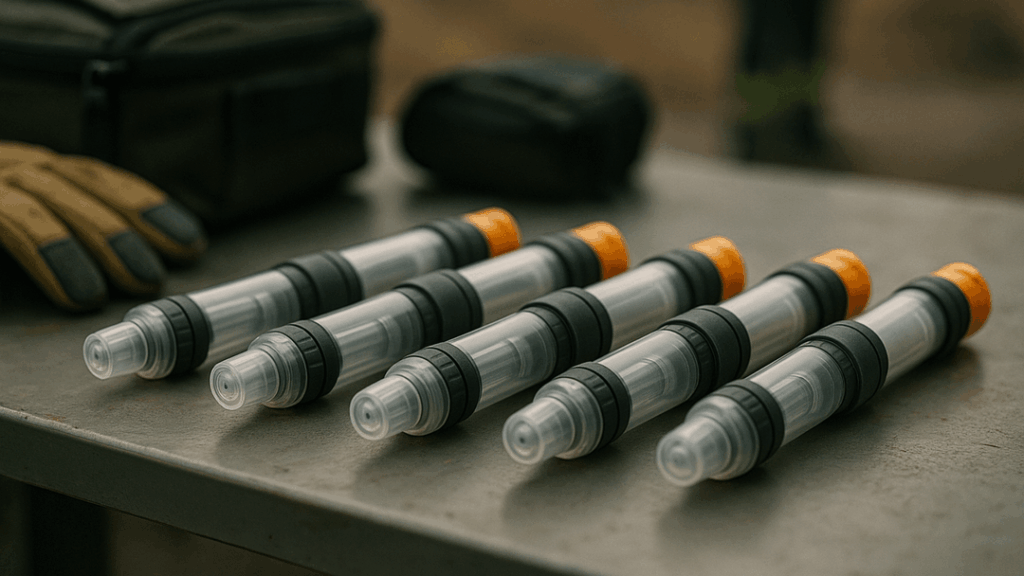 The intramuscular product is sold as UT-241, while the intravenous product is called UT-242. Wiedling said that USIL is not disclosing cost estimates or production volumes because they are “part of ongoing discussions with governments and procurement authorities.”
However, Wiedling added that UT-241 and UT-242 are both “designed to be affordable at national stockpile scale.”
Dr Samantha Terry, a reader in radiobiology at King’s College London, reviewed USIL Therapeutics’ promotional materials for Resilience Media to provide her assessment of the products.
Terry said USIL Therapeutics’ “products appear to be anti-oxidative and lead to less reactive oxygen or nitrogen species being produced by low linear energy transfer radiation.”
“This would theoretically help biological and health impacts from radiation exposure, but perhaps only to those types of radiation that have a low ionising density; alpha emitters, such as used in Litvinenko’s case for example, cause toxicity mainly through other mechanisms than reactive oxygen or nitrogen species and so this product may not be as effective.”
Ukraine ‘very clear real-world use case’ but not sole market for products
While the threat of radiological incidents has been dramatically elevated by Russia’s invasion of Ukraine, USIL Therapeutics sees markets for its products right across the globe.
“Ukraine is a very clear real-world use case because it operates under radiological threat on a daily basis,” Wiedling said.
That is due to the war-torn country having a multitude of sensitive areas, including an occupied nuclear power plant in Zaporizhzhia, the Chernobyl area, and a variety of critical infrastructure (which itself is seeing ongoing strikes). “Ukraine is therefore a top priority for us,” he said. “However, the market is not Ukraine-specific.”
There are potentially nine states with nuclear weapons: the US, UK, Russia, China, France, India, Pakistan, North Korea and possibly Israel, although Israel maintains strategic ambiguity around its nuclear weapons. Another 31 countries have civil nuclear power programmes. Put this together and the need for tools to protect populations is big.
“Radiological resilience is a global capability gap,” Wiedling continued. “NATO allies, the EU, North America (including Canada), the Middle East, and Japan all face their own risks.”
Japan has extensive real-world experience with radiation injuries due to Fukushima and incidents stretching back to the Second World War. In other words, “even if the current war [in Ukraine] were to end tomorrow, the underlying risk would not disappear,” he noted.
“Nuclear power plants remain active, small modular reactors are being developed, climate change increases infrastructure instability, and radiological terrorism remains a persistent threat. This is a long-term capability nations need regardless of the news cycle.”
Meeting need for radiation protection not provided by iodine
Currently, iodine pills are the main pharmaceutical response that public authorities call upon if a radiological incident happens. But according to Wiedling the pills do not address ARS.
In response to the risk of a civil nuclear incident happening in the UK, the UK Government website says that “taking stable iodine tablets at the right time blocks the absorption of radioactive iodine by the thyroid gland and speeds up the body’s ability to remove radioactive iodine.”
However, it adds that “stable iodine does not protect against health effects from other sources of radiation.”
Wiedling told Resilience Media: “Contrary to common belief, iodine has nothing to do with treating radiation sickness. It merely protects the thyroid from one very specific radionuclide – radioactive iodine – and only when taken before exposure.”
“It does not protect any other organs, and it does not treat Acute Radiation Syndrome. When asked whether iodine pills are sufficient, I usually explain it this way: iodine may protect your thyroid but it offers no protection to the rest of your body, and you can still develop ARS, which can be fatal. It is therefore a very narrow – almost symbolic – measure, rather than a true medical countermeasure.”
He explained that USIL Therapeutics is developing “whole-body protection” against radiation, and says the company’s product “addresses the actual biological damage caused by ionizing radiation across multiple organs, and it works both before and after exposure.”
“At present, there is no approved treatment anywhere in the world that can manage ARS in this way,” he said. “This is the reason why governments are now prioritizing this capability.”
Aiming to launch products in 2029 after regulatory approvals
USIL Therapeutics is aiming to bring its products to the market by 2029 after regulatory hurdles have been overcome.
“Human safety studies are completed, which is the first major milestone regulators require,” Wiedling said.
“Authorities must first establish that a new drug can be administered safely. In our case, this is particularly important because the product can be used prophylactically,” he said. There may be situations where someone receives the injection but is ultimately not exposed to radiation. “The full regulatory toxicology package is also completed and has been reviewed by the FDA.”
He said that the company is “now moving into the final non-clinical efficacy studies required for approval under the FDA’s Animal Rule and the equivalent EU pathway. We have also developed the manufacturing process and capability for UT-242.”
He was confident about the timeline for launching the products, and said: “Our objective is to file for approval in 2027 and launch in 2029, subject to final regulatory alignment.
“This timeline is realistic because ARS countermeasures follow a predefined pathway: efficacy is demonstrated in validated animal models, while only safety and pharmacokinetics (how the drug interacts with the body over time) are required in humans.”
Given that Ukraine is not part of the EU, a separate regulatory approval pathway would need to be completed to deploy the drugs in that country.
“Ukraine has emergency procurement and authorization pathways for medical countermeasures,” Wiedling said. “We are currently in discussions with the Ukrainian authorities to define the appropriate authorization path for our product.”
Reflecting on USIL Therapeutics’ claims around drug trials, Terry said: “The work relied on so far is all cell-based and as I gather, human safety trials have been carried out.
“My concern would lie in the fact that there is no evidence that this works in animals or humans and so it is unclear whether it will actually be effective” against radiation exposure.
However, she added that “radiation protection solutions are always a good idea, and these products are a step in the right direction,” and said that the drug may “only work for low linear energy transfer types of radiation.”
Despite her concerns, she said her opinion of USIL Therapeutics products is “supportive” but warned that “the products won’t protect against every type of radiation exposure.”
Other radio-protective products already under development
USIL is not the only organisation looking at how to counteract the effects of radioactivity in populations. The US Government’s Administration for Strategic Preparedness & Response (ASPR) said in its 2023-2027 PHEMCE (Public Health Emergency Medical Countermeasures Enterprise) Budget that it would develop an ARS countermeasure starting in the 2025 financial year.
Its Center for the Strategic National Stockpile (SNS) would “support the development and transition of 13 MCM candidates from BARDA’s (Center for the Biomedical Advanced Research and Development Authority) Project BioShield to stockpiling by the SNS by FY 2027.”
ASPR added that increased funding needs from 2025 were driven in part by “a therapeutic in the radiation/nuclear portfolio”.
In addition, the US Department of Health and Human Sciences’s National Institutes of Health (NIH) and National Institute of Allergy and Infectious Diseases (NIAID) have a Radiation and Nuclear Countermeasures Program (RNCP).
NIAID’s website says “Some currently-available drugs as well as approaches undergoing testing in pre-clinical models of radiation injury have shown great promise as mitigators/treatments, improving survival and enhancing other indicators such as levels of immune and other blood cells.”