
Publicly shared video has become one of the earliest signals of unfolding crises, conflicts, and influence campaigns, often appearing online long before official reporting or structured intelligence catches up. This was particularly evident during the early stages of Russia’s invasion of Ukraine, when open-source intelligence (OSINT) practitioners used videos posted to social media to track troop movements and battlefield developments in near real time.
But as useful as this data can be, governments are often confronted with a volume they cannot realistically monitor or interpret in real time.
That gap is what Senai is setting out to address. The Washington DC-based company, founded at the tail-end of 2024, is exiting stealth today with $6.2 million in seed funding to build what it describes as a new intelligence discipline focused on analysing publicly available online video.
Turning video into usable intelligence
TikTok, YouTube, Telegram and other social platforms have become a primary forum where footage of real-world events first appears. Videos posted from the ground often surface hours — or even days — before official reports are released, and at a pace and volume that’s impossible for humans to process manually.
“While the amount of potentially relevant video has grown exponentially, the tools available to government agencies to analyze this content in real time have not kept pace,” Senai co-founder and chief product officer Liam Weberman told Resilience Media. “This means that much of this early-warning information effectively remains inaccessible, and this gap creates two distinct challenges for government agencies.”
Weberman said the first challenge is one of timing. Early signs linked to violence, criminal activity, or unfolding security incidents are increasingly surfacing in publicly shared video, but authorities often only become aware once events have already escalated. The second challenge lies in understanding how “influence” activity spreads online, particularly when video content is coordinated and amplified across platforms and audiences.
“Coordinated and external influence campaigns today operate primarily through recommendation algorithms and video-driven narratives, particularly among younger audiences,” he said. “Understanding which narratives are spreading, where they originate, and whether activity appears to be coordinated or non-organic is crucial for national resilience and information security. Visibility into these patterns enables agencies to identify potential foreign or coordinated influence efforts early on, without targeting lawful expression or legitimate civic activity.”
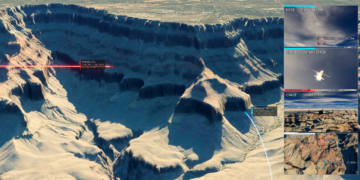
Senai’s platform is designed to identify and analyse such footage as it emerges, turning unstructured video into what the company calls “geo-specific, real-time intelligence.” The system relies on multimodal AI, combining computer vision, audio analysis, language processing, and geospatial inference to determine what is happening and where.
The company refers to this approach as Online Video Intelligence (OVINT), a term it says it coined to describe analysis tailored specifically to video-based content rather than traditional text-based media.
“Traditional OSINT tools were built for a text-first internet — articles, posts, and static data,” Weberman said. “Today, the most important signals increasingly live in short-form video, which is far more complex to analyze at scale.”
Conflict and crisis monitoring
In conflict and security contexts, Senai says publicly shared video often provides early insight into events that are otherwise difficult to observe in real time. Such footage can include videos showing troop movements, the appearance of new weapons or tactics, damage to infrastructure, civilian displacement, or propaganda and psychological operations.
Weberman pointed to real-world examples from Iran that shows how this material can surface during periods of restricted connectivity. During internet shutdowns, fragments of video sometimes escape the country via informal networks, shared by friends or family members abroad. These clips often appear sporadically across platforms, unverified and lacking context.
“Our system helps analysts surface, cluster, and contextualize these videos by location, theme, and actors, turning chaotic online content into actionable situational awareness, without relying on classified collection,” he said.
Elsewhere, Senai said its system has been used to make sense of both real-world unrest and coordinated online activity. During a period of violent disorder in one European capital, the platform was used to pull together publicly shared video as events unfolded, allowing authorities to understand how the situation was evolving and retain footage that was later removed. In a separate case, Senai said it examined a coordinated video operation tied to suspected Russian influence activity, identifying linked accounts and highlighting altered and synthetic clips.
Citing internal data, Weberman said as much as 17% of videos posted to major social platforms are now AI-generated, a figure he says could reach 40% by 2028.
“This is one of the main challenges our industry, and the entire information ecosystem, is facing today as AI generated content becomes omnipresent online,” Weberman said.
In response, Senai says it is expanding its detection capabilities by combining multiple signals — including visual artefacts, audio inconsistencies, metadata patterns, and behavioural indicators — to assess the likelihood that content is synthetic or manipulated. Moreover, it says it’s training its models on large datasets of synthetic content, while working with external researchers to keep pace with rapid advances in generative media.
“Most solutions in the market simply don’t have a good enough accuracy to detect this at this stage, and no system can claim perfect detection accuracy currently,” Weberman added.
While Senai describes its technology as “dual-use,” meaning it can be applied both by governments and by enterprises for tasks such as corporate crisis management and risk monitoring, the company says government agencies remain its primary users for now.
“Governments carry formal responsibility for public safety, national security, and crisis response,” Weberman said.
During its stealth phase, Senai says it has worked directly with government agencies across Europe, Asia, and the Middle East, though it’s not at liberty to divulge details.
“Naturally we can’t share publicly specific government clients – most of the agencies we work with operate under confidentiality constraints,” Weberman explained.

Privacy, safeguards, and oversight
As with any technology that analyses large volumes of publicly shared online content for security or intelligence purposes, questions around privacy, oversight, and potential misuse will inevitably arise. Senai, for its part, says its platform is designed to work exclusively with public video, and that it does not access private or otherwise restricted content.
“We ingest publicly available video content — all content already accessible to anyone on the internet,” Weberman said, adding that it respects platform terms of service and does not bypass technical protections.
Moreover, he says the focus of the system is not on individuals as such, but on identifying broader stories as they unfold.
“Our focus is on events, patterns, and narratives,” he said.
In terms of how Senai applies automation, Weberman said the system is built to identify and organise relevant material at scale, while leaving interpretation, judgment, and response firmly in the hands of humans.
“The platform is designed to support analysts, not replace them,” he said. “The system uses AI to detect and alert our users when specific trends or threats are detected, but it does not take automated action. It is designed to provide situational awareness and evidence to support human-led rapid situational awareness and long-form intelligence work.”
‘Shaping narratives’
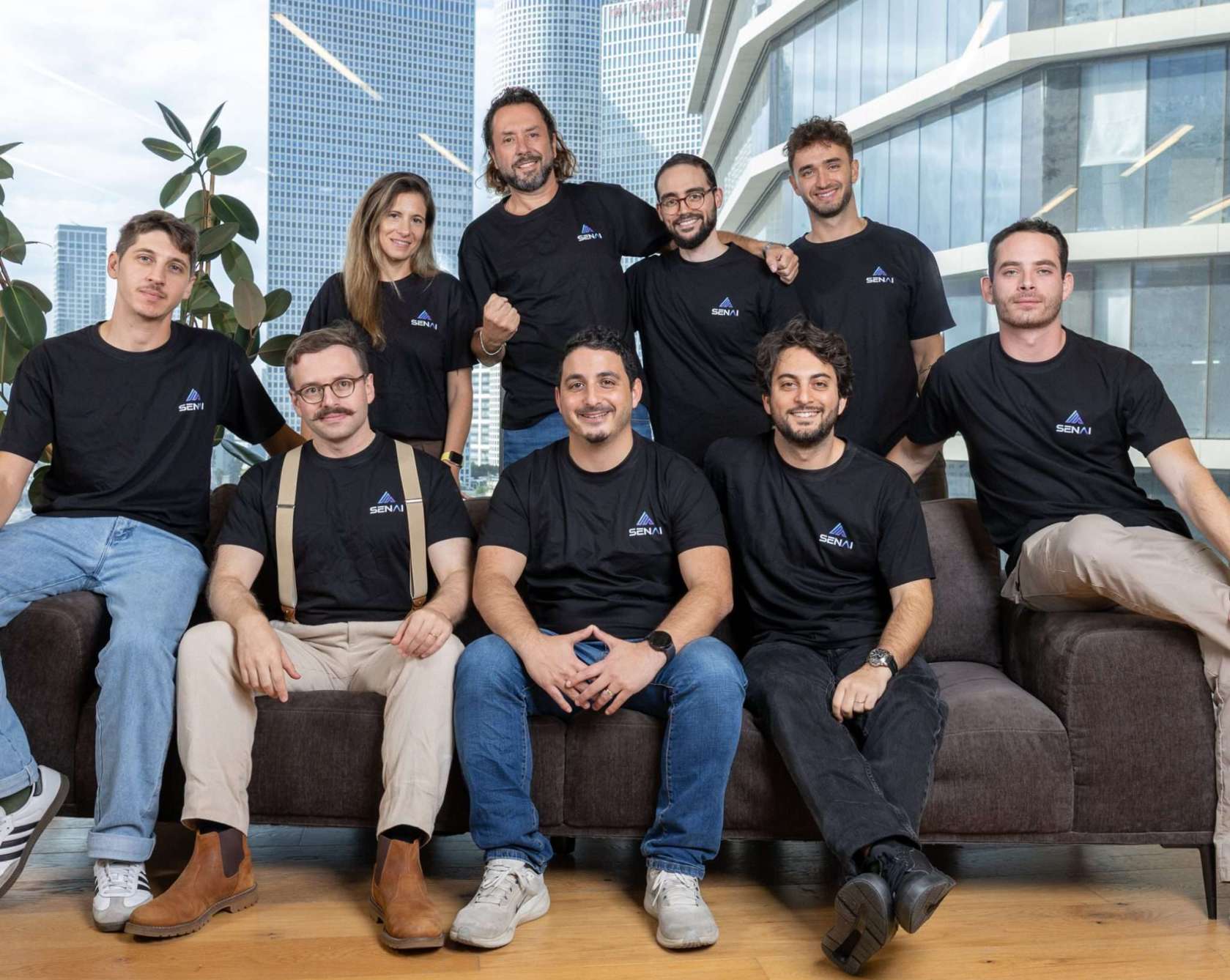
As online video continues to dominate how information spreads, Senai is ultimately betting that intelligence agencies will need tools purpose-built for a video-first internet. Spearheading this push alongside Weberman is co-founder and CTO Thomas Pariente and CEO David Allouche-Levinsky, who says that video now plays an outsized role in how security risks emerge.
“Video has become the primary signal shaping narratives, influence, and security outcomes,” Allouche-Levinsky said in a statement. “Senai was built to support decision-makers tasked with protecting the West against this new level of influence.”
Senai’s seed round was led by 10D Ventures, with participation from FS Ventures, 1948 Ventures, and strategic investors including Israeli entrepreneur and investor Jonathan Kolber. Senai said the funding will be used to accelerate product development and expand deployments across intelligence and law enforcement agencies.