It takes a village to raise a child, but when it comes to building the next generation of defence in Europe, it might take a string of villages. That is the thinking behind the European Defense Tech Hub (EDTH), which has been putting on a series of hackathons across NATO states in the region to get more technologists involved in the sector. The EDTH rolled into Tallinn recently, bringing with it drone challenges, workshops and the chance to be mentored by industry experts.
The event, co-organised with Tallinn’s science and business park Tehnopol, drew more than 100 participants. Sixteen projects pitched their hard work and competence on the final day, some with the ideas they arrived with, and others taking up challenges suggested by the attendees.
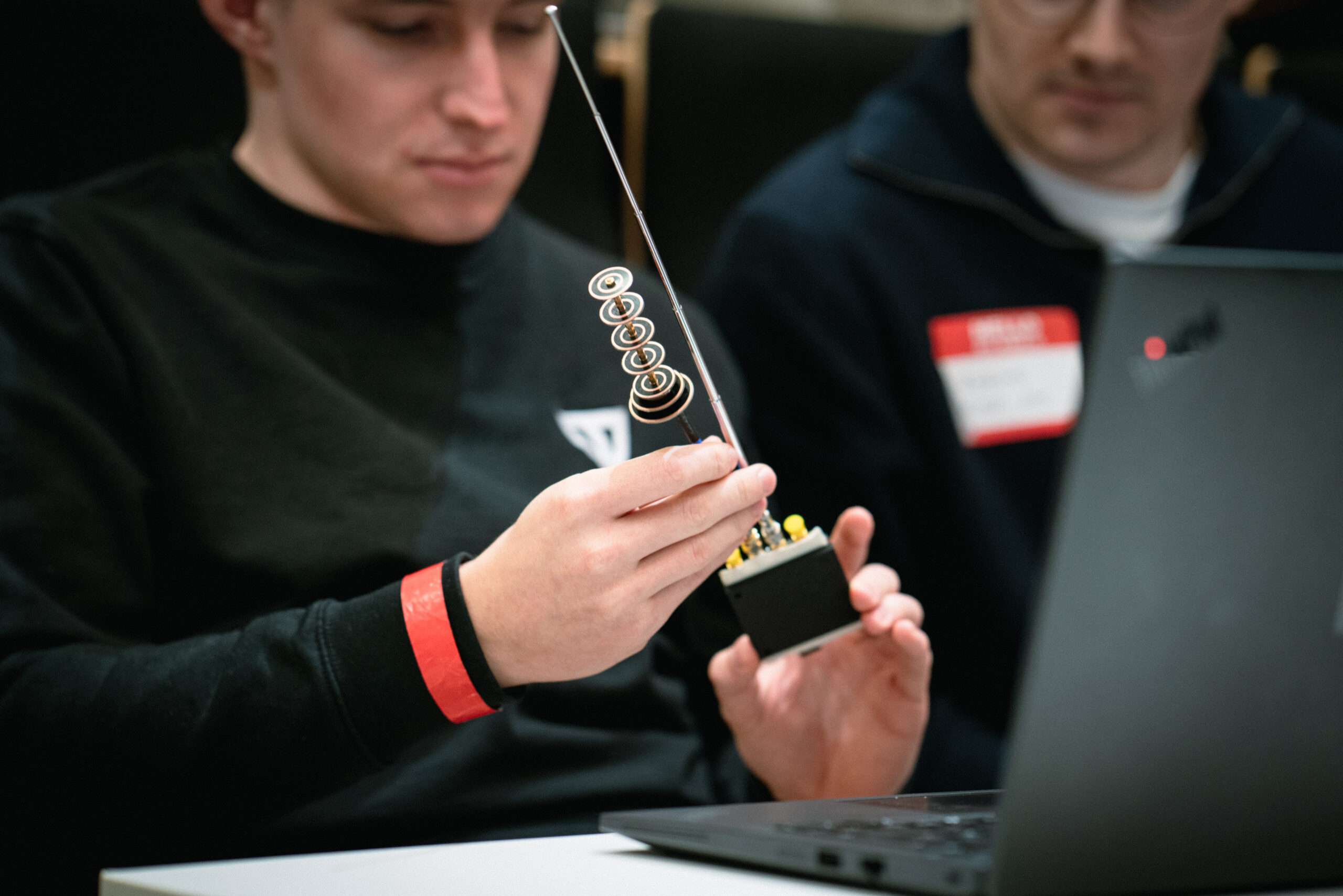
The pitches included a counter balloon interception system (Resilience Media reported on this issue issue as seen on Lithuania-Belarus border); systems that detect hostile drones; and a mobile UAV-based radio intelligence platform capable of detecting, identifying, and geolocating hostile radio emission sources in real time.
There is no prize pot, per se, at an EDTH event, but there are potential prizes enough for mission-driven hackers: winners are announced, giving those projects visibility and endorsement; and the EDTH network can open some pretty big doors, not to mention the introductions and mentoring offered to everyone participating.
Odin’s Sacrifice, a three-person team (Viacheslav Medvediev, Ignas Blažys and Freddy), were the big winners on the day. Their project aims to improve navigation for drones when there is no GPS or satellite connectivity, having drones in groups communicate to each other to map their surroundings more confidently (the name is a reference to the god of Norse mythology who gave up his own eye, among other things, in aid of gaining more universal wisdom). The team members were new to each other, two having met online only days before the event. Each was working on individual projects outside of the hackathon, but their solution clearly has legs, according to mentors I spoke with after the event.
And they clearly impressed the judging panel of Tom Eifler, business development manager at Tytan Technologies (the counter-drone startup that recently raised some decent funding is a product of a hackathon’s humble beginnings too), Roman Khomenko (CTO, 9mothers), Robert Matsar (EDF Force Transformation Command), Borys Nadykto (CEO Offset Labs), Heiti Kruusmaa (COO C2GRID) and Major Oleksandr P. (Head of Strike UAV Unit, DOZOR – 10th Mobile Border Guard Rapid Reaction Detachment of Ukraine).
Second place went to Big Fast Orca, which pitched a project for more precise, reusable autonomous payload delivery amid Electronic Warfare challenges such as GPS-denied environments. Third place went to Mozok, which turns drone footage into actionable intelligence.
EDTH is planning no less than 50 hackathons this year. Australia was treated to its first EDTH hackathon in Canberra in February and there are ongoing discussions to host events in Taiwan and South Korea, meanwhile back here on European turf, this was its first held in Tallinn.
Uwe Michaelis, a startup coach and mentor at EDTH, said Estonia was an essential stop on the train because a combination of reasons.
“You have the startup culture, the startup DNA, and a lot of talent coming from different backgrounds,” he said. “And there’s a very strong defence tech ecosystem already in a much more advanced stage than [in other] Western countries.”
One area that EDTH wants to address in future events is testing, which he described as a “huge bottleneck for everyone.”
“Field testing in Ukraine, but also field testing in Poland or in Germany or in Estonia,” are all challenging, he added. “We have so many teams who are in need of field testing, and not just once a year, they need the chance to test every two months. So we’re working on events where we can do field testing much more easily for teams.”
The fine print has yet to be figured out for how that would be implemented — it’s not enough to simply say you will do this, since dedicated and secure air, ground and sea space are needed, typically in abundance — he said confirmed that there will be a field testing day coming up in Kyiv. Surely if EDTH can grow to 50 hackathons in the space of a year, it’s only a matter of time before field testing is commonplace, at least at some of its locations.
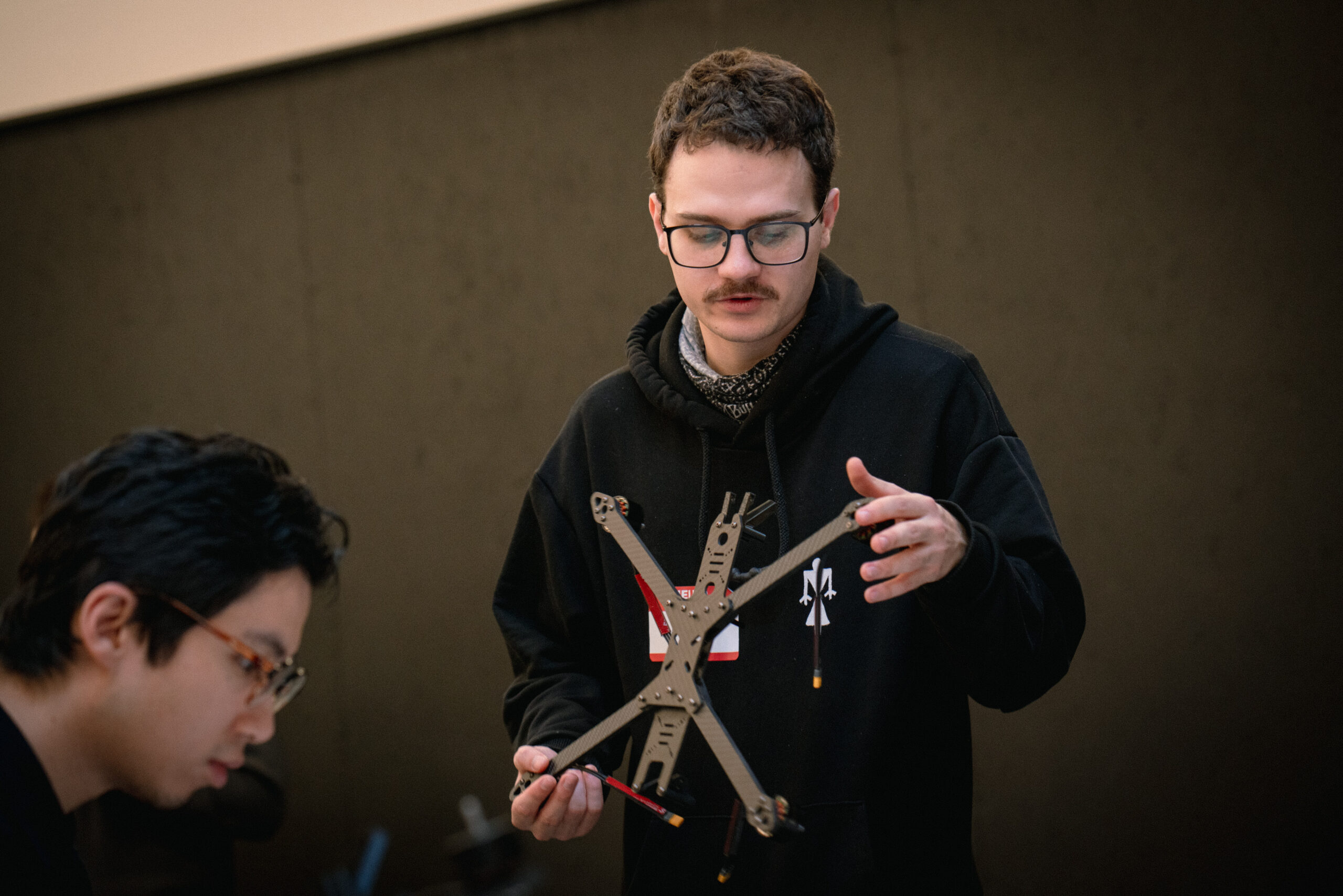
Speaking of testing, DroneAid from Kraków were present in Tallinn during the hackathon. The startup said it managed to build 16 drones over the course of the weekend. Those are eventually destined for Ukraine, although they are first getting taken to Poland for soldering and to be tested.
The DroneAid Collective is another example of how people are pulling together talent from many locations to focus on the same fight. It’s a not-for-profit organisation, with 11 branches across Europe hosting workshops that teach drone building, electronics, and soldering. The drones that are built are then donated to the Ukrainian Armed Forces and used for training, intelligence, surveillance, and reconnaissance missions.
“We are now trying to integrate veterans all over Europe, especially Ukrainian veterans, to come to the workshops – it is some kind of rehabilitation for them,” the collective’s co-founder Danylo Shevchenko told Resilience Media in an interview. “They can feel that they are still important, especially related to the war effort.”
He added that the aim of being at events like EDTH’s is to give more experience and understanding to hackers by way of building the drone itself, and to give them access to the experienced engineers who are volunteering for DroneAid.
“In relation to EDTH, our aim as the DroneAid Collective is to help the hackers who come up with new ideas on drone technologies or any kind of other military dual use technology,” he said.
Defence Business Lab
A few days after the EDTH hackathon, Tehnopol put on a separate event to introduce the defence pre-accelerator Defence Business Lab and NATO DIANA accelerator to its defence tech community. It was a positive sign to see some teams from the weekend’s hackathon there taking an interest in how to build on top of their existing projects.
Kati Kirsipuu, a project manager at the Tehnopol Startup Incubator, and Sigrid Mölder, project manager at Sparkup Tartu Science Park, were the two facilitators of the programme. The Defence Business Lab is due to open for entries any day now.
The three-month programme, which is funded by Estonia’s Ministry of Defence, is for deep tech teams that are at least at TRL 3 (building an early proof-of-concept). Participants will be given an equity-free €5,000 grant and the opportunity to test in real-world environments.
While not officially a precursor to the NATO DIANA accelerator programme (which opens during the summer), those with such aspirations should consider the Business Defence Lab as a stepping stone to at least the application process.
Hanwha Aerospace investment package
Elsewhere in Estonian defence news, South Korean defence giant Hanwha Aerospace says it will deliver an investment package of nearly €100 million to support Estonia’s defence industry and technological independence.
According to ERR, the Estonian national broadcaster, the move is to ‘strengthen Estonia’s technological sovereignty and establish a regional center for territorial defence systems’ which will include ‘joint research and development projects’ to the total value of €260 million.
This follows on from an existing relationship between the country and the Korean prime. In 2025, Estonia signed a contract worth nearly €290 million with Hanwha Aerospace to purchase at least six Chunmoo multiple rocket launchers, along with three different types of rockets. Last year, Hanwha also delivered six new K9 Thunder self-propelled howitzers, according to ERR.