Thursday 25 June, 2026
[email protected]
Resilience Media
  • News
    • Events
    • Interview
    • Startups
    • Venture
    • Weekly Digest
  • Resilience Conference
    • Resilience Conference Warsaw 2026
    • Resilience Conference Copenhagen 2026
    • Resilience Conference London 2026
  • About
  • Guest Posts
    • Author a Post
  • Subscribe
No Result
View All Result
  • News
    • Events
    • Interview
    • Startups
    • Venture
    • Weekly Digest
  • Resilience Conference
    • Resilience Conference Warsaw 2026
    • Resilience Conference Copenhagen 2026
    • Resilience Conference London 2026
  • About
  • Guest Posts
    • Author a Post
  • Subscribe
No Result
View All Result
Resilience Media
No Result
View All Result

HyImpulse eyes first European launch from SaxaVord as UK space ambitions gather pace

The German startup is planning its first European launch from Scotland later this year, as the UK looks to turn long-promised domestic launch capability into reality

Carly PagebyCarly Page
March 19, 2026
in News
Share on Linkedin

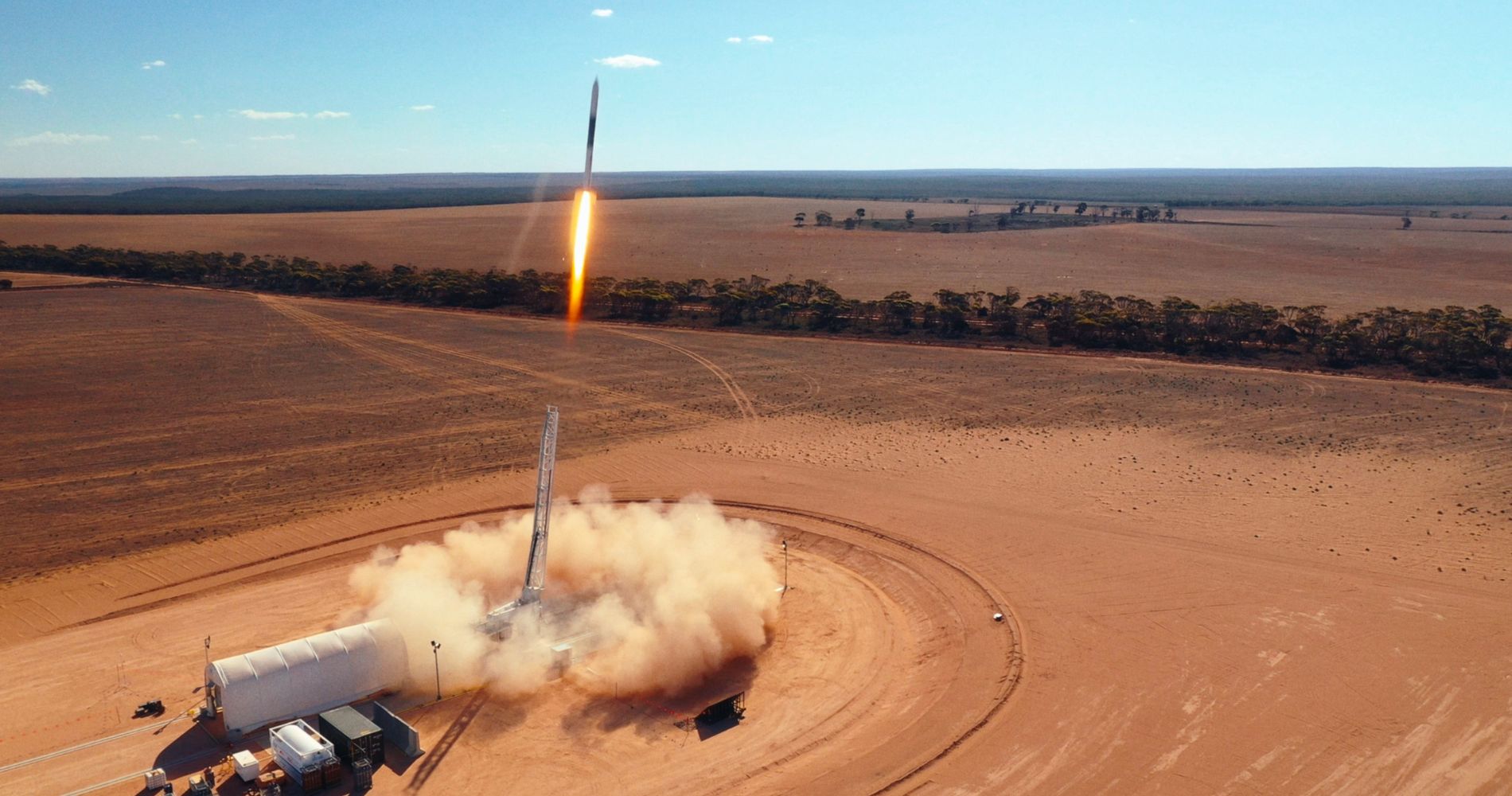
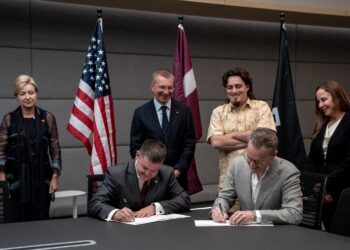
German aerospace startup HyImpulse has signed a launch agreement with SaxaVord Spaceport in Scotland to carry out the next flight of its SR75 suborbital rocket as Europe continues its slow push to launch from its own soil.

You Might Also Like

Irish space tech firm Ubotica raises $11M

Dutch semiconductor company is bringing secure, authenticated satellite positioning to handheld devices

Stark confirms monster €500M funding round, reportedly approaching a €3B valuation

The flight is pencilled in for later this year. It will be the second outing for the SR75, but the first time HyImpulse has attempted a launch from Europe. Its debut mission, carried out from Koonibba in Australia, saw the vehicle complete a stable flight and put its hybrid propulsion system, using paraffin-based solid fuel and liquid oxygen, through its paces.

Under the deal, SaxaVord will handle the launch infrastructure and operational support, with the Shetland site being lined up as part of a broader European network of launch locations. The move comes as governments across Europe place greater emphasis on reducing reliance on non-European launch providers and strengthening domestic capabilities in an increasingly contested space domain.

Dr Christian Schmierer, co-founder and CEO of HyImpulse, said: “The successful first lift-off of SR75 marked an important milestone. Establishing launch operations in Europe is the next step in our roadmap and supports the continued development of sovereign launch capabilities.”

Suborbital vehicles like the SR75 are usually flown for microgravity research, atmospheric testing, and early payload trials before orbital missions, but they are increasingly being pulled into the wider defence and security mix.

Space-based systems now play a central role in communications, navigation, intelligence, and surveillance, placing greater strategic weight on assured and responsive launch capacity.

For the UK, the agreement adds momentum to efforts to establish itself as a northern European launch hub, with SaxaVord among a small number of licensed spaceports aiming to support vertical launches. Scott Hammond, CEO of SaxaVord Spaceport, described the deal as “the culmination of our long-standing partnership with HyImpulse” and said it “further strengthens SaxaVord’s position at the vanguard of UK vertical space launch”.

HyImpulse already has a foothold in the UK, including operations in Glasgow, and is looking to grow that presence as part of a wider European setup covering testing, engineering and launch. Schmierer told Resilience Media the SaxaVord mission is intended to build on that, while also feeding into efforts to develop end-to-end space capability in the UK.

The launch agreement follows the recent closure of a €45 million Series A funding round, backed by a combination of private investment and German and European public funding programmes and led by Campus Founders.

Schmierer told Resilience Media that the investment is being used to advance its hybrid propulsion technology, expand testing and launch capabilities, and “progress towards regular launch operations” as it moves beyond initial demonstration flights.

The mission may be suborbital, but it points to a broader shift in how Europe is approaching access to space, with smaller and more flexible launch systems being positioned as part of a wider, more distributed setup.

Schmierer said sovereign and flexible access to space is increasingly being treated as critical infrastructure, adding that “reliable launch capacity” is becoming a strategic requirement as space takes on a larger role in communications, security and defence across Europe.

Tags: hyimpulsespaceUnited Kingdom
Previous Post

The UK is setting up meetings between Gulf states and defence tech startups

Next Post

Announcing the Resilience Conference Warsaw Agenda

Carly Page

Carly Page

Carly Page is a freelance journalist and copywriter with 10+ years of experience covering the technology industry, and was formerly a senior cybersecurity reporter at TechCrunch. Bylines include Forbes, IT Pro, LeadDev, The Register, TechCrunch, TechFinitive, TechRadar, TES, The Telegraph, TIME, Uswitch, WIRED, & more.

Related News

Irish space tech firm Ubotica raises $11M

Irish space tech firm Ubotica raises $11M

byFiona Alston
June 24, 2026

Ubotica, the Irish space tech firm developing orbital AI for satellites, has raised $11 million to scale the commercialisation of...

Dutch semiconductor company is bringing secure, authenticated satellite positioning to handheld devices

Dutch semiconductor company is bringing secure, authenticated satellite positioning to handheld devices

byJohn Biggs
June 23, 2026

For years, authenticated satellite positioning has largely been reserved for expensive, power-hungry systems operating in defence, aviation, and other specialised...

Stark inks Virtus deal with NATO member in Northern Europe, one week after expanding to Sweden

Stark confirms monster €500M funding round, reportedly approaching a €3B valuation

byIngrid Lunden
June 23, 2026

It's another big news day for defence tech startups in Europe. Stark -- the company building air and surface attack...

a satellite satellite flying over the earth

Russia is jamming GPS from space

byPaddy Stephens
June 23, 2026

Russia can jam GPS across Europe, and as far west as Canada – and has been doing so for over...

The Fourth Law, RSI Europe to build drone factory in Lithuania

The Fourth Law, RSI Europe to build drone factory in Lithuania

byJohn Biggs
June 23, 2026

Ukrainian defence company The Fourth Law (TFL) has signed a memorandum of understanding with Lithuanian defence technology firm RSI Europe...

helicopters and signal towers

From the battlefield to critical infrastructure, C-UAS are in the frame

byStanislaw Naklicki
June 23, 2026

To say that the anti-drone industry is booming may be an understatement. At the 2026 edition of Eurosatory in Paris,...

Frankenburg takes aim at a €100M Series B funding round

Frankenburg takes aim at a €100M Series B funding round

byFiona Alston
June 22, 2026

Frankenburg Technologies, the missile startup that aims to build lower-cost guided interceptor systems in Europe, has taken aim at something...

Aurochs 2 and TEC800 demonstrated by the French military, Eurosatory

Less crew, more ground: UGVs dominate Eurosatory lineup

byStanislaw Naklicki
June 22, 2026

Drones may be the technology that is dominating most conversations about defence tech today, but when it comes to what...

Load More
Next Post

Announcing the Resilience Conference Warsaw Agenda

Buntar Aerospace raises $10.4 million from Axon, others

Buntar Aerospace raises $10.4 million from Axon, others

Most viewed

InVeris announces fats Drone, an integrated, multi-party drone flight simulator

Uforce raises $50M at a $1B+ valuation to build defence tech for Ukraine

Auterion, the drone software startup, eyes raising $200M at a $1.2B+ valuation

Palantir and Ukraine’s Brave1 have built a new AI “Dataroom”

Twentyfour Industries emerges from stealth with $11.8M for mass-produced drones

Senai exits stealth to help governments harness online video intelligence

Resilience Media is an independent publication covering the future of defence, security, and resilience. Our reporting focuses on emerging technologies, strategic threats, and the growing role of startups and investors in the defence of democracy.

  • About
  • News
  • Resilence Conference
    • Resilience Conference Copenhagen 2026
    • Resilience Conference Warsaw 2026
    • Resilience Conference 2026
  • Guest Posts
  • Subscribe
  • Privacy Policy
  • Terms & Conditions
  • Mission Statement & Code of Practice
  • Press

© 2026 Resilience Media

No Result
View All Result
  • Home
  • About
  • Subscribe
  • Events
  • Guest Posts
  • Interview
  • News
  • Resilience Conference London 2026
  • Resilience Conference Copenhagen 2026
  • Resilience Conference Warsaw 2026

© 2026 Resilience Media

This website uses cookies. By continuing to use this website you are giving consent to cookies being used. Visit our Privacy and Cookie Policy.