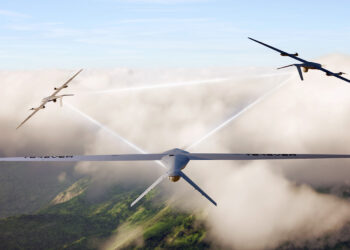
Origin, the Latvian robotics company building autonomous unmanned systems, has signed a memorandum of understanding (MoU) with US defence tech juggernaut Anduril, bringing together their respective drone-interception and battlefield command technologies.
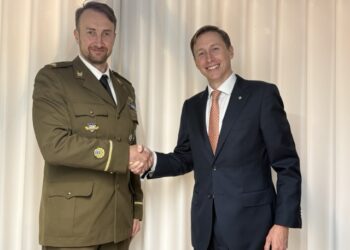
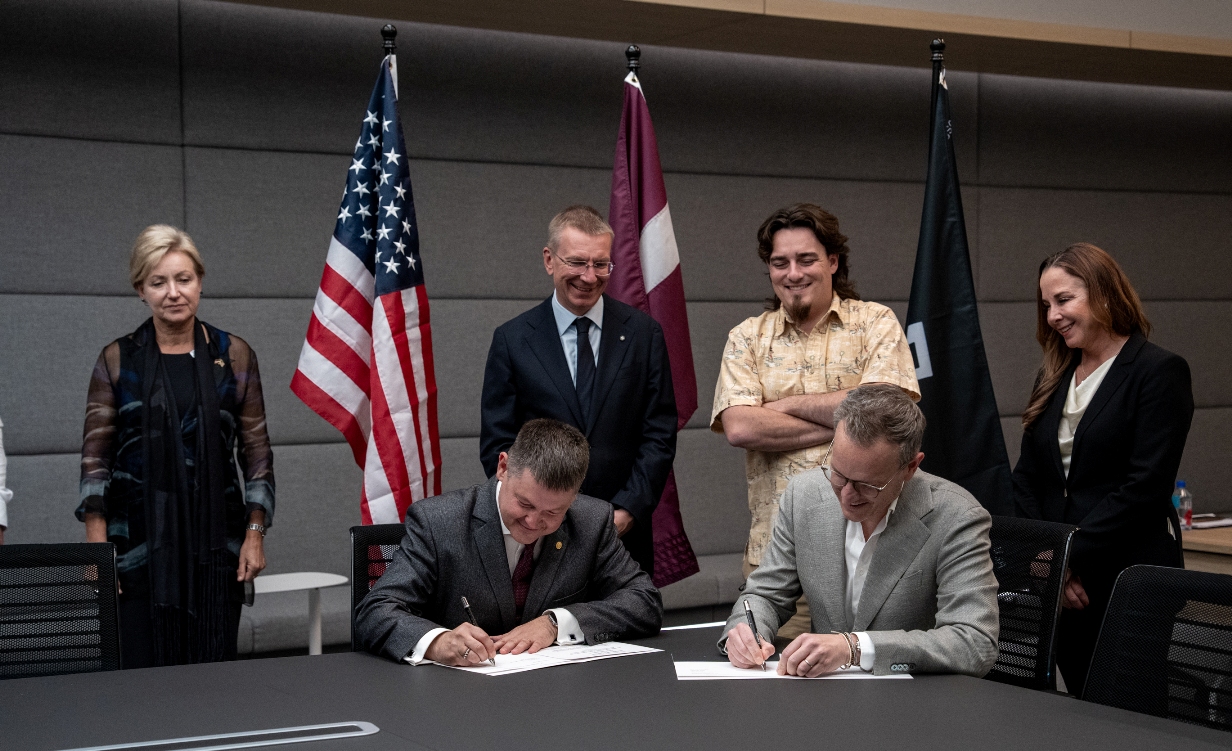
The agreement was signed in Los Angeles on 24 September, during a Latvian business trade mission to the US accompanying President Edgars Rinkēvičs’ official visit. Rinkēvičs was present at the signing alongside Anduril co-founder Palmer Luckey, with the two companies agreeing to explore integrating Origin’s Blaze interceptor with Anduril’s Lattice command-and-control platform.
An Origin story
Founded out of Riga in 2022, Origin is the handiwork of Agris Kipurs and Ilja Nevdahs, both of whom had previously built consumer-drone company AirDog. They exited to US home security company Alarm.com in 2020, with Kipurs and Nevdahs joining Alarm.com before returning to Latvia to kickstart Origin.
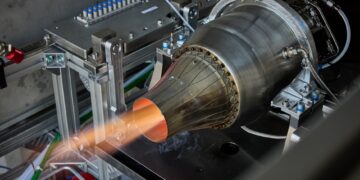
Origin raised €4 million in pre-seed financing in 2024, constituting €2.4 million in venture funding plus €1.6 million in grants from the EU and Latvia’s Ministry of Defence. At the time, its main product was Beak, a portable reconnaissance and precision-strike drone system. Then in 2025, Origin debuted Blaze, a four-rotor interceptor built to chase airborne targets such as the Shahed-family attack drones used extensively by Russia in Ukraine.
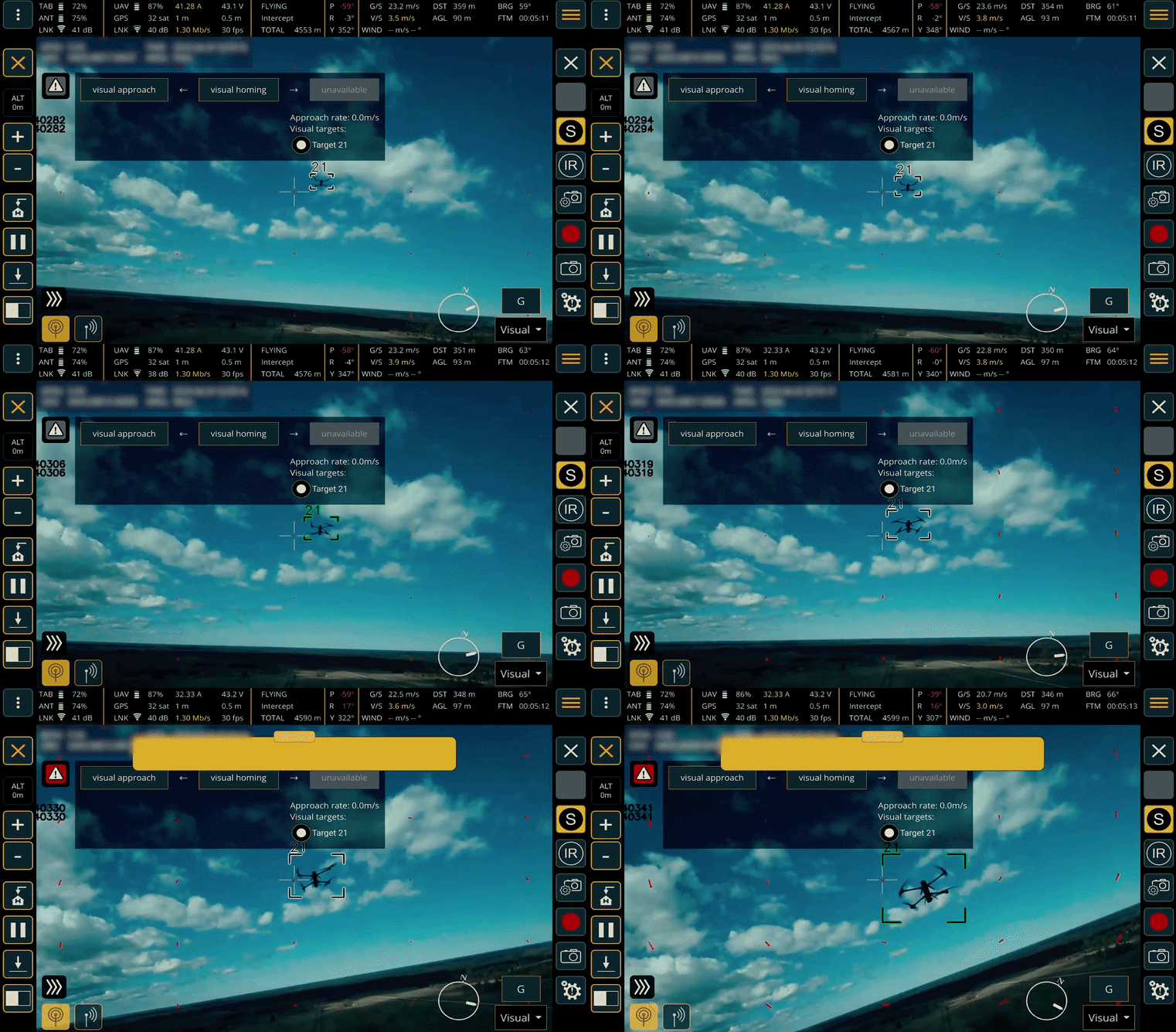
Radar gets the aircraft moving toward the target, before onboard computer vision takes over and guides it toward an intercept.
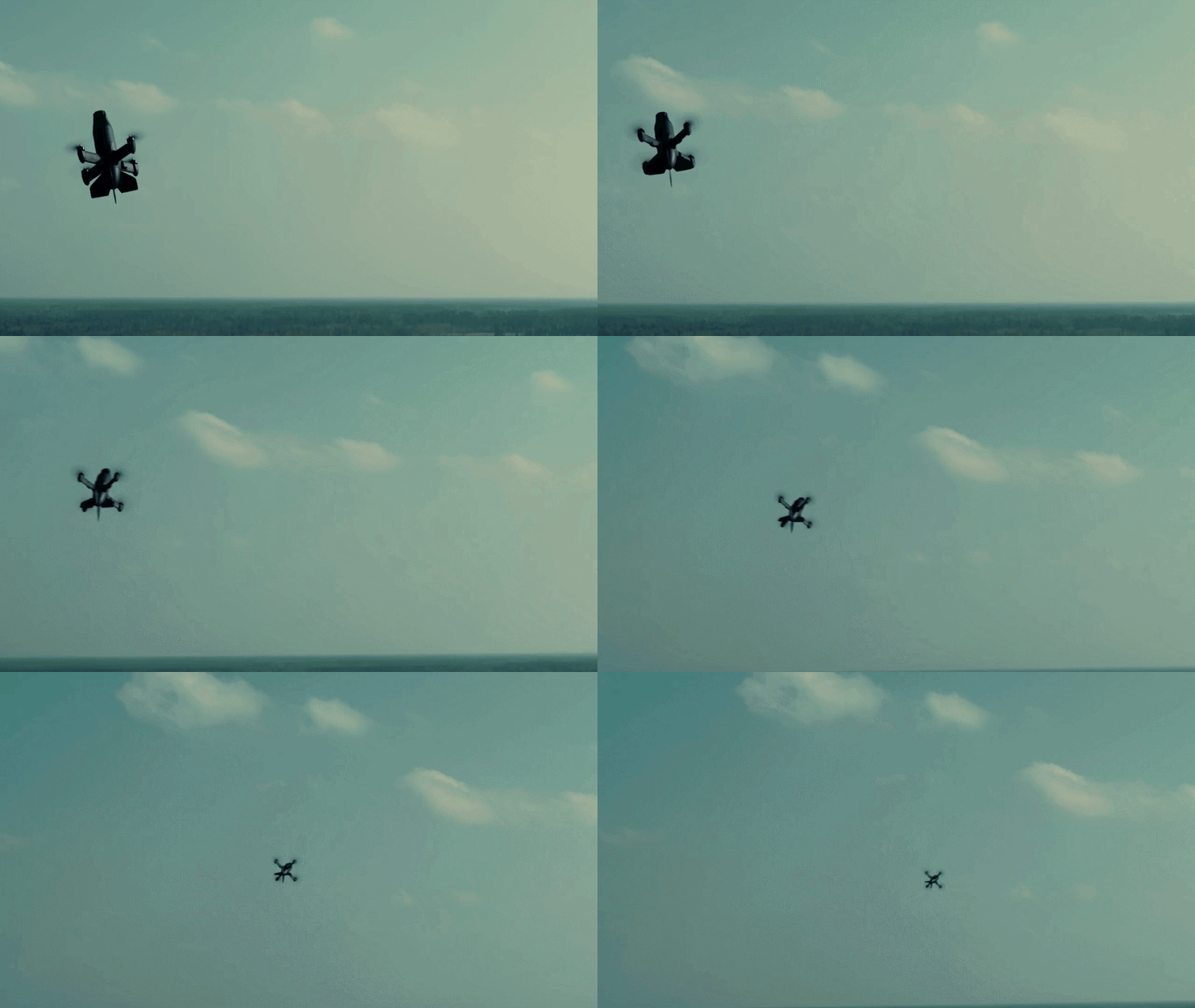
An operator remains in the loop throughout the engagement, with the control software displaying the interceptor’s position, flight data, communications and target information as it closes in.
Origin has already turned Blaze into government business, including contracts with Latvia, Estonia, and Belgium, while France also recently committed to buy.
Anduril eyes Europe
Anduril, for its part, enters the deal with considerably more financial firepower. The California company raised $5 billion at a hefty $61 billion valuation in May, having reported it had doubled its revenue to $2.2 billion in 2025. Its business now covers autonomous aircraft, underwater vehicles, missiles, surveillance systems and military software, with customers spanning the US and allied governments.
Europe has become an increasingly active market for the company. Anduril has partnered with Germany’s Rheinmetall to develop European versions of its Barracuda and Fury autonomous aircraft, while its UK arm has secured British government work ranging from Altius drones for Ukraine to battlefield data systems for the British Army. In July, NATO also selected Lattice for a nine-month evaluation as part of a programme to modernise the alliance’s air command-and-control systems.
Ukraine also served as an early combat test for Anduril’s hardware, with mixed results. Luckey said that the company had personnel and equipment in the country within two weeks of Russia’s full-scale invasion, claiming its autonomous weapons had since destroyed “hundreds of millions” of dollars’ worth of Russian equipment. Reuters later reported that an early version of Anduril’s Ghost drone struggled with Russian electronic warfare in Ukraine, while two Altius drones crashed during separate US Air Force tests in November 2025. Anduril said the failures were “isolated examples,” adding that a later Ghost model had addressed lessons from its earlier deployment.
The Origin agreement adds a Baltic partner whose interceptor is already being bought by NATO militaries in the region, giving Anduril another potential entry point into European air-defence programmes close to Russia. For Origin, meanwhile, the relationship puts it alongside one of America’s best-funded defence companies, though Mārtiņš Marenis, Origin’s commercial director, tells Resilience Media that the agreement itself shouldn’t be read as a direct route into US procurement.
“This MoU is focused on air defence capabilities in Latvia and NATO’s eastern flank,” Marenis says. “Origin is actively pursuing opportunities across NATO countries, including the United States.”
Blaze meets Lattice
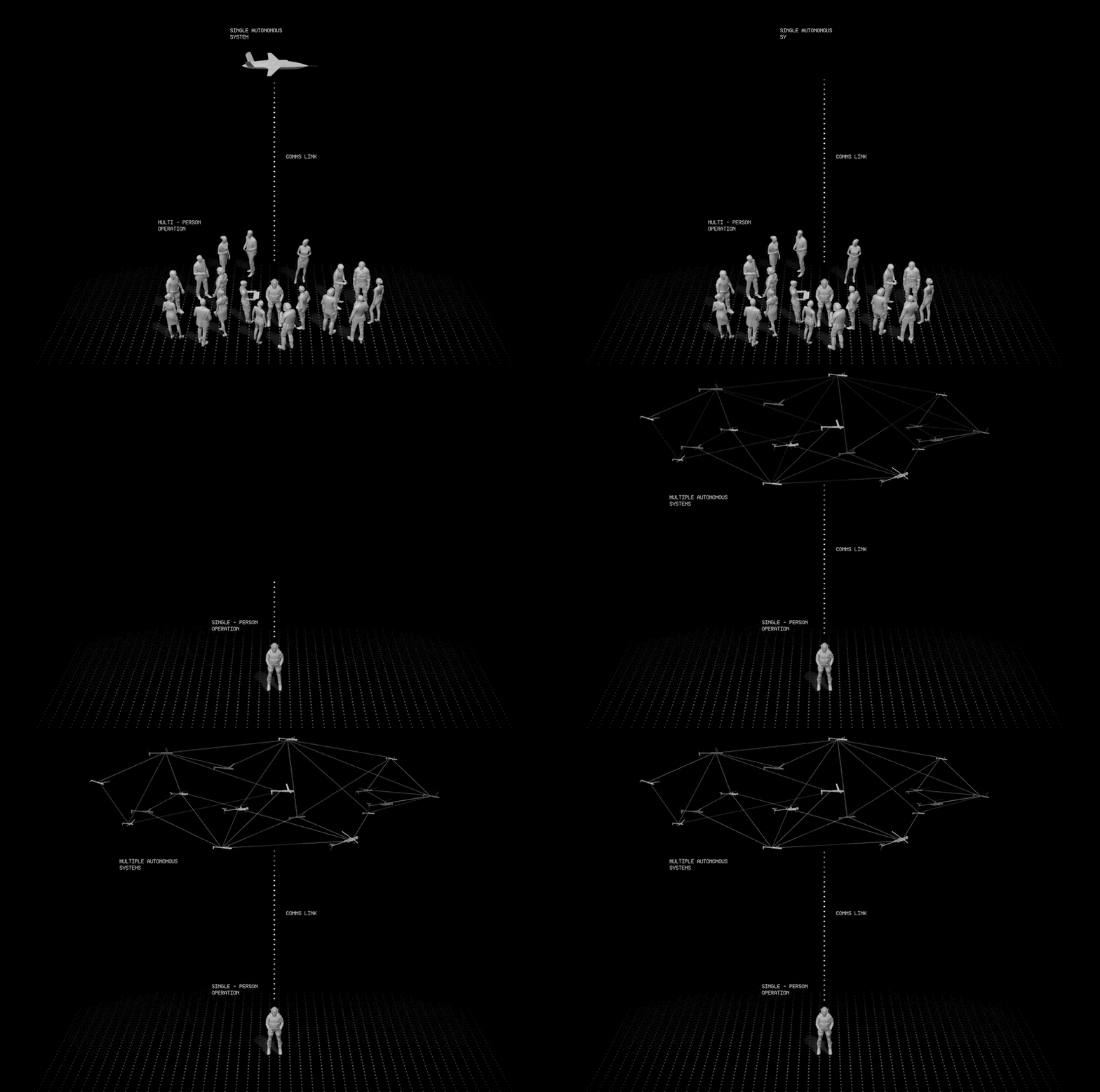
Lattice is the software layer tying much of Anduril’s hardware together. It can ingest information from radars, cameras, drones and other sensors, combine that information into a common operating picture, and then pass instructions to connected aircraft, vehicles or other systems.
With Blaze connected, a radar detecting an incoming drone could send its track into Lattice, where the software could combine it with information from other sensors and pass the target to an available interceptor. Blaze would then fly towards the target autonomously before using its own onboard vision system for the closing phase, with an operator overseeing the engagement.
“Integrating Blaze with Anduril’s Lattice platform means our interceptors operate as part of a connected system, giving allied forces better visibility and faster response against evolving drone threats,” Marenis said in a separate press release accompanying the news. “That is what modern air defense requires, and it is what smaller nations along NATO’s eastern flank need to defend their own airspace effectively.”
The joint configuration remains at the testing stage, however. Under the MoU, the companies plan to run demonstrations and validation work in Latvia, examining data exchange, operating procedures and how well the combined system performs against different drone threats. Those tests are due to take place imminently, according to Marenis, though he declined to give an exact date. He did confirm that the Latvian Armed Forces will participate as an “interested stakeholder” and “evaluate the capability” during the demonstration.
It’s worth noting that the companies are funding the integration work themselves, with no government money or development contract involved. Marenis said the arrangement reflects how both firms prefer to develop military technology before taking it to customers.
“Anduril and Origin operate with a similar product development philosophy,” Marenis said. “We invest private capital and resources to develop solutions to the operational problems we see armed forces facing.”
Ieva Jāgere, director of Latvia’s investment agency, LIAA, sees the agreement as part of a wider effort to turn US industry ties into business for domestic firms.
“For Latvian companies, the objective is to develop joint projects with US partners, secure orders and attract investment, and LIAA will continue to help move this work forward,” Jāgere said in a statement.