Ukraine is in desperate need for air defences, warned the managing partner of the D3 venture capital fund Eveline Buchatskiy.
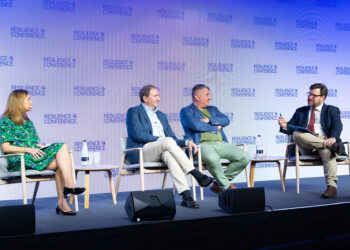
Speaking on the stage of Resilience Conference in London, she said Ukraine’s adversary has been advancing its technology. Ukraine’s interception rates for ballistic missiles launched by Russia have dropped to just “one percent.” She added that things are no better when it comes to Russia’s use of Shahed drones. These used to be shot down “98% of time, and now it’s a fraction of that.”
Patriot missiles have proven to be an effective defence, but these are facing a NATO-wide stockpile drain, and beyond these, the industry has lagged behind in responding to Russian attacks.
Buchatskiy believes that interceptor component shortages are to blame. Manufacturers are failing to source radars and jet engines, she said.
The interceptor shortage is aggravated by the incredibly fast-paced “capability development cycle”, or the time needed to advance a war-fighting technology and develop its countermeasure. These days, this is believed to be as short as six weeks. Since new, updated air defences often require different components compared to the previous defences, the search has to start anew.
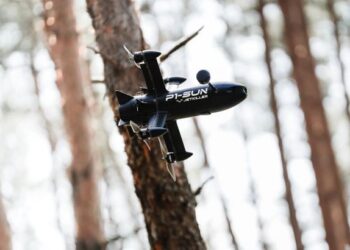
This has been the case with interceptors targeting Russia’s Geran drones, she continued. Newer generations of these include jet-powered versions which fly faster, lower, and have a longer range.
Furthermore, producers face major scaling challenges, particularly if they want to use dependable supply chains — that is, those limited to Europe or allied states.
However, founders and investors are looking for solutions. Buchatskiy said D3 has invested in component manufacturers whose philosophy is based on sovereign supply chains.
This is a gap that Ukraine has very much identified. President Volodymyr Zelenskyy said in late September 2026 that Ukraine had manufacturers capable of building interceptors against jet-powered drones, with prototype tests underway.
Buchatskiy also noted that while air defences need urgent replenishment, other fronts of the war effort have seen a “net positive”, since last year. These include ground and surface combat. On the Black Sea, the industry has proved to be “extremely innovative,” she said, including with unmanned surface vehicles.
One of the unique features of the Ukrainian armed forces is the close cooperation between the defence industry and the army at unit level. Ukrainian brigades often have their own R&D which they themselves described as “an extension of product development teams” of defence-tech manufacturers.