100 investors to watch 2026 100 investors to watch 2026 100 investors to watch 2026
Monday 2 November, 2026
[email protected]
Resilience Media
  • News
    • Events
    • Interview
    • Startups
    • Venture
    • Weekly Digest
  • Resilience Conference
    • Resilience Conference London — Oct 2026
    • Resilience Conference Copenhagen — May 2026 (PAST)
    • Resilience Conference Warsaw — Apr 2026 (PAST)
  • Launch
  • About
  • Guest Posts
    • Author a Post
  • Subscribe
No Result
View All Result
Resilience Media
No Result
View All Result

Gallium Defense raises €7.1M to develop lower-cost drone detection radar

The French startup is developing a drone detection radar at a fraction of the cost of existing systems, with military customers driving unexpectedly strong demand

Carly PagebyCarly Page
November 2, 2026
in News
Share on Linkedin

French defence technology startup Gallium Defense has raised €7.1 million to develop a drone detection radar that it says could cost as little as €500,000, potentially bringing sophisticated air surveillance capabilities within reach of more military operators.

You Might Also Like

Hypersonica raises €100M more to speed up and build out its hypersonic ambitions

Pelagon comes out of stealth to help secure maritime infrastructure from underwater threats

Quantum Leap: Quantum Systems’ journey from ISR to full military neo-prime

The Paris-based company, formally established in April 2026 following development work dating back to 2024, has emerged from stealth with a seed funding round led by Keen Venture Partners and 360 Capital, with participation from Omnes Capital and Polytechnique Ventures.

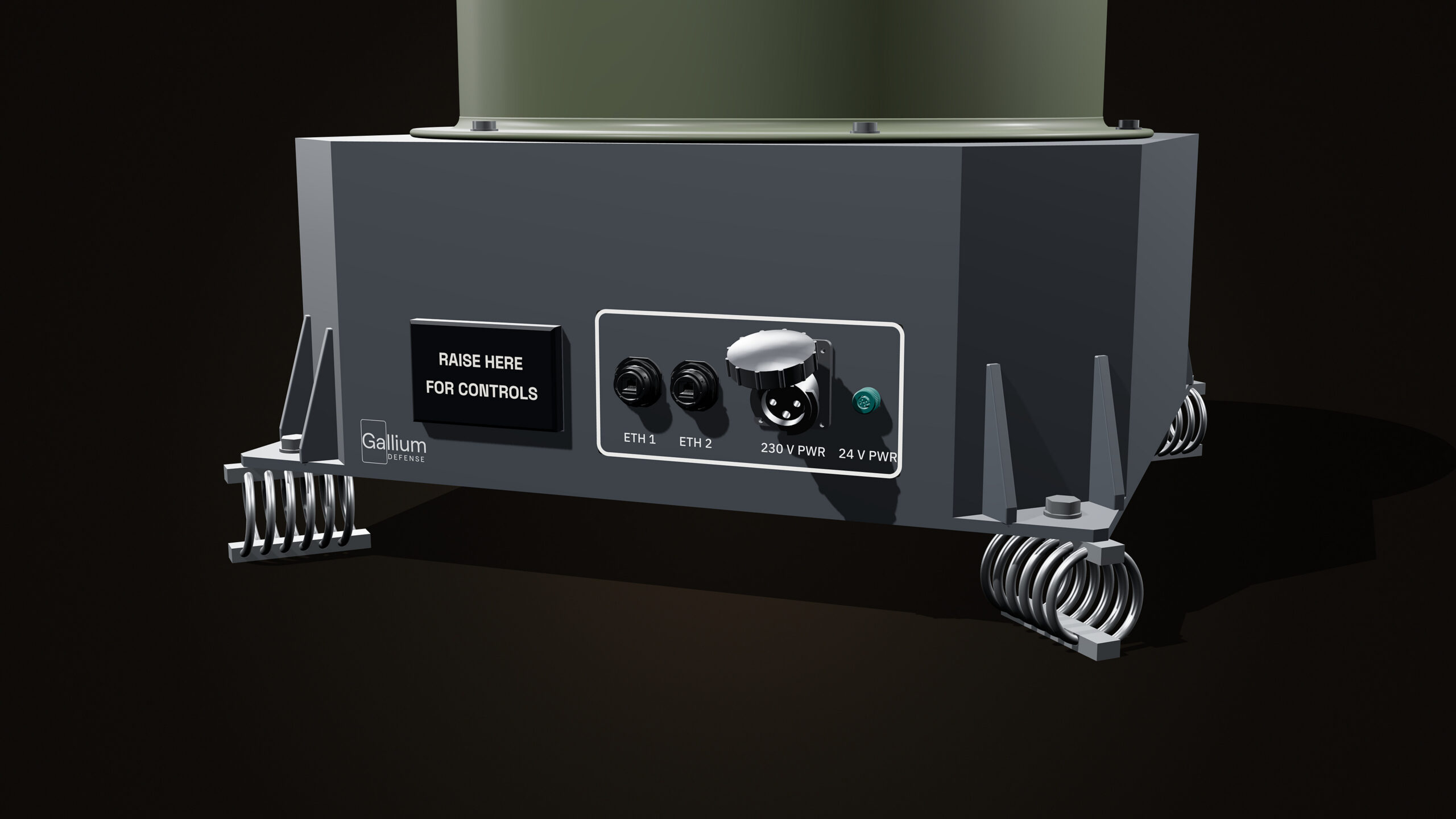
The investment will support development and industrialisation of its first product, the GDS-10, an AI-enabled radar designed to detect small drones at distances of up to 10 kilometres, including first-person-view (FPV) drones increasingly used in modern warfare.

Gallium Defense co-founder and CEO Eric Fournier told Resilience Media that the company hopes to sell the GDS-10 for around €500,000, a fraction of the €2 million to €5 million he says comparable radars typically cost. The final price won’t be settled until April 2027, once further testing is complete.

Much of the cost reduction comes from borrowing technology developed for other industries rather than relying entirely on traditional defence components.

Gallium’s radar uses components originally developed for 5G telecommunications networks, including gallium nitride amplifiers that Fournier said can be thousands of times cheaper than their radar-specific equivalents.

“We said, okay, let’s build a radar antenna, not with radar component, but with 5G telecom component,” Fournier explained. “So that was super hard. It took us time, you know, to make it fly.”

The company has also incorporated Nvidia computing hardware to process radar signals, claiming more than 100 times the computing power of conventional systems.

Fournier said using components from other industries has cut the cost of the antenna by more than 90%, although getting the different technologies to work together has proved tricky.

The GDS-10 can cover a full 360 degrees and is designed to track several drones at once, including swarms. Gallium is working on two versions of the radar, one for the military and another for operators protecting critical infrastructure.

However, Fournier revealed that demand has been considerably stronger from the military than he originally anticipated.

“I was convinced when I started that I would have all the big energy players and data center players coming to us,” he said. “It’s two out of 48 prospects right now. So most of the guys are indeed the armed forces, which was not our entry point.”

The company is now adapting its commercial strategy to reflect that demand, while retaining its ambition to make drone detection affordable for critical infrastructure operators.

Gallium also wants to change how radar systems are deployed. Rather than relying on a small number of expensive installations, Gallium aims to build networks of lower-cost radars that can be deployed in greater numbers and repositioned as operational requirements change.

The company currently has two operational prototypes and is undertaking regular outdoor trials to train and refine the system’s detection capabilities under different conditions.

“Every month we go for two days to five days outside, full day, and we track and we learn in various situations,” Fournier said. “So we expect some fixes that will have an impact on our bill of material.”

Orders are expected to open in the first quarter of 2027, with final pricing targeted for April and the first deliveries potentially beginning in June.

The funding will also support recruitment and further demonstrations as Gallium works towards commercial production.

 

Tags: gallium defenseKeen Venture Partnersradar
Previous Post

Pelagon comes out of stealth to help secure maritime infrastructure from underwater threats

Next Post

Hypersonica raises €100M more to speed up and build out its hypersonic ambitions

Carly Page

Carly Page

Carly Page is a freelance journalist and copywriter with 10+ years of experience covering the technology industry, and was formerly a senior cybersecurity reporter at TechCrunch. Bylines include Forbes, IT Pro, LeadDev, The Register, TechCrunch, TechFinitive, TechRadar, TES, The Telegraph, TIME, Uswitch, WIRED, & more.

Related News

Hypersonica raises €23.3M to develop hypersonic missiles for Europe

Hypersonica raises €100M more to speed up and build out its hypersonic ambitions

byIngrid Lunden
November 2, 2026

Hypersonic missiles -- systems that are capable of striking at long-range and high-speed, yet still remain accurate -- are not...

body of water under sky

Pelagon comes out of stealth to help secure maritime infrastructure from underwater threats

byStanislaw Naklicki
November 2, 2026

Unmanned systems are starting to dominate yet another domain: seas and oceans. Ukraine’s navy said that in September, they recorded...

Quantum Leap: Quantum Systems’ journey from ISR to full military neo-prime

Quantum Leap: Quantum Systems’ journey from ISR to full military neo-prime

byIngrid Lunden
October 31, 2026

A cold, foggy, and windy military training field in the centre of Germany was not where I expected to be...

a small piece of metal hanging from a tree branch

Scoop: Salesforce is paying $375M for Rune Technologies

byMargaux MacColl
October 30, 2026

Salesforce is acquiring defence tech startup Rune Technologies for $375 million in a combination of shares and cash, according to...

grey and red flag

Russia-linked sabotage could put European lives at risk, intelligence report warns

byCarly Page
October 30, 2026

Russian-linked sabotage operations in Europe could increasingly target airports, moving trains, and defence manufacturers over the next six months, with...

German startup MuRay raises €7.1M to inspect defence components using muons

German startup MuRay raises €7.1M to inspect defence components using muons

byJohn Biggs
October 30, 2026

Hamburg-based deep tech startup MuRay has raised €7.1 million to develop an industrial imaging system capable of seeing through dense...

A person controlling a drone.

Report: Europe’s defence boom draws industrial buyers to dual-use startups

byPaul Sawers
October 30, 2026

The dual-use dividend has generated a rush of investment into European startups whose technology serves both civilian and military customers....

Peter Sarlin’s road to European defence

Peter Sarlin’s road to European defence

byFiona Alstonand1 others
October 29, 2026

One year after emerging from stealth with €100 million to develop AI for autonomous systems, command centres and other military...

Load More
Next Post
Hypersonica raises €23.3M to develop hypersonic missiles for Europe

Hypersonica raises €100M more to speed up and build out its hypersonic ambitions

Top stories

a small piece of metal hanging from a tree branch
News

Scoop: Salesforce is paying $375M for Rune Technologies

October 30, 2026
Germany’s SWARM Biotactics Raises €10M to Deploy Insect-Based Bio-Robots
Startups

Germany’s SWARM Biotactics Raises €10M to Deploy Insect-Based Bio-Robots

July 7, 2025
Peter Sarlin’s road to European defence
European Defence

Peter Sarlin’s road to European defence

October 29, 2026
Helsing unveils new air defence system and 2 jet- and rocket-powered drone interceptors
Drones & UAS

Helsing unveils new air defence system and 2 jet- and rocket-powered drone interceptors

October 26, 2026

Resilience Media is an independent publication covering the future of defence, security, and resilience. Our reporting focuses on emerging technologies, strategic threats, and the growing role of startups and investors in the defence of democracy.

  • About
  • News
  • Resilence Conference
    • Resilience Conference Copenhagen 2026
    • Resilience Conference Warsaw 2026
  • Guest Posts
  • Subscribe
  • Privacy Policy
  • Terms & Conditions
  • Mission Statement & Code of Practice
  • Press

© 2026 Resilience Media

No Result
View All Result
  • Home
  • About
  • Subscribe
  • Events
  • Guest Posts
  • Interview
  • News
  • Resilience Conference London 2026
  • Resilience Conference Copenhagen 2026
  • Resilience Conference Warsaw 2026

© 2026 Resilience Media

This website uses cookies. By continuing to use this website you are giving consent to cookies being used. Visit our Privacy and Cookie Policy.