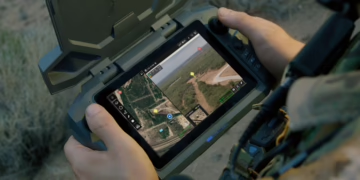
Canada’s Arctic is cold. Temperatures can fall to minus 60 degrees, satellite communications are unreliable and much of the territory is too remote to support conventional military infrastructure. As NATO increases its attention on northern security, Canada’s Dominion Dynamics believes autonomous systems designed specifically for these conditions will become essential.
Founded approximately 18 months ago, Ottawa-based Dominion Dynamics has grown to around 100 employees and raised $135 million in funding. The company is now developing Dominion Scout, an autonomous combat aircraft intended to operate in the coldest climates.
“We’re a defense product company focused on the Arctic, the hardest operating environment on Earth,” CEO Eliot Pence told Resilience.
Pence believes that building equipment for the Arctic requires a different approach to military development. Systems must be inexpensive enough to replace when they fail, capable of operating with limited communications and designed for conditions that can quickly disable conventional equipment.
“One of our core competencies is velocity,” he said. “We think the future of warfare is gonna be defined by companies that focus really on speed and iteration cycles.”
Building for an unforgiving environment
The Arctic creates problems that are difficult to reproduce in conventional testing environments. Extreme cold reduces battery performance, fuel can thicken or freeze and satellite communications may be intermittent or unavailable.
Navigation is another challenge. The sun remains low on the horizon during parts of the year and disappears entirely during the polar winter. Ground conditions also change as permafrost expands and contracts, creating problems for fixed installations.
“Dead reckoning is hard, PNT is hard, everything is hard in the Arctic,” Pence said.
Traditional military infrastructure can address some of these problems, but maintaining it across vast northern territories is expensive. Pence pointed to the Distant Early Warning Line, the Cold War radar network constructed across the northern approaches to North America, as an example of the costs involved in establishing permanent defense systems.
Dominion Dynamics is pursuing a different model based on relatively inexpensive systems that can be replaced rather than maintained indefinitely.
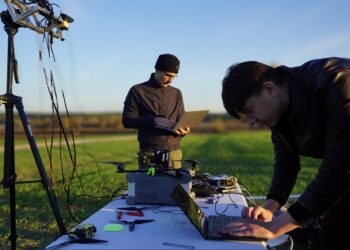
The company tests its equipment in northern environments rather than relying solely on laboratory results. Pence said demonstrating how systems perform, and fail, in actual Arctic conditions is particularly important when dealing with military procurement officials.
“We push stuff onto operations. We push stuff when there’s critical needs and we show,” he said.
Dominion Scout targets the Arctic combat aircraft market
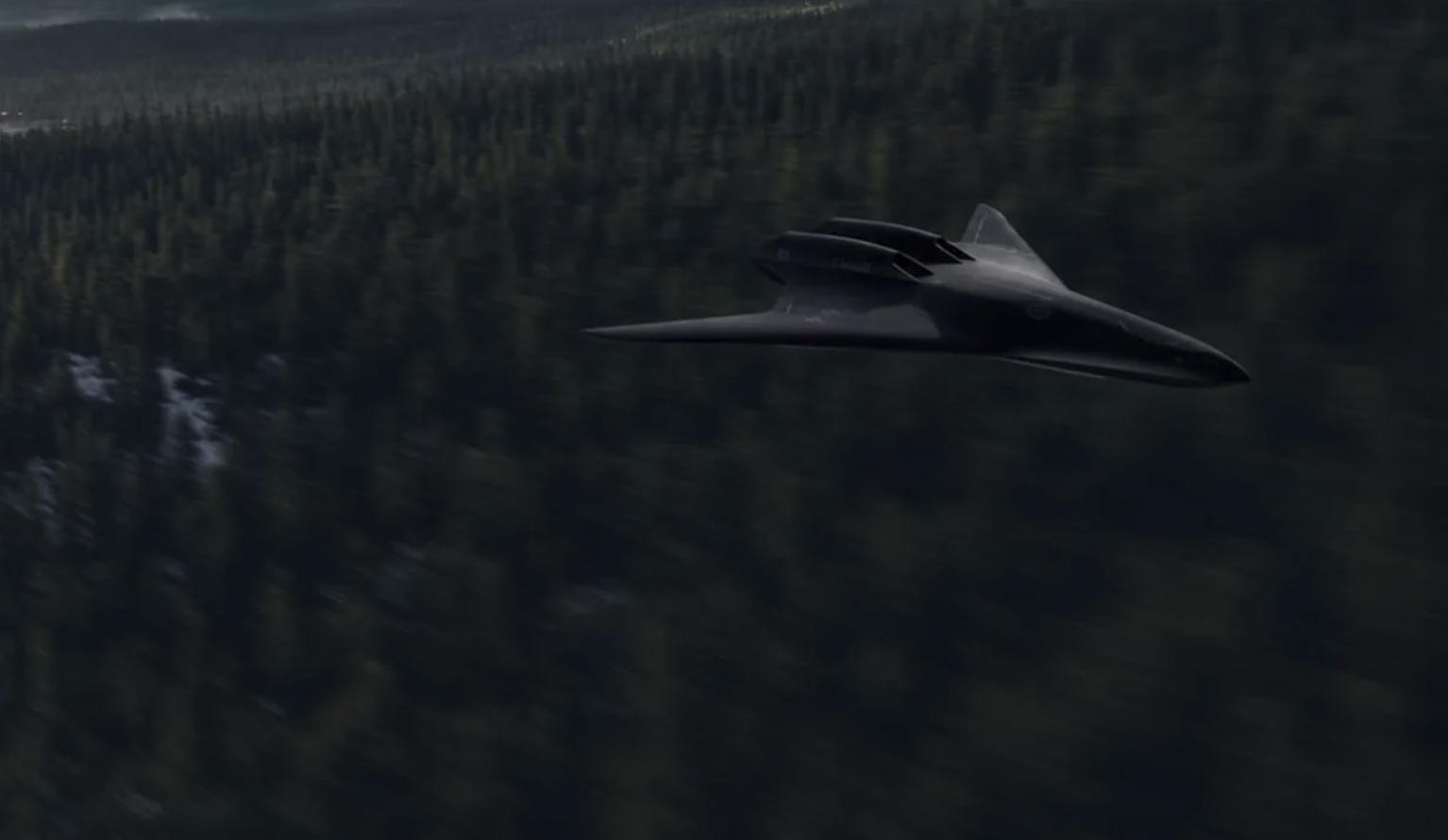
The company’s largest planned program is Dominion Scout, an autonomous collaborative combat aircraft designed specifically for Arctic missions.
Pence said developing the aircraft will require approximately $500 million. Dominion is seeking a government commitment to support a prototype and expects to pursue additional financing through a Series B round in the second quarter of 2027.
Scout is intended to operate from short, rough runways using ruggedized tires and materials suited to extreme cold. The aircraft is also being designed for long-range missions and operations at different altitudes.
The aircraft is being developed around Canada’s defense requirements, but Dominion expects its capabilities to be relevant to other NATO countries operating in northern environments.
Canada looks to strengthen its Arctic defense industry
Dominion’s strategy reflects growing concern about the security of Canada’s northern territory and the role of the Arctic in defending North America. Pence argues that the region represents one of the most direct potential approaches for hostile aircraft and missiles targeting the continent.
“The vector that is the greatest and most immediate threat and closest to America and North America, it is through the Arctic,” he said.
Canada has discussed increasing defense spending and strengthening its northern military presence for years. Pence believes those discussions are now beginning to translate into greater investment and demand for new systems.
He also sees an opportunity for Canada to develop a domestic defense contractor capable of integrating multiple technologies into larger Arctic defense programs.
Although Canada remains Dominion’s primary market, the company is already developing relationships with other NATO members. Pence said Dominion regularly sends personnel to Sweden, has hosted Danish representatives at its factory and maintains a collaborative research agreement with the United States focused on Arctic awareness and readiness.
The company views NATO as its next major market beyond Canada.
Dominion is betting that a defense manufacturer focused on a specific operating environment can develop useful equipment faster than companies attempting to adapt general-purpose systems to Arctic conditions. The next major test will be securing government support for Dominion Scout and converting its early funding into an aircraft capable of meeting Canada’s northern defense requirements.