At first it seemed as if the grey-zone threat to defence businesses was concentrated mainly in countries along the Eastern Flank; now there are signs that the issue is much bigger. The UK on Tuesday issued a warning that Russia is trying to sabotage the operations of defence tech companies supplying Ukraine, and that malicious activity is on the rise.
The announcement, which came jointly from the MI5’s National Protective Security Authority (NPSA) and the Ministry of Defence, notes that “proxy actors employing low-sophistication sabotage methodologies, such as arson” are carrying out actions “intended to undermine support for Ukraine.” It also noted that the sabotage might be combined with other actions such as intimidation, espionage and information operations.
The alert exhorted companies to “act now to reduce opportunities for hostile actors to identify your organisation or people as targets, conduct hostile reconnaissance, and attack people, sites or operations.”
The grey-zone manoeuvres detailed in the announcement are similar to those from multiple incidents in countries like Estonia. The most recent of these involved an arson attempt at drone maker Threod Systems. That was unsuccessful, but it still led Estonia to announce it would close off the remaining borders that it had continued to keep open for people across the countries to visit family. That is due to take effect on 1 December.
The information leaflet advises firms to reduce exposure, look out for actions, and to report anything suspicious. More guidance measures can be found on the NPSA website.
“If your organisation supports military procurement or supplies equipment to Ukraine’s armed forces, you could be a target. This includes organisations in the supply chain,” the NPSA states.
Ongoing threat
It is no surprise that the UK is seeing more grey-zone activity carried out by adversaries, and in particular those supporting Russia.
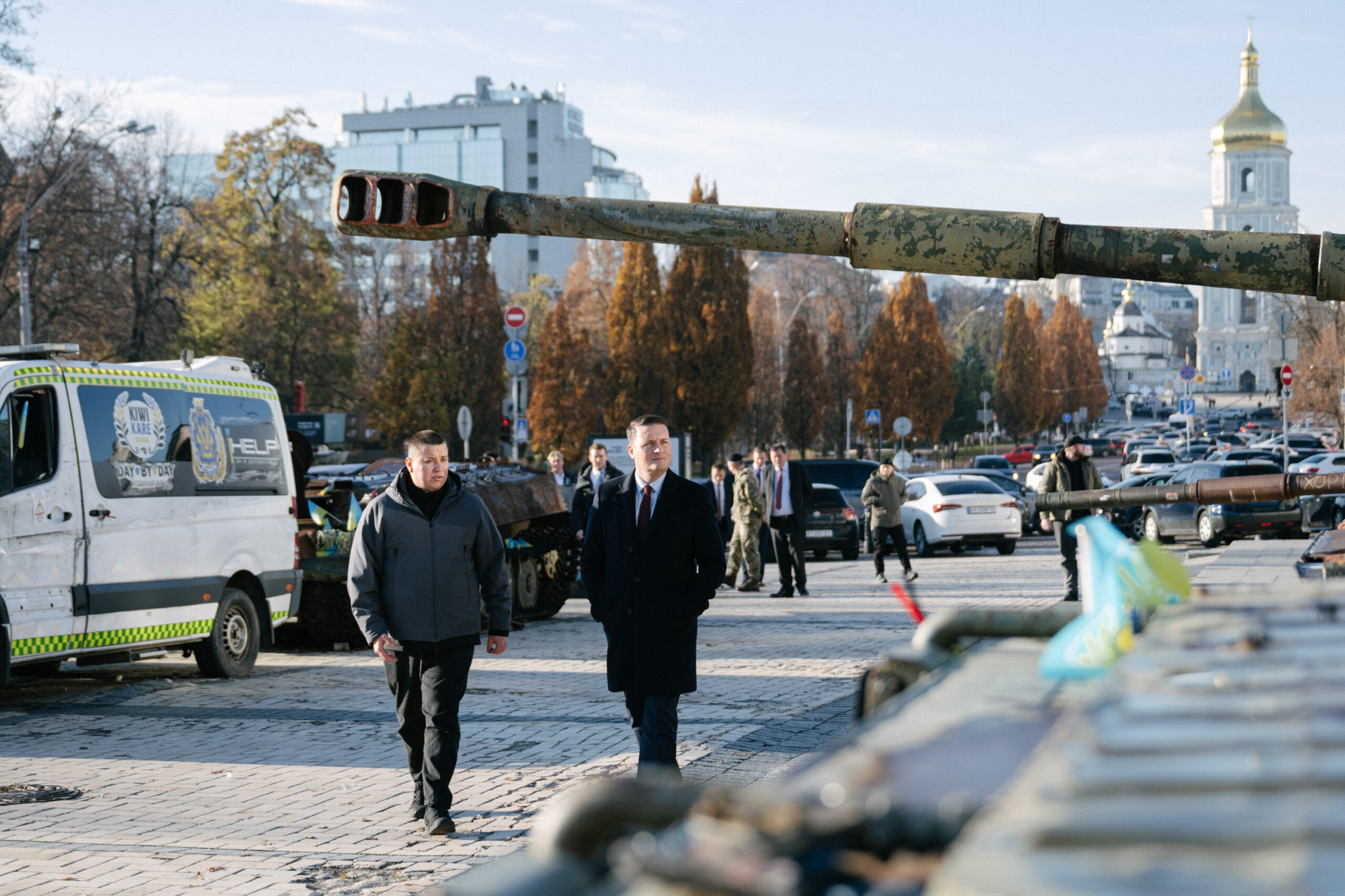
Alongside Germany, the UK provides the most aid to Ukraine from the rest of Europe, and the UK government has made many moves to show that it intends for this to remain the case. That includes public statements, as well as visits: Tuesday the MoD also noted that the Defence Secretary Wes Streeting (pictured, above) became the first UK defence secretary ever to visit war-torn Kharkiv.
The joint statement from MI5 and the MoD may be the first alert of its kind in the UK, but elsewhere in Europe, situations like this have become daily life for defence firms, and companies are locking down. The Threod Systems attempted arson, for example, was stopped due to the actions of a security guard, which led to arrests and no harm to employees or the company’s production.
That was not the case for Milrem Robotics earlier this summer, however. Russian agents damaged the company’s facilities and the case sparked off a much stronger awareness of grey-zone activities, including more proactive actions from companies themselves.
Estonian Internal Security Service (ISS/KAPO) Director General Margo Palloson, in an interview with Estonia’s national broadcaster ERR after the Threod attack, said that multiple companies are at risk.
“We know that Russia is currently targeting around 10 defence industry companies in Estonia,” he said.
German drone manufacturer Quantum Systems reported a cybersecurity attack, which occurred in October, compromising its software update infrastructure causing the German military, Bundeswehr, to down its drones temporarily.
France has also witnessed fires at drone factories. The most recent, which burned down the factory and offices of Flying Eye in Biot earlier this month, is still being investigated to determine the cause.
In the past year the intelligence services of Germany, Denmark, Sweden and Norway have all issued warning to their country’s defence companies, supporting Ukrainian forces, that they need to improve their security over Russian threats.