100 investors to watch 2026 100 investors to watch 2026 100 investors to watch 2026
Friday 16 October, 2026
[email protected]
Resilience Media
  • News
    • Events
    • Interview
    • Startups
    • Venture
    • Weekly Digest
  • Resilience Conference
    • Resilience Conference London — Oct 2026
    • Resilience Conference Copenhagen — May 2026 (PAST)
    • Resilience Conference Warsaw — Apr 2026 (PAST)
  • Launch
  • About
  • Guest Posts
    • Author a Post
  • Subscribe
No Result
View All Result
Resilience Media
No Result
View All Result

Estonia said Russia-backed arsonists caused fire at Milrem Robotics

Fiona AlstonbyFiona Alston
September 30, 2026
in Cyber, News, Ukraine
Share on Linkedin

Estonia’s government said it has “full confidence” that an August 2026 arson attack on Milrem Robotics, a defence company based in Tallinn, was “an act of sabotage commissioned by the special services of the Russian Federation,” according to a statement published on the government’s official web site.

You Might Also Like

Ukraine’s industry lacks parts to build interceptors, says D3 fund’s Eveline Buchatskiy

Augur takes new funding from Sovereign AI, inks deal to work on public safety with TfL

Kapta Space raises $24M Series A

The statement noted that Estonia’s Internal Security Service reached its conclusion after an investigation, “a thorough assessment of the information it has gathered.” Speculation that Russia was involved had surfaced almost immediately after the attack.

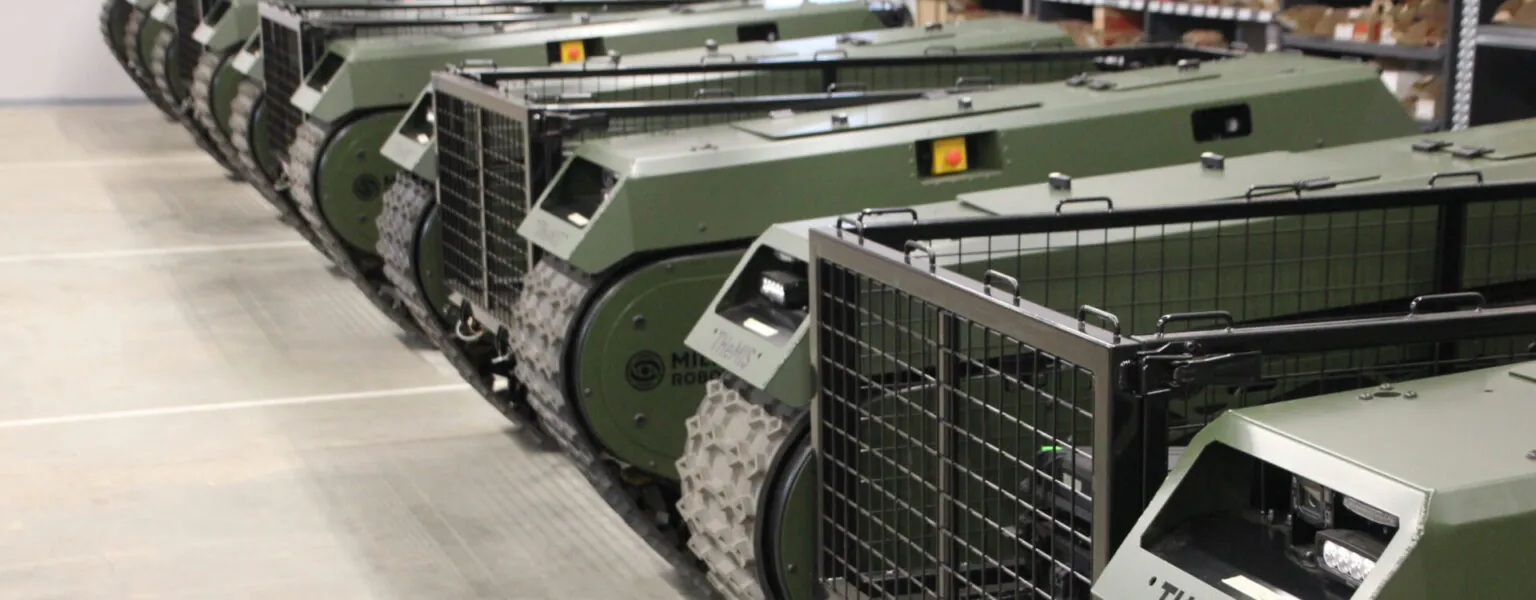
Russia has been engaging in a series of grey-zone warfare tactics to rattle countries and the organisations within them that are supporting Ukraine in the war. Milrem, in cooperation with European Union countries, supplies THeMIS unmanned ground vehicles to Ukraine. Prime Minister Kristen Michal was quick to identify this and Estonia’s response.

“This is part of Russia’s broader campaign across Europe to intimidate us and weaken our support for Ukraine,” he wrote on social media site X. “It will not work. Our response will be the opposite: stronger security at home, more support for Ukraine and greater pressure on Russia. We will not be intimidated.”

The 15 August fire broke out at Milrem’s facility in the Lasnamäe district of the capital, where the company manufactures unmanned and autonomous ground systems.

Four days later, three culprits, Latvian citizens, were apprehended in Latvia. Milrem officials confirmed to Resilience Media earlier this month, during a plant visit, that the offenders have now been extradited to Estonia.

The company said that damage was done, but they were dealing with it and it did not impact “the promises we have made to our customers.”

Milrem said that it was in the process of “adding several layers of security,” and, on a lighter note, added that it was perhaps a “quality mark” as well. “It means that we are creating the technology that really matters,” one official said.

Disposable agents

This fire is just one of Russia’s alleged attempts to sabotage the European defence industry. As with the Estonian incident, a common theme is the employment of people who appear to be working at arms’ length from Russia itself.

Recently, the German publication DW, collaborating with broadcasters in Lithuania, Czechia and Spain, ran an investigation into the activities of a Cuban dance teacher living in Russia, who had been coordinating with the GRU, Russia’s military intelligence service, to build a network of “disposable agents” across Europe — typically Spanish-speaking individuals who were migrants or looking for extra money.

These agents, DW said, were paid up to thousands of euros to carry out arson attacks on a range of targets that included construction supply businesses, a bus depot, a recycling facility, and a company making equipment for Ukraine. There were also agents engaged for sabotage and espionage operations. Convictions of the agents are making their way through the course, and there is also now a warrant out for the arrest of the dance instructor (who is now a Russian citizen).

There have been a number of other incidents that are now generally also being attributed to Russian-backed agents. They include the attempted drone attack on Leipzig/Halle Airport in August 2026; a fire at a plant in Poland that makes drone parts for Polish and Ukrainian militaries; and a fire at a Ukrainian drone company in Czechia.

Russia has denied any involvement in these incidents.

Strengthen physical and cyber security measures

Margo Palloson, director general of the Estonian Internal Security Service, said that Russian special services continue their campaign to “recruit and influence people in Europe, including for the purpose of carrying out acts of sabotage,” and that organisations supporting Ukraine, and defence industry companies, “face an elevated threat.” These companies “strengthen both their physical and cyber security measures,” the service recommends.

“Estonian security authorities are closely monitoring Russia’s activities and cooperate closely with both Estonian companies and international partners to prevent such incidents,” Palloson added. “Estonia is a safe country, and our goal is to ensure that it remains so.”

Moscow’s growing desperation

In the press release issued by the Estonian government, the Prime Minister said that such an act of sabotage is part of an intimidation tactic by Russia to force Europe to reduce its support for Ukraine. That it is “absolutely unacceptable and irresponsible,” calling it “Moscow’s growing desperation” due to the aggressor’s failed objectives of its full-scale invasion of Ukraine.

“The Estonian state is capable of protecting its security,” the Prime Minister said while commenting on Estonia’s strengthened preparedness and internal security towards its neighbours’ antics. “Thanks to Estonia’s strong security and law enforcement agencies, our country is an exceptionally difficult environment for an adversary to conduct such operations, and similar activities have also been prevented before they could be carried out. Russia will not intimidate us or change our policies through such actions.”

Such attempts of intimidation and sabotage by Russia is not having the desired effect on Estonia.

Foreign Minister Margus Tsahkna confirmed that Estonia’s response will be exactly the opposite of what Russia is seeking to achieve.

“Together with our allies and partners in Europe and beyond, we will increase pressure on Russia, tighten sanctions, and seek additional ways to restrict the travel of Russian citizens to Europe. We will also continue and strengthen our comprehensive support for Ukraine. Russia’s attempts to intimidate us will not diminish our resolve — they will only strengthen it.”


 

Tags: arsondisposable agentsgrey-zone threatshybrid warfareRussiasabotage
Previous Post

M-Fly snaps up new funding for ITAR-free camera and laser gimbals

Next Post

Exclusive: Osavul snaps up $10M to expand its hybrid threat detector tech to more users

Fiona Alston

Fiona Alston

Fiona Alston is a defence tech, innovation and business journalist based in Estonia. With over a decade of experience covering tech, business and sustainability for Irish and European publications, she has a knack for bringing interesting and technical stories to an everyday audience.

Related News

Ukraine’s industry lacks parts to build interceptors, says D3 fund’s Eveline Buchatskiy

Ukraine’s industry lacks parts to build interceptors, says D3 fund’s Eveline Buchatskiy

byStanislaw Naklicki
October 14, 2026

Ukraine is in desperate need for air defences, warned the managing partner of the D3 venture capital fund Eveline Buchatskiy....

Social networking apps like Snapchat are being used to recruit agents in grey-zone warfare, says Augur CEO

Augur takes new funding from Sovereign AI, inks deal to work on public safety with TfL

byIngrid Lunden
October 14, 2026

Augur, the UK startup that has developed a "privacy first" AI-based analytics platform that ingests video and other feeds to...

Kapta Space raises $24M Series A

Kapta Space raises $24M Series A

byJohn Biggs
October 14, 2026

Seattle-based space technology startup Kapta Space has raised $24 million in Series A funding and secured multiple classified contracts for...

Is there a defence tech bubble?

Is there a defence tech bubble?

byStanislaw Naklicki
October 13, 2026

Over the past few years, Europe has seen a remarkable growth of the defence tech sector, with several start-ups reaching...

Coders in Singapore embrace defence hackathons as America retreats from commitments abroad

Coders in Singapore embrace defence hackathons as America retreats from commitments abroad

byHarry Saunders
October 13, 2026

It’s a Sunday afternoon on the campus of Singapore’s national university, and Richard Xiong, chief pitchman for a startup that...

white red and green map

NATO Innovation Fund sets up a branch in Warsaw

byIngrid Lunden
October 13, 2026

The NATO Innovation Fund, one of the biggest investors into defence and resilience technology in Europe, is going local. Today,...

At Washington’s premiere defence show, the primes rule the roost

At Washington’s premiere defence show, the primes rule the roost

byJohn Biggs
October 12, 2026

Across the street from the Carnegie Library Apple Store, not far from the National Portrait Gallery, missile launchers are aimed...

Japan to acquire interceptors from Ukraine’s SkyFall

Japan to acquire interceptors from Ukraine’s SkyFall

byLuke Smith
October 12, 2026

Japan's Ministry of Defence has signed a contract to acquire interceptor drones from Ukrainian manufacturer SkyFall, Defence Minister Shinjiro Koizumi...

Load More
Next Post
Matrix movie still

Exclusive: Osavul snaps up $10M to expand its hybrid threat detector tech to more users

Astroscale is ready to help the UK sweep away space debris

Astroscale is ready to help the UK sweep away space debris

Top stories

white red and green map
European Defence

NATO Innovation Fund sets up a branch in Warsaw

October 13, 2026
Dark digital map of north-western Europe
European Defence

State of Defence Tech 2026: European defence startup funding to quadruple to $10.5B

October 5, 2026
UAV surveillance firm Monopulse raises over €2M to further expand its NATO markets
Drones & UAS

UAV surveillance firm Monopulse raises over €2M to further expand its NATO markets

October 12, 2026
Social networking apps like Snapchat are being used to recruit agents in grey-zone warfare, says Augur CEO
Cyber

Augur takes new funding from Sovereign AI, inks deal to work on public safety with TfL

October 14, 2026

Resilience Media is an independent publication covering the future of defence, security, and resilience. Our reporting focuses on emerging technologies, strategic threats, and the growing role of startups and investors in the defence of democracy.

  • About
  • News
  • Resilence Conference
    • Resilience Conference Copenhagen 2026
    • Resilience Conference Warsaw 2026
  • Guest Posts
  • Subscribe
  • Privacy Policy
  • Terms & Conditions
  • Mission Statement & Code of Practice
  • Press

© 2026 Resilience Media

No Result
View All Result
  • Home
  • About
  • Subscribe
  • Events
  • Guest Posts
  • Interview
  • News
  • Resilience Conference London 2026
  • Resilience Conference Copenhagen 2026
  • Resilience Conference Warsaw 2026

© 2026 Resilience Media

This website uses cookies. By continuing to use this website you are giving consent to cookies being used. Visit our Privacy and Cookie Policy.