November 2024
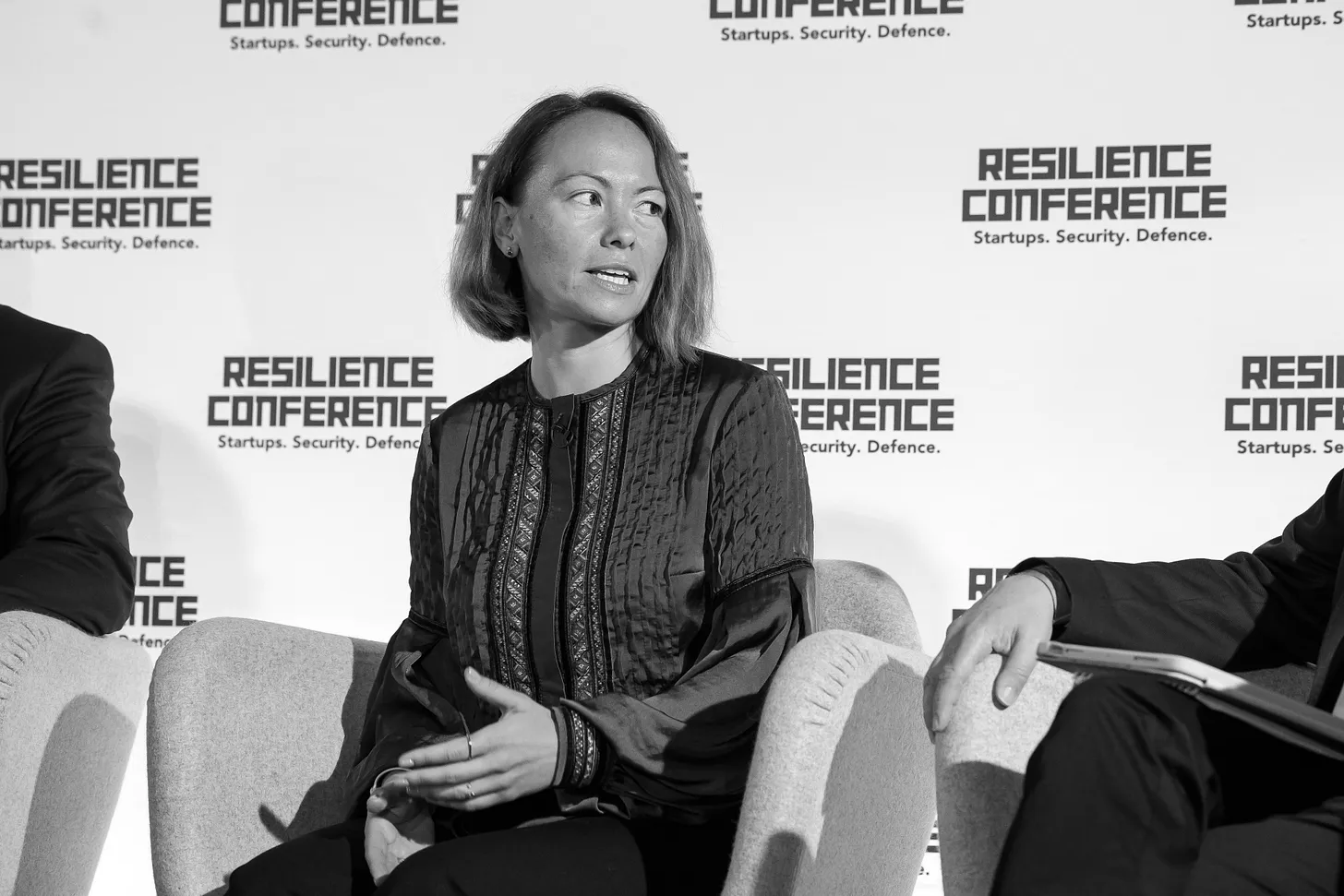
Viktoriia Yaremchuk arrived for lunch wrapped up against the cold outside. Under her coat, she was wearing an army green sweatshirt with the word “Foxtrot” across the front. She explained that it represents the UAV Battalion of the 80th Assault Brigade, also known as the Lviv Brigade, one of Ukraine’s most celebrated defence units. Viktoriia, who comes from Lviv, wears it with pride as a symbol of resilience, community, and her mission to reshape the defence landscape through innovation.
Before founding Farsight Vision, Viktoriia was climbing the ranks in a commercial software company, transitioning from engineering leadership to senior managerial roles. An MBA, capped with a semester in the U.S., was meant to cement her rise in the corporate sphere. But the outbreak of war in Ukraine changed everything. By early 2022, she was coordinating evacuations for stranded colleagues, sourcing night vision devices, and arranging logistics for bulletproof vests and helmets. Her role as a volunteer became a lifeline for many, but as the conflict dragged on, it no longer felt like enough.
“In May 2023, everything shifted,” Viktoriia explained. Her friend’s brother was killed on the battlefield, and then her Czech colleague Martin was killed. Martin had come to Ukraine to teach battlefield medics and had mastered the Ukrainian language in just one year. His death was a catalyst. “I realised I needed to do more than supply physical items. Helmets and medical kits weren’t enough. I wanted to create something that could fundamentally shift the dynamics on the battlefield.”
“It all started just with the trenches. How we can analyse the trenches, how can we analyse the enemy’s positions so that we can effectively kill them?”
With her co-founder Volodymyr Nepiuk, a business school classmate, Viktoriia began exploring how their expertise could address urgent military needs. “It all started just with the trenches. How we can analyse the trenches, how can we analyse the enemy’s positions so that we can effectively kill them?” Satellite imagery was too static, often rendered obsolete by the rapidly changing terrain of war. What was needed was a dynamic, 3D mapping tool—something adaptable to the harsh realities of electronic warfare.
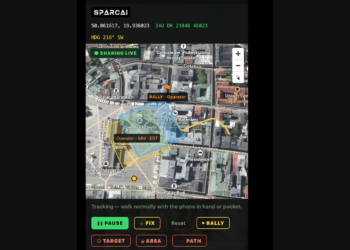
“We built a solution that is platform-agnostic and doesn’t rely on GPS,” she said. “Our system can process data from any drone and map it back to geographical coordinates, even in environments where electronic warfare disrupts traditional navigation systems.” In just over six months, from June 2023 to February 2024, Farsight Vision’s minimum viable product was operational on the frontlines, enabling soldiers to generate high-resolution, actionable terrain maps in as little as seven minutes.
The rapid development and iteration of their product was fuelled by feedback directly from battlefields and government ministries. This grassroots innovation attracted attention from the defence tech community, helping Farsight Vision integrate with other startups and secure grants and support from programmes like Brave1.
But Viktoriia ran into a fundamental problem: “usually software in military policies and bureaucracy is considered to be only an enabler of hardware.” This outdated perspective highlights the need for systemic change in military procurement, which often struggles to keep pace with the evolving nature of modern warfare. Military and government systems, she explained, must adapt to recognise software as a strategic asset in its own right, not merely a supporting element for hardware. “Software isn’t treated as a standalone product in military procurement systems,” Viktoriia explained. “We had to bundle our software with hardware to meet bureaucratic requirements, which was frustrating but necessary.”
Farsight Vision eventually secured €600,000 in pre-seed funding from Darkstar, with follow-on funding from the Freedom Fund and angel investors, as well as mentorship and connections through the Darkstar bootcamp. The investment marked a turning point, enabling the company to scale, hire, and incorporate in Estonia as e-Residents to mitigate the risks of operating solely within Ukraine’s volatile environment. “We’re now a 50/50 male-female company,” she said, proudly noting the diverse team they’ve built.
As Farsight Vision grows, its technology’s dual-use potential is becoming increasingly clear. Beyond military applications, the software can monitor infrastructure, gas pipelines, and even oceanic environments. “We’re focusing on military needs for now,” Viktoriia said, “but the use cases for this technology are vast.”
When asked about the kind of support Ukrainian startups need, Viktoriia emphasised the importance of collaboration over transactions. “Instead of just selling us products, we need partnerships where we can share expertise and build something together,” she said, going on to explain that startups like hers need advocates in other countries who understand the value they bring, partnerships that are built on shared innovation rather than one-sided transactions, as well as access to global grants and programmes that are often difficult to navigate. “We need people to share their knowledge and help us apply for programmes we might not even know about,” she added. Viktoriia also stressed the importance of adapting to different contexts: “Scenario planning doesn’t work if you’re not imagining the realities we face—like operating without helicopters or stable communication systems.”
As Farsight Vision continues to grow, Viktoriia has identified three key needs to accelerate their mission: strong partnerships with advocates and collaborators globally, an openness to learning from different contexts, and increased access to knowledge about funding and innovation programmes.
As our time with Viktoriia ended, she pointed out her sweatshirt with the Foxtrot emblem once more. A gift from the brigade she supports, it seems to encapsulate her journey from software executive to wartime innovator, driven by a profound sense of purpose and an unyielding commitment to her country. “It’s not just about building technology. It’s about helping people survive and rebuild, no matter what challenges come our way.”