The UK Government has pledged its biggest defence spending increase since the end of the Cold War and now plans to ‘turbocharge’ defence innovation. We have seen defence grow in importance on the political agenda, especially as it will be 2.5% of the nation’s GDP by 2027. It’s no surprise after three years of war in Ukraine and peace still uncertain (note: at the time of writing, Ukraine has agreed to a 30-day ceasefire, but Russia has not), along with the halt in US foreign aid and the hesitancy surrounding US military support in Europe. Now is the time for the UK to emphasise the growing opportunity that sovereign defence capabilities can harness when we tap more into space. Any investment into space catalyses tech development, so by investing more in defence (read space), you speed up innovation and the production process to end up with a better solution.
The overlap between space and defence
The relationship between the two might not be immediately apparent to those outside the space and defence sectors (or even some people within them). How can rockets leaving Earth’s atmosphere impact boots on the ground? Today’s battalions must be equipped with the latest technologies and have the means to counter the offences by the opposing side. Moreover, defence isn’t just soldiers on the battlefield fighting. Intelligence, reconnaissance, situational awareness and communications are a few crucial elements of both warfare and peacetime. If military assets are on the move, space-based assets provide the first warning bell.
Communication is key in all aspects of life, and defence is no different. Whether that’s among troops, allies, or satellites, the importance of sharing information and data is not to be undermined. The sustained tracking of rockets used to be down to a number of ground stations, relying on line-of-sight to provide telemetry data during flight. This obviously restricts companies and governments to where they can conduct launch operations to wherever this ground station infrastructure is. New space-based systems from the likes of ViaSat, using satellites to continuously track launch vehicles in real-time, reduce that dependence on ground-based infrastructure and offer added flexibility on launch locations.
Space activity should not operate in a silo. We need to overcome the status quo where defence is separate from space; these concepts must be synonymous so that we can improve efficiencies and monitor and receive updates in these industries. Doing so will benefit the entire nation in the long run.
Why launch matters
Unlocking sovereign launch capabilities will be a crucial step to pave the way for the UK space industry. This will be the foundation of a booming space ecosystem while also strengthening our national security and defence potential and creating a safer Europe.
Space is the first battlefield for effective defence strategies, and such technology cannot depend on third parties. Glasgow manufactures more satellites than anywhere else in Europe, but all of these are currently being shipped and launched elsewhere. Orbit relies solely on trust, which could easily be abused. While trust may not usually be an issue – as the UK is a long-standing ally of many ideologically and economically aligned nations – such a predicament would leave the UK too reliant on the support of foreign governments. In early March, the US briefly paused intelligence sharing with Ukraine, but has since resumed. A lack of the ability to launch and control our own satellites for communication leaves the UK dependent on the political whims of its allies.
Safety and security
Greater investment in space does not mean a blank cheque to run amok in the skies. While greater investment needs to be dispersed among the innovative space-tech companies that have the know-how to fortify our defence capabilities, we must do so responsibly. Make no mistake: this is not about calling for reams of red tape or bureaucracy for the sake of it, but rather ensuring that space endeavours are conducted safely and with regard for everyone.
There is a three-pronged approach to responsible launch: the environment, airspace and accountability. More funding will help the sector better protect protected species and maintain launch sites, effectively manage airspace, and remain accountable to the customer. Launching satellites for defence purposes also means safeguarding people and the environment while the payloads are still on the ground.
The great enabler
Space is paramount to defence-tech and a strong national defence strategy. Without capital to fund innovation in the sector, the UK cannot forge ahead in either industry. Nor can it set its own defence agenda or launch without international interference. Information sharing between space and defence needs to be accelerated, and greater awareness of the link and engagement coordination will enable us to better understand how to balance commercial space, civil society and defence.
More investment in defence should automatically mean more investment in space. Not only are the two intrinsically linked, but this will also foster greater innovation, which will, in turn, create jobs and boost economic growth. This is the focus of any British government and a handful of cutting-edge space-tech companies that act as “custodians” to deliver on both space and defence.
Volodymyr Levykin is a space and tech entrepreneur with a longstanding record of launching and managing successful innovative businesses in the UK and Silicon Valley.
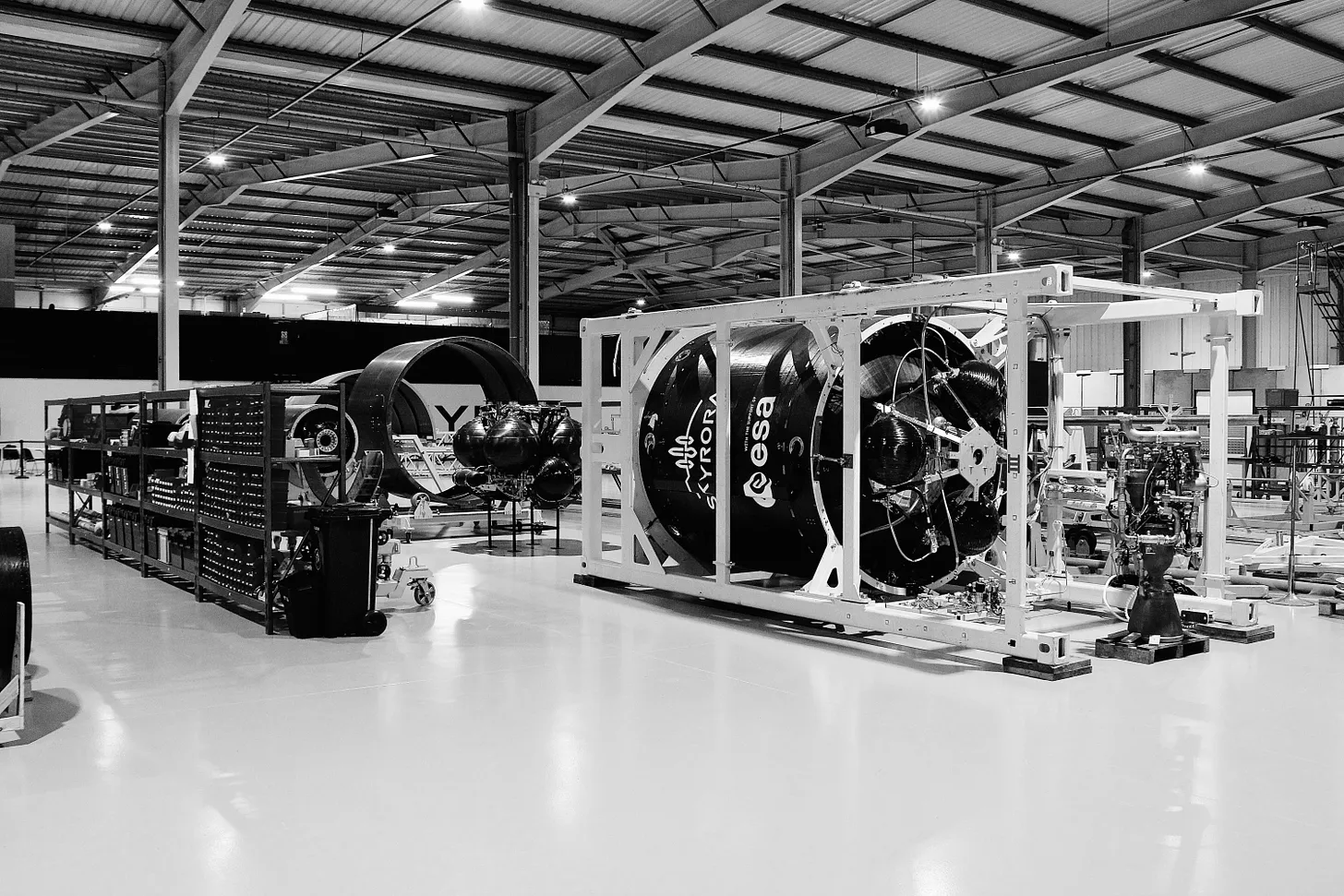
In 2021, Levykin was awarded the Space and Satellite Professionals International (SSPI) Personality of the Year for his work as the founder and CEO of Skyrora, a British satellite-launch company. He used private funds to launch and grow the company from a handful of individuals in 2017 to a team today of over 100 employees. Headquartered in Edinburgh (UK), Skyrora has extensive rocket manufacturing and engine testing facilities across Scotland.
Levykin was running an IT business in California when he decided to move back to his previous home in Edinburgh with his family to start Skyrora. Under his leadership, Skyrora has become the first company to complete a successful integrated rocket stage test in the UK since the 1970s among other disruptive technical milestones, including four suborbital rocket launches.
Prior to his move to the USA, Levykin was the Managing Director of an AIM-listed e-commerce business based in Scotland with over 600 employees worldwide, eventually selling his stake in the company and moving to Silicon Valley.