Tuesday 22 September, 2026
[email protected]
Resilience Media
  • News
    • Events
    • Interview
    • Startups
    • Venture
    • Weekly Digest
  • Resilience Conference
    • Resilience Conference London — Oct 2026
    • Resilience Conference Copenhagen — May 2026 (PAST)
    • Resilience Conference Warsaw — Apr 2026 (PAST)
  • Launch
  • About
  • Guest Posts
    • Author a Post
  • Subscribe
No Result
View All Result
  • News
    • Events
    • Interview
    • Startups
    • Venture
    • Weekly Digest
  • Resilience Conference
    • Resilience Conference London — Oct 2026
    • Resilience Conference Copenhagen — May 2026 (PAST)
    • Resilience Conference Warsaw — Apr 2026 (PAST)
  • Launch
  • About
  • Guest Posts
    • Author a Post
  • Subscribe
No Result
View All Result
Resilience Media
No Result
View All Result

PhysicsX confirms $20M from Nvidia at ‘nearly’ $1B valuation

The deal furthers a strategic partnership between the chip giant and the startup building an AI software engine for creating and testing hardware for defence, aerospace, manufacturing and others

Ingrid LundenbyIngrid Lunden
November 19, 2025
in News, Startups, Venture
Share on Linkedin

PhysicsX — the London-based startup building an AI-based software platform to run better simulations for those designing, building and testing advanced hardware — is getting a little more firepower to expand its business.

You Might Also Like

Iceland’s Laki Power charges up with €6M from NIF because electric grids are under threat

Germany has Europe’s biggest defence budget. Startups don’t get much of it

Denmark’s Final Frontier and Myriad join forces to create a new defence fund

Today the startup confirmed that NVentures, the VC arm of Nvidia, has made a strategic investment of $20 million into its latest round, bring the total funding for the Series B to $155 million.

The startup’s valuation appears to be staying largely flat with Nvidia’s infusion: it is currently at just under $1 billion, which was the same as it was in June 2025 when it initially announced the round at $135 million, led by Atomico with participation from Temasek, Siemens, Applied Materials, July Fund, General Catalyst, NGP, Radius Capital, Standard Investments, and Allen & Co.

For those who have been watching PhysicsX, this news might not come as a huge surprise.

For starters, the two had already been working together. Earlier this month the pair, along with Deutsche Telekom, said that PhysicsX would be a key partner on DT’s new Industrial AI Cloud, a service powered by Nvidia chips and other products that the carrier is building.

The three have a common goal: as manufacturing becomes more digitised, the hope is that more builders will adopt AI-based hardware and software to execute their work, and will in turn turn to clouds optimised for that work.

“The next industrial revolution will be AI-native — and the next generation of hardware will be imagined, designed, and proven in software. This investment reflects our investors’ shared conviction of that future,” said Jacomo Corbo, CEO & Co-Founder of PhysicsX, in a statement. “Together, we’re reimagining engineering and manufacturing and building the AI infrastructure to solve the most important industrial challenges of our time. The present can’t wait for tomorrow’s technologies and we’re working hard — with our customers, partners, and investors — to build the software that bridges that gap.”

PhysicsX might be optimised to work on Nvidia architecture, but it’s likely also heavily leaning on Nvidia chips to build and train its own platform. That compute does not come cheap, and so, as with other investments that Nvidia has made into AI companies, some of that funding is likely going to go towards defraying the cost of that compute, in a classic circular finance arrangement.

The other reason this may not come as a surprise is because rumours of the round surfaced at the time that the Nvidia-Telekom-PhysicsX deal was getting announced. Contacted for comment, neither Nvidia nor PhysicsX would comment on the other detail that was leaked at that time: that Nvidia was also committing to investing up to $100 million in PhysicsX between this Series B and future rounds. That extra, future $80 million will be predicated on how PhysicsX gets adopted by customers, meaning Nvidia’s investment placeholder could go up… or down.

On one side, the GPU chipmaker is currently the world’s richest technology company based on market cap, thanks to the current boom in AI (and its extreme reliance on GPUs). On the other, if the bubble that is currently surrounding AI does burst… that could spell a different outcome for a lot of companies.

It will be interesting to see if PhysicsX is one of them. The startup — whose product is predicated on the idea of ensuring better predictability in the process of designing, manufacturing and testing new hardware — has built resilience into its very fabric, in a sense. The company first emerged from stealth in 2023, founded by Robin Tuluie and Jacomo Corbo, two physicists who gained fame for their contributions to the high-performance automotive world, specifically in racing.

Initially, PhysicsX targeted companies in materials design, automotive and manufacturing, where building and testing new products cost a fortune and didn’t work well.

More recently the startup has been expanding its messaging to the concepts of technological sovereignty and resilience for its customers, and it’s added one more critical sector to its roster of target customers: defence.

Here, it’s courting customers (and presumably signing them: we are asking for customer names) that are building high-precision drones and other next-generation devices for reconnaissance, munitions and more. Typically, that is work sometimes being done under time-constrained and budget-constrained conditions. The work also comes with a high degree of complexity and potential failure, as the recent events in Kenya demonstrated.

“What PhysicsX buys you is the ability to be able to predict the physics [of a system] with very, very high accuracy and fidelity, doing it, anywhere from 10,000 to a million times faster,” Corbo told me in an interview in 2023.

Indeed, defence companies are working at the cutting edges of autonomy and cyber warfare, and so companies that present more efficient and foolproof ways to test the next generation of kit have become hot properties.


Tags: NvidiaPhysicsX
Previous Post

Chaos Industries raises $510 million to build counter-drone radar networks

Next Post

Kraken discloses Mike Pompeo as an investor and new international advisor

Ingrid Lunden

Ingrid Lunden

Ingrid is an editor and writer. Born in Moscow, brought up in the U.S. and now based out of London, from February 2012 to May 2025, she worked at leading technology publication TechCrunch, initially as a writer and eventually as one of TechCrunch’s managing editors, leading the company’s international editorial operation and working as part of TechCrunch’s senior leadership team. She speaks Russian, French and Spanish and takes a keen interest in the intersection of technology with geopolitics.

Related News

a street light in the snow at night

Iceland’s Laki Power charges up with €6M from NIF because electric grids are under threat

byIngrid Lunden
September 21, 2026

The NATO Innovation Fund is making another resilience tech investment out of its €1 billion+ coffer, and it happens also...

German military uniform

Germany has Europe’s biggest defence budget. Startups don’t get much of it

byPaul Sawers
September 21, 2026

A pattern is emerging among European defence-tech startups looking for sales: plenty of money is up for grabs, but the...

Denmark’s Final Frontier and Myriad join forces to create a new defence fund

Denmark’s Final Frontier and Myriad join forces to create a new defence fund

byFiona Alston
September 21, 2026

It started with a cup of coffee and ended up in two Danish early stage New Nordics defence funds becoming...

Terra bags $22M more to build out Africa’s first defence prime

Terra Industries puts $1M into Aeon, a Nigerian cybersecurity startup

byIngrid Lunden
September 18, 2026

After closing its $52 million seed round with a bumper $18 million in August, Nigeria's Terra Industries is using some...

The London Defence Tech Week programme is here

The London Defence Tech Week programme is here

byLeslie Hitchcock
September 17, 2026

From 1-8 October, London Defence Tech Week brings together conferences, networking events, workshops, investor gatherings and partner events across London....

Canada’s SPARC AI launches GPS-free positioning for soldiers

Canada’s SPARC AI launches GPS-free positioning for soldiers

byJohn Biggs
September 16, 2026

Canadian defense technology company SPARC AI has launched Overwatch Patrol, a positioning system designed to let soldiers track themselves and...

Martin Herem appointed Estonia’s new defence minister

Martin Herem appointed Estonia’s new defence minister

byIngrid Lunden
September 16, 2026

Two weeks after losing its defence minister amid a botched Ukraine procurement deal, Estonia has named a new person from...

‘We’ve had the proliferation phase in Ukraine, now we go into consolidation’

‘We’ve had the proliferation phase in Ukraine, now we go into consolidation’

byLuke Smith
September 16, 2026

When the MITS Lightning Fund closed its first venture fund in May, its partners had raised slightly more than $20...

Load More
Next Post

Kraken discloses Mike Pompeo as an investor and new international advisor

Helsing opens its first UK ‘Resilience Factory’ to build maritime tech

Helsing opens its first UK 'Resilience Factory' to build maritime tech

Top stories

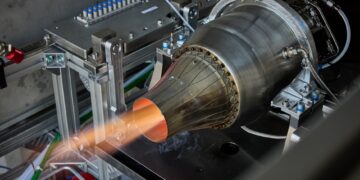
The UK built and flew a new jet engine in under seven months
UK Defence

The UK built and flew a new jet engine in under seven months

September 17, 2026
The London Defence Tech Week programme is here
Events

The London Defence Tech Week programme is here

September 17, 2026
‘We’ve had the proliferation phase in Ukraine, now we go into consolidation’
Interview

‘We’ve had the proliferation phase in Ukraine, now we go into consolidation’

September 16, 2026
German military uniform
News

Germany has Europe’s biggest defence budget. Startups don’t get much of it

September 21, 2026

Resilience Media is an independent publication covering the future of defence, security, and resilience. Our reporting focuses on emerging technologies, strategic threats, and the growing role of startups and investors in the defence of democracy.

  • About
  • News
  • Resilence Conference
    • Resilience Conference Copenhagen 2026
    • Resilience Conference Warsaw 2026
  • Guest Posts
  • Subscribe
  • Privacy Policy
  • Terms & Conditions
  • Mission Statement & Code of Practice
  • Press

© 2026 Resilience Media

No Result
View All Result
  • Home
  • About
  • Subscribe
  • Events
  • Guest Posts
  • Interview
  • News
  • Resilience Conference London 2026
  • Resilience Conference Copenhagen 2026
  • Resilience Conference Warsaw 2026

© 2026 Resilience Media

This website uses cookies. By continuing to use this website you are giving consent to cookies being used. Visit our Privacy and Cookie Policy.