Sunday 26 July, 2026
[email protected]
Resilience Media
  • News
    • Events
    • Interview
    • Startups
    • Venture
    • Weekly Digest
  • Resilience Conference
    • Resilience Conference Warsaw 2026
    • Resilience Conference Copenhagen 2026
    • Resilience Conference London 2026
  • About
  • Guest Posts
    • Author a Post
  • Subscribe
No Result
View All Result
  • News
    • Events
    • Interview
    • Startups
    • Venture
    • Weekly Digest
  • Resilience Conference
    • Resilience Conference Warsaw 2026
    • Resilience Conference Copenhagen 2026
    • Resilience Conference London 2026
  • About
  • Guest Posts
    • Author a Post
  • Subscribe
No Result
View All Result
Resilience Media
No Result
View All Result

Stark acquires Pleno as autonomous flight and swarming become battlefield necessities

“[We] never saw low-cost unmanned systems as the finish line – it was only the beginning.”

Resilience MediabyResilience Media
July 17, 2025
in News
Virtus. Photo credits: Stark

Virtus. Photo credits: Stark

Share on Linkedin

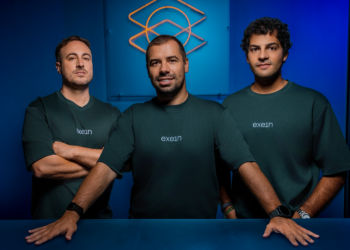
One of the biggest priorities for drone makers building for military end users is ensuring that their devices can be secured from jamming and other malicious interference. This week, drone company Stark took a significant step in building up its own resilience to cater to its target market, with the acquisition of Pleno, a specialist in autonomous navigation software.

You Might Also Like

Germany puts money where its mouth is

Russian strike hits defence technology demo day near Kyiv

NATO, Microsoft, NATO Innovation Fund Leaders to Speak at Resilience Conference London

Pleno’s co-founder and co-CEO, Nino Lindenberg, is joining Stark as Director of Al and Navigation as part of the deal, but other terms, including financial, are not being disclosed.

Both companies are based out of Berlin, and Pleno, founded in 2023 as a climatetech startup, had raised less than $500,000, mostly from accelerator programs, per PitchBook records. Since its pivot into drone navigation, it has been backed by Nvidia Inception, K.I.E.Z., the Define Defence Accelerator out of Finland, and Spain’s BFAero.

Stark, for its part, is reportedly backed by Peter Thiel and Sequoia although the company has declined to comment on who its backers are and how much it has raised. (PitchBook notes it has raised around $30 million and has a valuation of around $100 million.)

Stark, prior to picking up Pleno, already had a software business: its current product range includes a command and weapons control system (CWC) called Minerva, alongside its AI-guided strike drone, Virtus (also known as OWE-V, short for One Way Effector Vertical Vertical Take-Off and Landing (VTOL), which has Minerva integrated into it. Virtus has already been tested in live-fire conditions in Ukraine – live use being a critical milestone not just for founders but also investors and would-be customers.

So why buy another software company in the form of Pleno? The answer lies in the power of software.

In one sense, software is the more scalable business opportunity since other drone makers can also buy it. But it is also perhaps the most critical one. Drones may have changed how wars are fought, but equally they have also opened the door to a new wave of how the opposition fights back, in the form of jamming and other forms of malicious software hacking.

Pleno’s focus is specifically around building navigation and simulation tools that can work through the attacks made on Global Navigation Satellite Systems (GNSS). It offers two AI-based flight autonomy and simulation tools, PLENO Sim and PLENO Lab.

This is a shift for the startup. Pleno’s focus initially was on making low-cost first-person-view (FPV) quadcopter drones autonomous by combining vision-based navigation, neural network-based computer vision and terminal guidance. However, Lindenberg told Resilience Media that the startup “never saw low-cost unmanned systems as the finish line – it was only the beginning.”

Pleno’s tech will now help contribute to Stark’s work on autonomous drone swarms, particularly Virtus. Its most direct rival, the HX-2 loitering munition, is already advertised as swarm-capable by its maker Helsing, which is backed by Daniel Ek.

“Autonomous flight and swarming have become battlefield necessities,” Lindenberg said. Combined, these can take out large targets without multiple human operators in close proximity. But swarming — where drones fly together like bees — is especially difficult to pull off when communications are jammed and radio links pose major security risks.

Pleno had already secured three pilot projects with a total contract value of €150,000 and over €1 million in its pipeline, according to the company. These are still being followed through post-acquisition.

“Joining Stark allows us to move faster, build deeper, and deliver where it matters,” Lindenberg said in a statement.

The acquisition comes at an interesting moment for Stark. The company was co-founded only last year, in 2024, by Florian Seibel, who is better known as the CEO of Peter Thiel-backed defence tech unicorn Quantum Systems. Seibel, however, is not Stark’s CEO; and despite rumors, neither is Project A founder Uwe Horstmann, according to Stark’s spokesperson.

Lindenberg, a former Bundeswehr member who had gone on to study machine learning and become a software engineer, co-founded Pleno with Indonesia-born Ngurah “Nura” Linggih, a former project manager. It appears that only Lindenberg will be joining Stark; Resilience Media contacted Linggih for confirmation.

The duo’s initial focus was automated carbon measurement with satellite remote sensing; but after they joined Techstars Berlin Accelerator in 2024, they pivoted into AI-enabled drone autonomy. With a new MVP reportedly built by Lindenberg in close collaboration with a Ukrainian AI module manufacturer, Pleno went on to win awards in startup competitions. It is also said to be the second team from EDTH’s Munich 2024 hackathon to get acquired.

Although a number of drone companies have staked their strategies on flexibility, specifically the ability to integrate with other systems, this deal underscores another approach. Vertical integration, in this case where a drone maker’s software and security systems are tightly connected to the device, appears to be part of the main selling point here for Stark.

“The acquisition of Pleno is part of our broader strategy to accelerate momentum in autonomy and AI, and to get cutting-edge technology into the hands of military users now,” said Johannes Schaback, co-founder and CTO of Stark. “Bringing a Berlin-based company into the Stark family reinforces what we’ve always believed: Europe, and Germany in particular, has the talent and infrastructure to deliver the next-generation capabilities NATO and Allied Forces urgently need. We’re proud to help make that a reality.”


Tags: GermanyNino LindenbergPlenoStark
Previous Post

Ukraine launches K4 Startup Studio to fund battlefield AI

Next Post

Anduril’s Edge Data Mesh Just Made the British Army a Lot Faster

Resilience Media

Resilience Media

Start Ups. Security. Defense.

Related News

white concrete building with flags on top under blue sky during daytime

Germany puts money where its mouth is

byIngrid Lunden
July 24, 2026

Germany is putting its money where its mouth is — literally. Earlier this week, Katherina Reiche, the country’s minister for...

Russian strike hits defence technology demo day near Kyiv

Russian strike hits defence technology demo day near Kyiv

byLuke Smith
July 24, 2026

The war in Ukraine continues to escalate, and today saw a strike land directly into the very workings of the...

Iceye, the Finnish satellite startup, nabs €1B at a €10B valuation amid growing demand for space intel

NATO, Microsoft, NATO Innovation Fund Leaders to Speak at Resilience Conference London

byLeslie Hitchcock
July 23, 2026

Resilience Conference London is pleased to welcome James Appathurai, NATO Deputy Assistant Secretary General for Strategy and Policy, Cyber and...

Never Despair: Lessons in resilience from one of the last surviving members of the French Resistance

Never Despair: Lessons in resilience from one of the last surviving members of the French Resistance

byHugo Jammes
July 22, 2026

Editors' note: Hugo Jammes, a founding partner of EDT Ventures and former head of the UK's National Security Strategic Investment...

Wes Streeting takes Defence brief and Healey moves to the Treasury

Wes Streeting takes Defence brief and Healey moves to the Treasury

byCarly Pageand1 others
July 21, 2026

One of Whitehall's biggest jobs has landed with a former defence secretary, while a new face is now leading the...

Anduril unveils Thunder, an autonomous VTOL attack drone

Anduril unveils Thunder, a new autonomous ‘attack rotorcraft’

byIngrid Lunden
July 20, 2026

Anduril is adding another aircraft model to its range of autonomous and unmanned sea, land, air and space systems. Thunder...

Analysis: What Fedorov’s firing means for Ukraine and defence tech overall

Analysis: What Fedorov’s firing means for Ukraine and defence tech overall

byIngrid Lundenand3 others
July 18, 2026

Ukraine has been a trailblazer and pace-setter in the evolution from traditional defence to ‘defence tech’. Drones, AI, autonomous ground...

Singularity steps into the light with $80 million Series A to protect humans from cheap modern warfare

Singularity steps into the light with $80 million Series A to protect humans from cheap modern warfare

byFiona Alston
July 17, 2026

US defence startup Singularity has emerged from stealth with an oversubscribed $80 million Series A round at a $400 million...

Load More
Next Post
Anduril’s Edge Data Mesh Just Made the British Army a Lot Faster

Anduril’s Edge Data Mesh Just Made the British Army a Lot Faster

The Long Read: How Helsing Sees the World

The Long Read: How Helsing Sees the World

Most viewed

InVeris announces fats Drone, an integrated, multi-party drone flight simulator

Uforce raises $50M at a $1B+ valuation to build defence tech for Ukraine

Auterion, the drone software startup, eyes raising $200M at a $1.2B+ valuation

Palantir and Ukraine’s Brave1 have built a new AI “Dataroom”

Twentyfour Industries emerges from stealth with $11.8M for mass-produced drones

Senai exits stealth to help governments harness online video intelligence

Resilience Media is an independent publication covering the future of defence, security, and resilience. Our reporting focuses on emerging technologies, strategic threats, and the growing role of startups and investors in the defence of democracy.

  • About
  • News
  • Resilence Conference
    • Resilience Conference Copenhagen 2026
    • Resilience Conference Warsaw 2026
    • Resilience Conference 2026
  • Guest Posts
  • Subscribe
  • Privacy Policy
  • Terms & Conditions
  • Mission Statement & Code of Practice
  • Press

© 2026 Resilience Media

No Result
View All Result
  • Home
  • About
  • Subscribe
  • Events
  • Guest Posts
  • Interview
  • News
  • Resilience Conference London 2026
  • Resilience Conference Copenhagen 2026
  • Resilience Conference Warsaw 2026

© 2026 Resilience Media

This website uses cookies. By continuing to use this website you are giving consent to cookies being used. Visit our Privacy and Cookie Policy.