Thursday 2 April, 2026
[email protected]
Resilience Media
  • About
  • News
  • Resilience Conference
    • Resilience Conference Warsaw 2026
    • Resilience Conference Copenhagen 2026
    • Resilience Conference London 2026
  • Guest Posts
    • Author a Post
  • Subscribe
No Result
View All Result
  • About
  • News
  • Resilience Conference
    • Resilience Conference Warsaw 2026
    • Resilience Conference Copenhagen 2026
    • Resilience Conference London 2026
  • Guest Posts
    • Author a Post
  • Subscribe
No Result
View All Result
Resilience Media
No Result
View All Result

Germany awards Stark and Helsing contracts to deliver next-generation strike drones

The move underscores Berlin’s growing focus on bringing AI-driven strike technology into frontline NATO deployments

Carly PagebyCarly Page
February 12, 2026
in News
Share on Linkedin

Germany is preparing to introduce loitering strike drones into frontline service after awarding contracts to two venture-backed defence startups linked to technology billionaires Daniel Ek and Peter Thiel, in deals that could be worth as much as €4.3 billion.

You Might Also Like

The war Rheinmetall thinks it’s fighting is not the one Ukraine is winning

China’s long shot in satellite tech

Varjo begins shipping “extended reality” training systems to Ukraine

Munich-based Helsing and Berlin-based Stark Defence have each secured initial contracts worth €269 million to supply so-called kamikaze drones to the Bundeswehr, according to procurement documents submitted to Germany’s parliamentary budget committee and obtained by the FT. 

The agreements include options that could expand Helsing’s contract to €1.46 billion and Stark’s to €2.86 billion, although it’s not yet known why Stark’s programme carries the higher potential ceiling. The number of drones being purchased has also been redacted from the documents.

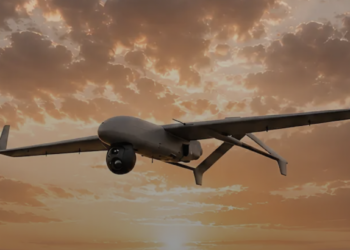
Helsing, backed by Spotify founder Ek, will supply its HX-2 loitering munition, while Stark, backed by US investor Thiel, will provide its larger Virtus drone. The procurement marks Germany’s first major deployment of explosive-armed unmanned systems and forms part of a broader push to equip Berlin’s new brigade stationed in Lithuania, where NATO is reinforcing its eastern flank in response to Russia.

Both contracts include “innovation clauses” requiring suppliers to continuously deliver upgraded versions of their technology, reflecting defence planners’ attempts to keep pace with the rapid evolution of drone warfare demonstrated in Ukraine.

However, the programmes have come under scrutiny for their performance during trials and combat testing. Stark reportedly failed to hit a target during two separate tests involving British and German forces, although the company described the setbacks as part of the normal development cycle for emerging systems. Helsing has also faced criticism following reports that HX-2 drones struck targets five times in 14 deployments in eastern Ukraine. 

Germany’s chief of defence, General Carsten Breuer, said during a visit to trials late last year that he was satisfied with the drones’ performance, according to the FT.

Both Stark and Helsing have been expanding their industrial and operational ecosystems ahead of anticipated demand. Stark recently acquired AeroMass Technologies, a specialist focused on building supply chains for defence equipment manufacturing, in a move aimed at scaling production capacity as orders increase. Helsing, meanwhile, has been building partnerships to integrate its software and AI targeting systems more closely into battlefield command networks, including a collaboration with Danish defence software firm Systematic.

The rivalry between Stark and Helsing is increasingly visible, yet at times difficult to separate. A promotional display at Munich Airport, captured by Resilience Media this week, highlighted the startups’ competing drone capabilities while also underscoring how closely their messaging and positioning overlap. Given that both firms are vying for dominance in the same market and supplying technology to the same primary customer, the parallel branding reflects as much a shared mission as growing competition between two of Europe’s most prominent defence tech start-ups.

The contracts remain subject to Bundestag approval, with lawmakers expected to decide on the procurement shortly. Germany’s defence ministry and procurement agency did not comment. 

Tags: droneGermanyHelsingStark
Previous Post

Stanhope AI raises $8M for new approach of AI for physical applications

Next Post

Estonia needs to stay on guard, says Estonian Foreign Intelligence Service

Carly Page

Carly Page

Carly Page is a freelance journalist and copywriter with 10+ years of experience covering the technology industry, and was formerly a senior cybersecurity reporter at TechCrunch. Bylines include Forbes, IT Pro, LeadDev, The Register, TechCrunch, TechFinitive, TechRadar, TES, The Telegraph, TIME, Uswitch, WIRED, & more.

Related News

The war Rheinmetall thinks it’s fighting is not the one Ukraine is winning

The war Rheinmetall thinks it’s fighting is not the one Ukraine is winning

byJohn Biggs
April 2, 2026

This week, Rheinmetall CEO Armin Papperger made news with a blunt interview in The Atlantic about the changing face of...

birds flying in the sky during night time

China’s long shot in satellite tech

byPaddy Stephens
April 1, 2026

Starlink – estimated as the largest low Earth orbit (LEO) communications constellation by a long shot – has been invaluable...

Varjo begins shipping “extended reality” training systems to Ukraine

Varjo begins shipping “extended reality” training systems to Ukraine

byJohn Biggs
March 31, 2026

Varjo and Fynd Reality are deploying extended reality training systems to support the Ukrainian Armed Forces, allowing the military to...

Airbus demonstrates is autonomous Bird of Prey interceptor drone in Germany

Airbus demonstrates is autonomous Bird of Prey interceptor drone in Germany

byJohn Biggs
March 31, 2026

Airbus Defence and Space has completed a first demonstration flight of its Bird of Prey interceptor drone at a military...

black and white round illustration

Post-Quantum trials quantum-resilient drones built for future battlefield threats

byCarly Page
March 31, 2026

A UK-based cybersecurity startup claims to have done what many in cryptography circles have long written off as impractical: getting...

BEAM App

A BEAM of light for EU sovereignty as Belgium rolls out Matrix-based messaging app for government

byPaul Sawers
March 28, 2026

Belgium is rolling out its own secure messaging platform, as European states step up efforts to bring sensitive communications under...

Shield AI raises $1.5 billion to acquire Aechelon, a military simulation system

Shield AI raises $1.5 billion to acquire Aechelon, a military simulation system

byJohn Biggs
March 27, 2026

Shield AI is raising $1.5 billion in Series G funding at a $12.7 billion valuation, alongside $500 million in preferred...

Inside Ukraine’s plans to become a global military data hub

Inside Ukraine’s plans to become a global military data hub

byThomas Macaulay
March 26, 2026

Ukraine has a new inspector general in its Ministry of Defence: Yurii Myronenko, appointed on Wednesday evening to evaluate the...

Load More
Next Post
an aerial view of a snowy city at night

Estonia needs to stay on guard, says Estonian Foreign Intelligence Service

Dronamics partners with HENSOLDT to build a heavy defence drone with 24-hour endurance

Dronamics partners with HENSOLDT to build a heavy defence drone with 24-hour endurance

Most viewed

InVeris announces fats Drone, an integrated, multi-party drone flight simulator

Uforce raises $50M at a $1B+ valuation to build defence tech for Ukraine

Auterion, the drone software startup, eyes raising $200M at a $1.2B+ valuation

Twentyfour Industries emerges from stealth with $11.8M for mass-produced drones

Senai exits stealth to help governments harness online video intelligence

Palantir and Ukraine’s Brave1 have built a new AI “Dataroom”

Resilience Media is an independent publication covering the future of defence, security, and resilience. Our reporting focuses on emerging technologies, strategic threats, and the growing role of startups and investors in the defence of democracy.

  • About
  • News
  • Resilence Conference
    • Resilience Conference Copenhagen 2026
    • Resilience Conference Warsaw 2026
    • Resilience Conference 2026
  • Guest Posts
  • Subscribe
  • Privacy Policy
  • Terms & Conditions

© 2026 Resilience Media

No Result
View All Result
  • About
  • News
  • Resilence Conference
    • Resilience Conference Copenhagen 2026
    • Resilience Conference Warsaw 2026
    • Resilience Conference 2026
  • Guest Posts
  • Subscribe
  • Privacy Policy
  • Terms & Conditions

© 2026 Resilience Media

This website uses cookies. By continuing to use this website you are giving consent to cookies being used. Visit our Privacy and Cookie Policy.