Three years into the most drone-intensive conflict in history, Ukraine has built a defense tech industry that the world has started to take seriously.
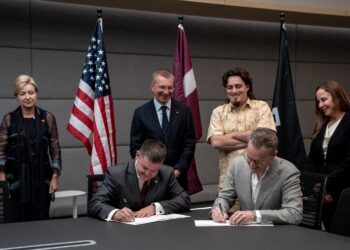
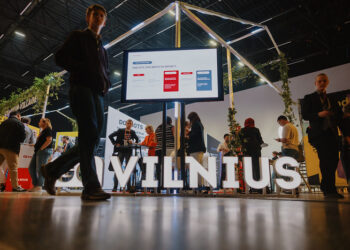
Over the past two weeks Brave1 — Ukraine’s state-backed defense tech cluster, which both backs and incubates defence tech startups and the wider ecosystem around them — brought 16 of the country’s most battle-tested startups to six American cities to pitch to venture capitalists, defense primes, and government officials.
The timing could not have been better.
Standing-room only
Iranian-designed Shahed drones, purchased and further developed by Russia, have pounded Ukrainian cities for years. Shaheds are now being used by Iran to target American forces and facilities in the Middle East, a development that has focused minds in Washington and led the UAE and Saudi Arabia to scramble for Ukrainian drone expertise designed to counter the weapons.
“This really came at the absolute perfect time,” said Davis Richardson, managing partner at America Ukraine Strategic Partners, a firm focused on connecting the two countries’ defence ecosystems.
The attention in the US that defence tech is getting right now with high valuations for a growing number of startups, combined with active warring in the Middle East and Ukraine’s particular expertise, made for a charged atmosphere at Brave1’s roadshow.
In Washington DC, a packed event space left many attendees standing. Investors from Andreessen Horowitz turned up at the New York demo day. Defense primes including L3 Harris sent representatives to Dallas.
“The primes are showing up, the institutional investors are showing up,” Richardson said. “There’s a lot of appetite surrounding this right now.”
Much of that appetite centers on the technologies Ukraine has developed out of sheer necessity.
“A lot of the attention is focused on interceptors and counter-drone solutions,” said Artem Moroz, head of investor relations at Brave1. “Ukraine has gained unique, real-world experience in protecting critical infrastructure and frontline units from large numbers of drones.”
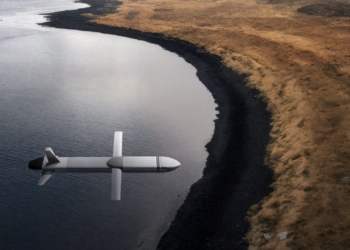
Brave1 said it has committed over $2 million in R&D grants for AI guidance modules for interceptor drones alone. Ukrainian engineers, it noted, are also developing AI that processes reconnaissance imagery to detect camouflaged targets in near real-time. These systems are not prototypes: they are running on active front lines.
Brave1 has backed a number of Ukrainian defence tech startups that are getting noticed, such as Swarmer, which had a heated IPO earlier this month in the US. To date, Swarmer has not disclosed any sales to the US, according to its SEC filings.
A meeting of the minds
For all the enthusiasm, the roadshow was also an exercise in translation — and Richardson was candid about where the friction exists.
Ukrainian companies like to say that they “innovate at the speed of war.” In other words, iteration cycles, which might take a Western startup months, collapse into days when battlefield failure is the alternative.
That tempo, however, doesn’t map cleanly onto standard investor due diligence, and Richardson acknowledged the adjustment Ukrainian founders have had to make. But he was equally pointed about the obligations on the American side.
“Americans are focused on KPIs, numbers, governance — what makes an investable company,” he said. “All of that is extremely important. But they also need to be aware that Ukraine is fighting a war. It’s not a typical VC process.”
Serious engagement, he continued, means sending the right people. “You can’t have investors just sending junior staff before the partners show up. If you’re serious about it, you’ve got to bring in the top dogs and show these Ukrainians absolute respect.”
Brave1 echoed the sentiment.
“The focus has been on building bridges,” said Moroz, “understanding each other’s processes and timelines.”
The long road ahead
For Ukrainian companies with ambitions in the US defense market, a strong pitch and a signed term sheet are only the beginning of a much longer road, since investment does not automatically lead into procurement (nor does procurement necessarily require private investment as a prerequisite, as some of the successful startups out of Ukraine have demonstrated).
Add to this that Ukraine is not a part of NATO. This is a contentious issue in itself in the war with Russia, since Ukraine is strategically aligned and signalled it wants to join NATO and NATO has been receptive, but Russia sees such a move as a significant red line. In terms of procurement, it means the standard pathways that govern how the Pentagon buys from foreign suppliers do not automatically apply.
Ukrainian founders are already wrestling with challenges like NDAA compliance — which are restrictions on the origin of certain components in systems sold to the US government.
But Richardson was quick to point out that’s just one item on a long list.
“The US system, in a lot of ways, has a lot in common with the Soviet system when it comes to procurement,” he said. “You need this license, you need this certificate. There are all of these barriers to entry that any foreign company is going to struggle with.”
America Ukraine Strategic Partners has spent years focused specifically on this problem — helping Ukrainian companies structure themselves as subcontractors and joint venture partners that can function inside the American defense industrial base.
There are some US deals starting to appear featuring Ukrainian companies — for example, F-Drones came out with a strong performance in the Pentagon-run “Drone Dominance” programme, paving the way for US Army procurement. But overall, it’s still early days.
“Yes, money is being thrown around. There are a lot of amazing announcements,” Richardson said. “But when you’re talking about sales to the US government, that’s where the most revenue is going to come from — and nobody’s looking at that right now.”
He did note movement on the policy front. The Trump administration has taken steps toward easing procurement hurdles for allied nations, and Richardson believes the regulatory conditions are gradually aligning.
What comes next
Brave1 expects the first concrete outcomes from its roadshow — investments, partnerships, or pilot agreements — to emerge within three to four months. Joint ventures that allow Ukrainian technology to plug into American manufacturing and R&D infrastructure are seen as the most natural early structure.
Richardson’s read on the larger trajectory is bullish. He compared it to the cryptocurrency industry, which many predicted would be dominated by Switzerland or the Gulf before a shift in US regulatory posture upended the field almost overnight. He sees a similar inflection point approaching for Ukrainian defense tech.
“When the US moves on this space,” he said, “it’s going to be seismic.”