Ukrainian defence startup Odd Systems is building a line of mission-specific camera systems designed for drones operating in electronic warfare environments, part of a broader effort by the country’s wartime tech sector to replace imported commercial hardware with systems tuned for combat conditions. The company, which blossomed out of Ukraine’s burgeoning pre-war startup scene, is now building entire drone systems to defend Kyiv.
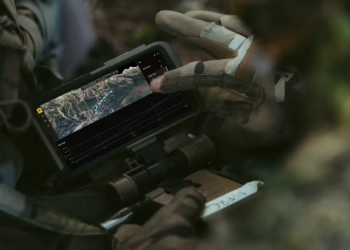
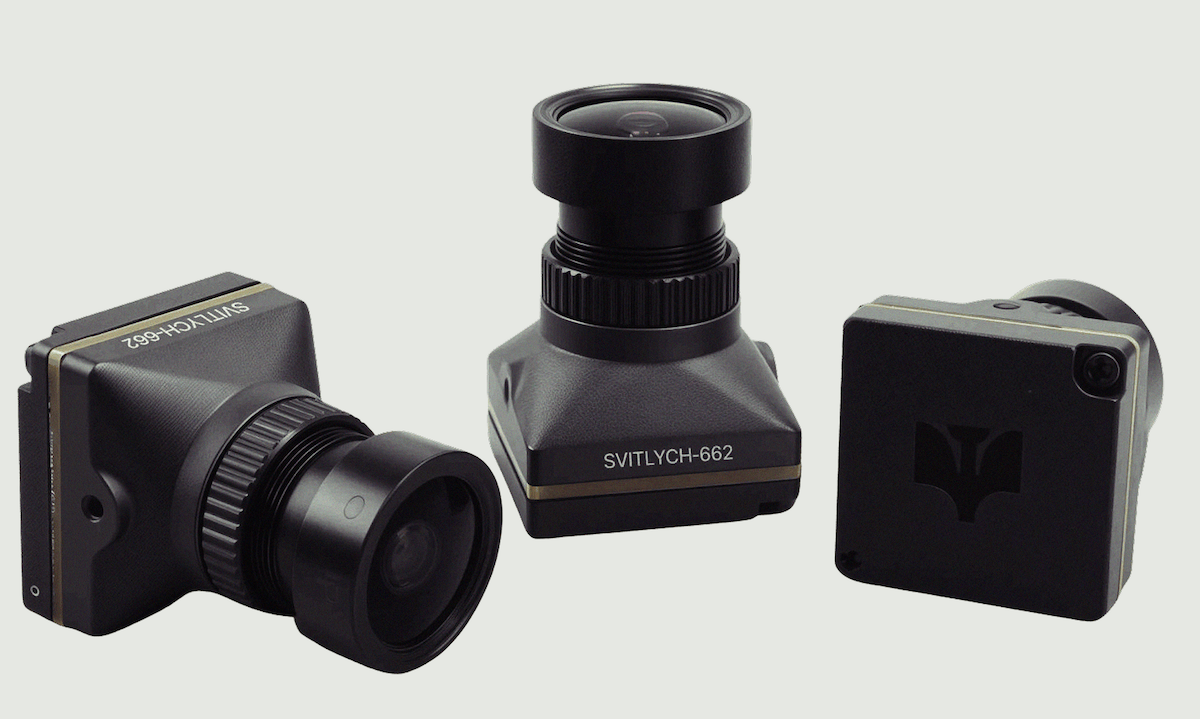
Their latest product, the Svitlych-662, is the company’s first Ukraine-built daylight camera for use on drones. The camera, named after a Ukrainian dissident Ivan Svitlychnyi, is a full-color 1920×1080 pixel camera with low-light capabilities. It is designed to ride on FPV drones and other uncrewed vehicles.
“Before the full invasion, the team members of our company were deep inside of different software companies building ride-sharing services, streaming services, and site-building platforms. Our co-founders built a pet camera called Petcube,” said Andrii Taganskyi, director of Odd Systems’ camera business. “They produced over one million cameras for the US market.”
“When the full invasion hit, all of us changed not only our daily routines but also the business we do,” Taganskyi said.
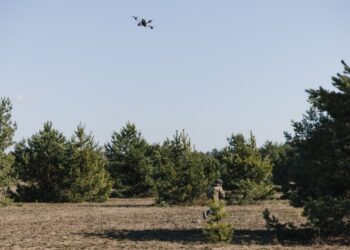
Odd Systems now operates two product lines, FPV and interceptor drones, alongside optical and thermal vision systems. The company says the cameras are designed specifically for military integration, with hardware and software adjustments aimed at extending target detection range, surviving electromagnetic interference, and connecting directly into onboard computer vision systems. While Taganskyi couldn’t go into details, his cameras are tuned to sense important fixtures and actors on a battlefield.
The company’s thermal imaging work has been underway for more than two years. Taganskyi said one area of focus is image processing tuned to specific thermal signatures, allowing operators or onboard systems to identify targets at longer distances.
“If you know what type of object you would like to hunt for, you can set up your image processing to some thermal signature,” he said. “It means you will see the enemy earlier than they will see you.”
Further, the company wants to make drones fully autonomous. Their new camera products are moving them towards that reality.
“We want to help newbie pilots, you know, to catch the target and then do complicated maneuvers to hit the target,” he said.
The ultimate goal is to have the drone which is fully autonomous.
According to Taganskyi, commercial drone cameras proved insufficient once unmanned systems became central to combat operations. He compared the difference to consumer footwear versus military boots.
“There could be some great product like Nike shoes and they are quite universal,” he said. “But when you need military boots, you need something specific.”
The systems are also designed to function inside larger drones where magnetic interference and weather conditions can disrupt standard electronics. Odd Systems says the cameras must interface with different single-board computers and onboard autonomy stacks, requiring both hardware and software adaptation.
“The ultimate goal is to have the drone which is fully autonomous,” Taganskyi said. He described a future system in which drones launch automatically after a target is detected, travel to a designated zone, classify the target, and strike it without continuous operator control.
That future, he acknowledged, raises unresolved questions about human oversight and the limits of autonomous weapons.
“We need to find an answer,” he said. “Where is the border, the red line of autonomous versus control?”
Transcript
Welcome to Resilience. I’m John Biggs. Today we have Andrii Taganskyi. He’s the director of camera systems from Odd Systems. It’s a Ukrainian defense tech company. they have a bit of news that just came out. they have the Svitlych six six two full color camera. welcome Adria.
Andrii T (00:33.557)
Hello everyone. Hello, John.
John (00:34.582)
Yeah. So tell me tell me what you’re telling me what you’re building here. The the odd systems sounds like a fun sounds like a fun name, but what it’s it’s you have a you have a pretty hardcore mission. Why don’t you tell me about what what odd systems is?
Andrii T (00:47.545)
So before the full invasion the team members of our company were deep inside of software different software companies building ride sharing services, streaming services and like site building platforms. And also our co-founders were building pet camera. So the pet cube company
Produced over one million cameras for the US market. Yeah, yeah. So that was so this is a camera which you can use to play remotely with your pet. So when you are in the office. So then when the foo invasion hit, all of us changed our like not only daily retreat routines but also the business we do.
John (01:19.817)
well yeah I yeah, I remember I remember Pet Cube.
Andrii T (01:45.754)
And we started with at Opt Systems we started with drones and a bit later with cameras. So it is funny how we like choos the name of the company. So there was a voting process of co founders and each of them suggested some names and then we voted for each of the names.
names and odd systems was the let’s say less unlikely for like all of the participants. Yeah so and we name it named it as odd systems. And then we decided to name our products with the names of dissidents who were murdered by Russian and Soviet regimes in the past.
John (02:43.757)
Okay, so this and this was sh this Schwittlich was was a dissident.
Andrii T (02:48.093)
Yeah, so it is named by the name of Svitlinsky, yeah, who is like a poet and literary critic and one of the leaders of nineteen sixties yeah of the like national democratic movement in Ukraine. So he was imprisoned in labor camps like for his pro Ukrainian use.
John (03:14.359)
No, okay. All right. So so tell me about the the quote unquote camera business when it comes to defense. Why why do you need a camera like this? What’s the what’s the goal?
Andrii T (03:24.853)
So the thing is that when you like before twenty twenty two, the drones were like hobby toys, let’s say. So yeah, like it was a hobby to develop drones and find them. But then when we started using drones for military missions, like step by step we all realized that we need some mission specific
devices like cameras. So there are a lot of requests for what we see so for image processing and also there are a lot of different requests for the interfaces to integrate cameras with different types of platforms and systems and therefore when we turned on our product mindset towards solving these requests and problems
so we found that unlike usual cameras either daylight or thermal we can create mission specific cameras. It’s like when you I don’t know, so there could be some great product like Nike shoes, you know, they are quite universal, you know, but when you need military boots, you know, so you need something specific.
John (04:50.709)
Mm-hmm. What’s the what are what are some of the specific things that are I mean, I’m I’m assuming they’re more rugged. I’m assuming they can they can handle more more I guess more tougher conditions. but is there anything specific that you guys had to do to to build them out so they could be combat ready?
Andrii T (05:09.695)
So if we talk about thermal cameras and so daylight cameras this direction we launched just in the beginning of this year. So the innovation process is on the way, yeah, but thermal cameras we do for over two years and like what what’s the difference with usual thermal cameras?
So first of all the image processing. So if you know like what type of the object you would like to hunt for, you can set up your image processing to like some thermal signature, let’s say so. Yeah, and it means that you can identify the target on the
large on the larger distance. And it it seem it it means that you will see the enemy earlier than they will see you. And this gives you like some advantage. Then the interfaces. So you need to integrate the camera with different types of single boards, you know, and with different types of computer vision.
John (06:16.173)
Mm-hmm.
Andrii T (06:33.005)
And you need to use camera in some circumstances of the weather or inside large drone, you know, where the a lot of magnetic fields are applied. So and all these are requirements and you need to solve the issues on the hardware side and on the software side as well.
John (06:52.716)
Mm-hmm.
John (07:00.171)
And there’s and there is there is there target sensing inside the camera or does it just optimized for target sensing? Does that make sense?
Andrii T (07:08.383)
It is optimized but yeah, step by step the changes so we like are summarized and it leads to some like new product.
John (07:21.525)
Okay, I gotcha. Yeah. I mean you don’t you don’t have to go into too much detail. I understand this is probably this is probably you don’t want to talk too much about the the inner workings. I’m just trying to understand if there’s AI in the camera, for example, if there’s if there’s image sensing or object sensing in the camera versus on board the on board the the drone or actually way back where they with the drone operator is at if that if that makes sense or if there’s any or if it’s just basically a camera shoots us shoots a signal back to the system. why
Why why cameras aside from PetCube, is this a is this gonna be the the the focus of odd systems or are there gonna be other products that you guys are making?
Andrii T (08:02.239)
so at Old Systems we have two business directions, business units, yeah, like one unit is focused on drones and we do FPV drones and also we do interceptors. And the second direction are vision systems. So this is like cameras and accessories for for the cameras.
John (08:28.277)
Okay. And these are and these are these are for military only. They’re you’re not they’re not you’re not gonna be selling to average consumers.
Andrii T (08:36.031)
right now, yes. so we are focused on our defence and this is primarily goal for our team and this is like mission specific right so mission not only for the military but for like for us to defend our country. Yeah, but we are looking at the company as something that exceeds the term of the war.
And it means that we definitely like need to find and work on other applications.
John (09:07.821)
Yeah, of course.
John (09:13.963)
Okay. All right. and what’s the what’s the funding? How did you guys how did you guys build out?
Andrii T (09:20.245)
So in the beginning it was like a bootstrap, so bootstrapping. So our co-founders put some money into the initial growth and experiments. And then we had some government grants to finance our early products. And then we like growing
month to month, you know, quarter to quarter, and like our sales finance the further development and R and D.
John (10:00.501)
Mm. All right, very cool. All right.
Andrii T (10:02.165)
So currently we are sell like sufficient, you know, and sustainable.
John (10:07.733)
And you’re completely based in Kiev.
Andrii T (10:10.127)
yeah.
John (10:12.525)
All right. Interesting. what do you think is the what do you think of the future for for computer vision and and warfare? What needs to happen? What needs to what’s what’s the what’s your ideal product that you want to build?
Andrii T (10:23.829)
So our sister company, the Force Law, they are building autonomy and they are focused on the future of autonomy. today they sell thousands of products to our defense forces and they help to overcome radio horizon to overcome radio jamming.
John (10:24.693)
Hmm.
Andrii T (10:53.365)
You know, and also to help newbies, newbie pilots, you know, to catch the target and then do complicated maneuvers to hit the target. But the ultimate goal is to have the drone which is fully autonomous. So it means that there should be some like launchpad.
John (11:03.725)
Mm-hmm.
Andrii T (11:22.281)
Yeah then the signal comes that there is a target in the zone of interest and then the drone should be should be launched you know automatically and then go to the zone of interest and identify the detect and identify and classify the target and then to hit it. So and it should be integrated into
into like a larger system which includes like ISR which includes like sensoring and mm like decision making process and acting. So this is about like interceptors and something very similar to words like frontline strike drones and other types of drones.
John (12:21.933)
So the so the goal is almost completely autonomous attack, right? And as what’s and I obviously from the name first law you have to you have to consider you have to consider the the implications of that. What are some of the s fail safes do you think that need to be put in place to to to control for, I don’t know, accidental?
Andrii T (12:26.589)
Right, cried the
Andrii T (12:42.323)
I believe this is a question, I mean we need to we need to find an answer. Where where is the where is the border, you know, the red line of autonomous versus control?
John (12:57.729)
Fascinating. All right. Well, odd systems. you guys are out of Kiev. You’re going to look at them at oddsystems.io. And and thank you, Andre, for this for this look inside this inside the company.
John (13:15.287)
This has been Yep, go ahead.
Andrii T (13:15.655)
yeah, yeah, please repeat it again.
John (13:19.211)
It’s all right. yeah. th thank you for this look inside the company.
Andrii T (13:23.229)
Yeah, yeah. Thank you for your questions and yeah, thank you for spreading the word.
John (13:29.484)
This has been Resilience. I’m John Biggs. We’ll see you next time.