European defence technology company Project Q has launched HYDRIS, an open source integration and orchestration platform designed to connect sensors, drones, command-and-control systems, and other military capabilities from different vendors into a single operational environment.
The Munich- and Berlin-based company says the software is intended to tackle one of the biggest challenges facing modern armed forces: integrating new technologies into existing military systems quickly, securely, and without creating long-term dependence on a single supplier.
The launch builds on Project Q’s unveiling of its Unattended Ground Sensor (UGS) Mission Kit at Eurosatory last month. That passive surveillance system relies on HYDRIS to integrate seismic-acoustic sensors with existing command-and-control networks, giving the company an early example of how it expects the software to underpin future defence capabilities.
HYDRIS is designed to work with what’s already there. Using open interfaces and plugins built around a Modular Open Systems Architecture (MOSA), Project Q says developers can connect new capabilities without rewriting integrations for every customer or mission system.
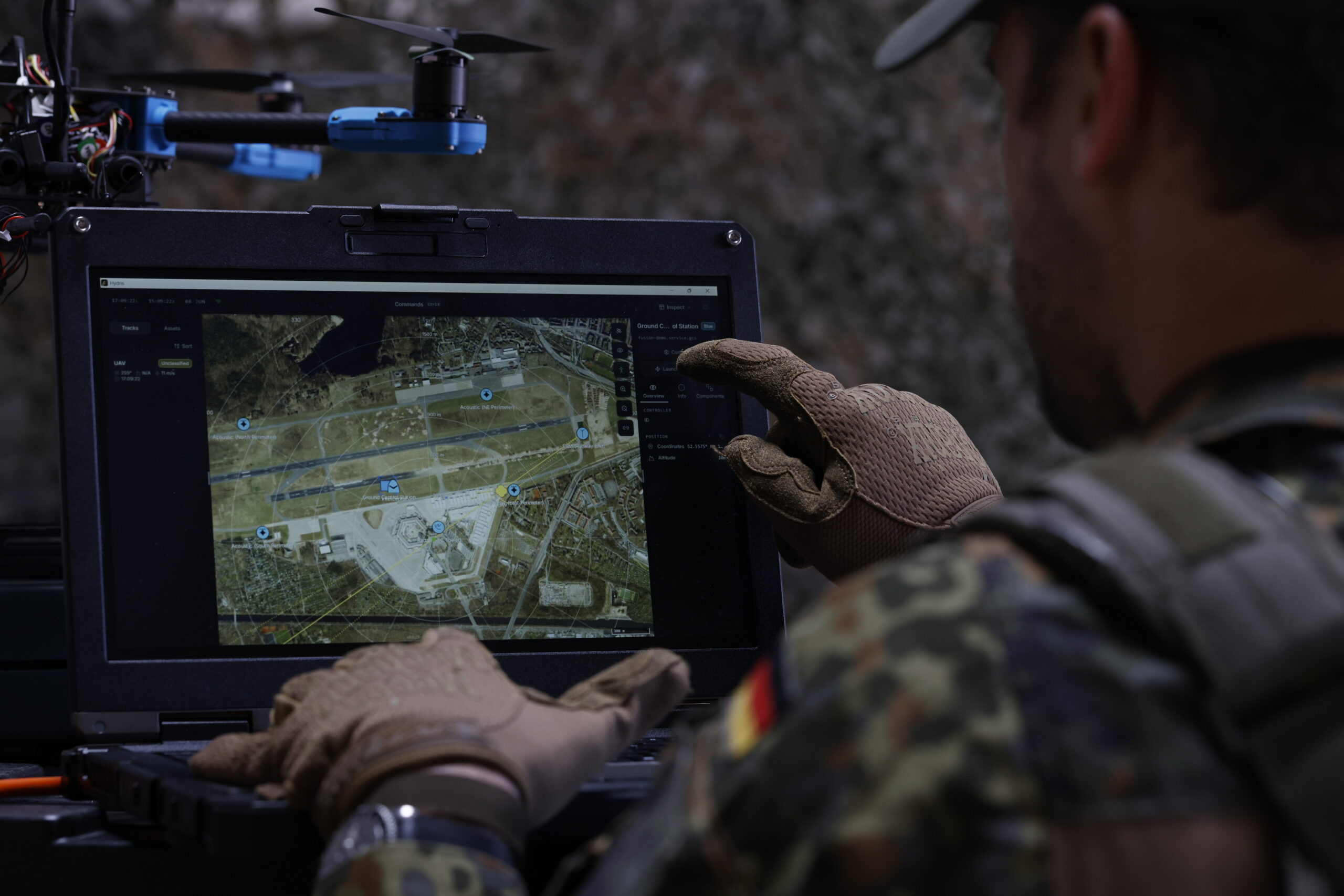
Project Q said the software combines data from connected systems into a common operational picture at the tactical edge and provides AI-assisted support to help operators prioritise information. It can also control manned and unmanned platforms through existing command-and-control systems or via the HYDRIS interface, although the company stressed that automation remains under human supervision.
“The future of defence lies not in replacing existing systems, but in connecting them,” said Leonard Wessendorff, CEO and co-founder of Project Q.
“Ukraine shows what matters today: continuous adaptability during ongoing operations – enabled by an open defence ecosystem. That is exactly what we built HYDRIS for.”
The company is positioning HYDRIS as part of a broader push towards European technological sovereignty. By making the integration layer open source while keeping sensitive operational data and export-controlled capabilities protected, Project Q says users retain control over their software, systems, and data without sacrificing security.
The platform is designed to run in containers on commercial off-the-shelf hardware within a customer’s own infrastructure and supports established NATO and industry standards. Project Q said interoperability has already been demonstrated during multinational exercises.
The company also argues the approach could lower barriers for smaller defence technology firms by allowing start-ups and SMEs to integrate their software through standardised interfaces rather than developing bespoke connections for every customer. If adopted more widely, that could make it easier for armed forces to introduce new capabilities without lengthy integration programmes or proprietary software lock-in.