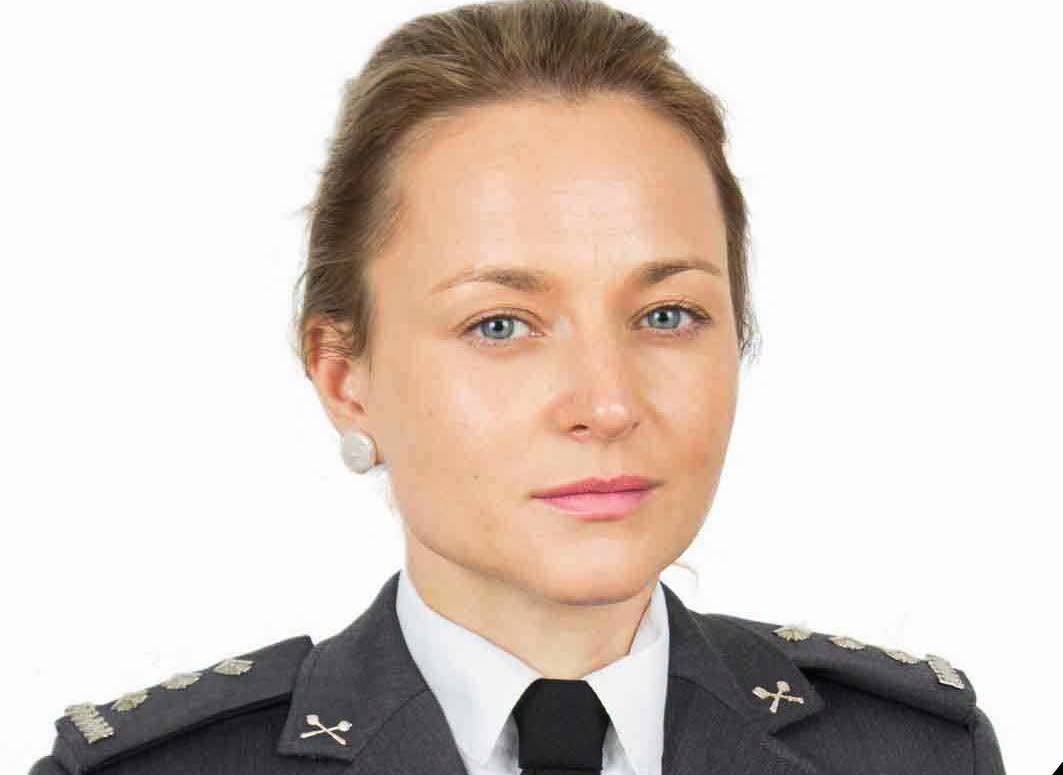
Valentyna Savitska, a colonel and senior strategic communications official, was among the 10 victims killed in a missile strike on a defence-technology demonstration event in the Kyiv region on Friday, according to multiple sources in Ukraine. Savitska was 32.
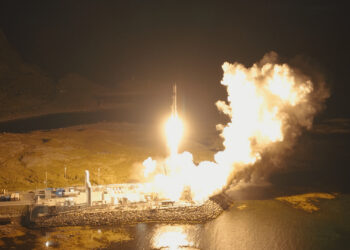
Russian forces attacked the site in the Bucha district of the city at around 11:30 a.m. on 24 July with three Iskander-M/S-400 ballistic missiles, according to a statement from Ukraine’s Air Force. One missile was intercepted, and two struck the area, killing at least 10 people and injuring around 100.
Savitska served as deputy head of the Centre for International Cooperation and Strategic Communications at the Department of State Protection of Ukraine.
In a statement, the department said Savitska’s professionalism, integrity and persistence had contributed to many of its achievements, including expanding international cooperation, strengthening relationships with foreign partners and improving strategic communications.
“My family has suffered a terrible tragedy,” wrote her husband, Ihor Solovei, head of Ukraine’s Centre for Strategic Communication and Information Security, SPRAVDI.
Solovei described his wife as an exceptionally kind, compassionate and devoted person, but also “a real colonel” who expected those around her to respect her professional achievements. Savitska is survived by her husband and two children.
Tributes from friends and colleagues have highlighted the importance of her work within Ukraine’s wider strategic communications community.
Journalist and former lawmaker Olha Chervakova said Savitska brought together people from very different backgrounds, built professional communities and created effective collaborations. Former Deputy Defence Minister Hanna Maliar recalled that Savitska regularly proposed ideas and practical solutions during closed meetings involving communications officials from Ukraine’s security institutions.
“She was never indifferent,” Chervakova wrote.
Also killed in the strike was an employee of a Polish defence company, according to Ukrainian and Polish media. Poland’s Foreign Ministry confirmed the victim was not a Polish citizen. GUR chief Kyrylo Budanov said foreign delegations were in the Kyiv area at the time of the strike, though he did not specify which countries were represented.
The tributes have added weight to the anger surrounding the circumstances of the attack. The event’s organisation had already attracted criticism over the decision to assemble hundreds of defence-sector representatives at an open-air location within range of Russian ballistic missiles.
Ukraine’s prosecutor general has said the principal organiser was detained and served with a notice of suspicion under an article of the Criminal Code covering negligence resulting in grave consequences. Searches were also conducted at the offices of the organising association and the homes of others potentially involved in planning the event.
According to investigators, more than 300 people were invited, including military personnel, government officials, international partners and business representatives. Prosecutors allege that the event was held without clearance from the military command, regional or district military administrations or other authorised bodies.
The programme included demonstrations of air defence systems, while the nearest shelter was reportedly around 100 metres away and had space for only a fraction of those attending. Invitations were distributed nine days in advance, with the location and time provided approximately 24 hours before the event, according to the prosecutor general.
No court has determined responsibility, and investigators are also examining whether police, security officials, military representatives or state and local authorities failed to respond adequately to the risks.
Debate continues around security process
President Volodymyr Zelenskyy was nevertheless unequivocal in his criticism.
“We have said a thousand times that under these wartime conditions, with such an enemy, it is absolutely unacceptable to hold any weapons exhibitions with large crowds of people, especially near residential buildings,” he said after the attack.
Zelenskyy’s position, however, sits uneasily with how Ukraine’s defence-technology sector has operated throughout the war.
Such events take place regularly and often include active-duty military personnel, government representatives, diplomats, investors and international defence companies.
Just nine days before the strike, Tech Force in UA held a live Demo Day in the Kyiv region that brought together nearly 500 participants, including Ukrainian service members, government officials and diplomats. More than 50 Ukrainian defence manufacturers displayed technologies, while 18 companies conducted live demonstrations involving drones, ground robots, electronic warfare and signals-intelligence systems.
Since the full-scale invasion, Zelenskyy’s administration has also organised and promoted a series of International Defence Industries Forums in Kyiv. The inaugural forum in 2023 brought together 252 companies producing weapons, defence systems and related technologies.
A controlled international forum is not the same as an open-air live demonstration of counter-drone and air-defence technologies. The risks, security requirements and operational demands are different. Nevertheless, the frequency of these gatherings makes the idea that no such events should occur difficult to reconcile with established state practice.
The more consequential question is not whether Ukraine can hold defence events at all, but which events require live demonstrations, where they may safely be conducted, how attendance should be limited and what level of coordination with the military and regional authorities must be mandatory.
ARMADA, the association involved in organising Friday’s demonstration, has disputed claims that the location was publicly advertised.
The association said the gathering was closed and that material circulated online as evidence of public promotion was a personalised invitation distributed through private channels. Attendees received the location only after registering and undergoing vetting, it said.
ARMADA also argued that the gathering was not a conventional exhibition, but a practical demonstration of systems intended to protect critical infrastructure. These reportedly included interceptor drones, electronic warfare and intelligence equipment, radar systems and technologies for detecting and intercepting aerial targets.
“Testing these systems requires open space where they can undergo practical trials,” the association said.
That explanation points to a broader problem confronting Ukraine’s rapidly expanding defence-technology sector. Demo days are not simply promotional showcases or networking events comparable to those held by Western technology startups.
For early-stage developers, the events provide access to military users who can determine whether a product addresses a genuine operational need. Soldiers can identify design flaws and explain how systems must be adapted to survive battlefield conditions.
More mature companies use demonstrations to show performance to military officials, potential customers and international partners. Investors attend to identify technologies capable of scaling, while manufacturers and developers look for opportunities to integrate their systems.
In Ukraine, the distance between an engineer identifying a battlefield problem, a soldier testing a proposed solution and a manufacturer producing an improved version can be measured in weeks rather than years.
The exceptionally tight cycle between development, testing and combat use has become one of Ukraine’s principal advantages. Friday’s attack showed that the same concentration of developers, military personnel, officials and investors that makes this system effective can also create an attractive target.
Kyiv and other cities far from the frontline have attempted to preserve a semblance of ordinary professional life despite recurring missile and drone attacks. Conferences, business meetings and technology events are part of that resilience, allowing Ukrainian institutions and companies to continue functioning under siege.
But the July 24 attack served as a stark reminder that in wartime, there is no “business-as-usual.”