Australia has unveiled a 10-year plan to overhaul how it develops and buys military technology, with AI, autonomous systems and undersea warfare among six capabilities earmarked for accelerated investment.
The 2026 Defence Innovation, Science and Technology (IS&T) Strategy, launched by the Australian government this month, sets six technology priorities for the coming decade: artificial intelligence, autonomous systems, high-energy lasers, long-range fires and hypersonic weapons, quantum technology and undersea warfare.
The bigger shift is in how Canberra plans to turn those technologies into usable military capability. That means accepting that the best capability may be the one that can be fielded now, rather than the more sophisticated system that arrives years later. The strategy allows Defence to buy systems delivering the “lowest acceptable level” of the required effect within the required timeframe, favouring minimum viable capabilities that can be tested quickly, produced affordably and scaled if they work.
This is a marked departure from the long development cycles and pursuit of increasingly sophisticated systems that have traditionally characterised defence procurement.
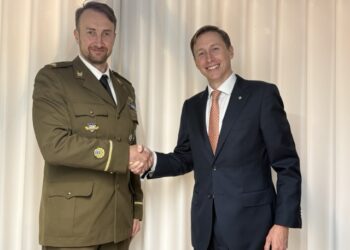
Admiral Mark Hammond, Australia’s Chief of the Defence Force, said the strategy would allow new technology to reach personnel sooner through a “balanced approach to risk”, closer partnerships with industry and academia, and rapid experimentation designed to “fail fast, learn faster and adapt quickly”.
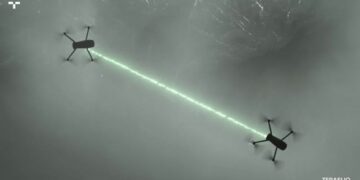
The shift comes as militaries around the world digest lessons from Ukraine and the Middle East, where relatively cheap drones, autonomous systems and rapidly modified commercial technologies have repeatedly demonstrated the value of being able to adapt at speed.
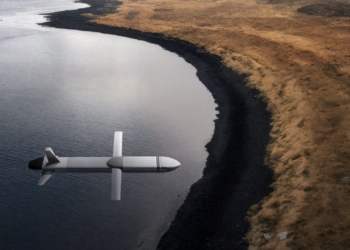
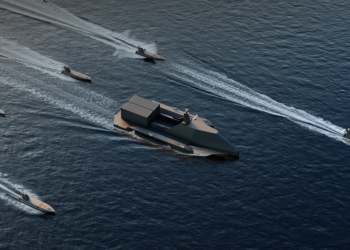
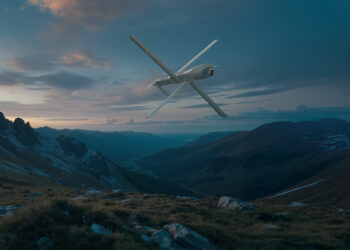
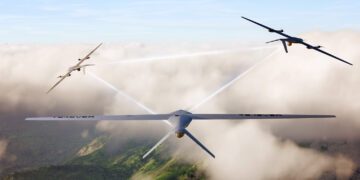
Australia’s government explicitly points to those conflicts in its strategy, including lessons around counter-drone systems, while the country’s existing Ghost Bat uncrewed aircraft and Ghost Shark autonomous undersea vehicle are cited as examples of the sort of platforms its technology priorities are intended to support.
The new priorities also differ from those Australia set only two years ago. AI and undersea warfare have been added; information warfare is no longer a standalone priority; directed energy has been narrowed to high-energy lasers; and hypersonics and long-range fires have been brought together.
There is significant money sitting behind the push. Australia’s 2026 Integrated Investment Program committed AU$425 billion (£225 billion) over the next decade to defence capabilities, including investment intended to accelerate delivery.
For industry, the strategy points to the Advanced Strategic Capabilities Accelerator (ASCA) and Defence Trailblazer as routes for bringing emerging technology into Defence. ASCA was established in 2023 to experiment against defined military problems and move promising technologies towards operational capability more quickly.
Australia’s emphasis on getting technology out of development and into service also lands at an important point for AUKUS, where the same question has dogged Pillar Two since the pact was launched.
Pillar Two is intended to deepen cooperation between Australia, the UK and US across advanced technologies including AI, autonomy, quantum, hypersonics and electronic warfare. But while the technology has moved quickly, building a genuinely trilateral model for developing and buying it has taken longer.
Kurt Campbell, former US Deputy Secretary of State and one of the architects of the Biden administration’s Indo-Pacific policy, said during a Q&A attended by Resilience Media that the past six or seven years had seen a proliferation of innovative companies developing autonomous systems, long-range sensors and other capabilities of exactly the kind envisaged under Pillar Two.
“The challenge is that most of that work has been done individually by countries,” Campbell said, adding that AUKUS had yet to develop enough three-way investment between its members.
Rather than jointly investing from the outset, he said, Pillar Two programmes have tended to involve the US developing technology before asking Australia and the UK to buy it. Sustaining the partnership, he argued, instead requires the three countries to build the capacity to invest together.
Campbell was candid about the difficulty AUKUS has faced in making that happen.
“I don’t think we were successful in being able to launch the kind of procurement process initially that would allow for the kind of things that you’re describing,” he said, describing the obstacle as primarily a bureaucratic one across the three countries.
He nevertheless argued that the conditions for closer cooperation are improving, noting that the Trump administration has placed greater emphasis on Pillar Two and that there is now more confidence in the future of the wider AUKUS arrangement.
That leaves Australia’s new strategy facing a familiar test. Identifying AI, autonomy, quantum and other technologies as priorities is relatively straightforward; building procurement systems capable of buying and deploying them at anything approaching the speed at which the technology itself is changing is considerably harder.
Australia’s answer is to accept that the first capability through the door might not be the most sophisticated one available. For AUKUS, the bigger question is whether three defence bureaucracies can learn to move at that pace together.