100 investors to watch 2026 100 investors to watch 2026 100 investors to watch 2026
Friday 16 October, 2026
[email protected]
Resilience Media
  • News
    • Events
    • Interview
    • Startups
    • Venture
    • Weekly Digest
  • Resilience Conference
    • Resilience Conference London — Oct 2026
    • Resilience Conference Copenhagen — May 2026 (PAST)
    • Resilience Conference Warsaw — Apr 2026 (PAST)
  • Launch
  • About
  • Guest Posts
    • Author a Post
  • Subscribe
No Result
View All Result
  • News
    • Events
    • Interview
    • Startups
    • Venture
    • Weekly Digest
  • Resilience Conference
    • Resilience Conference London — Oct 2026
    • Resilience Conference Copenhagen — May 2026 (PAST)
    • Resilience Conference Warsaw — Apr 2026 (PAST)
  • Launch
  • About
  • Guest Posts
    • Author a Post
  • Subscribe
No Result
View All Result
Resilience Media
No Result
View All Result

Vermeer’s Brian Streem tells the story of how he went from cinematography to building GPS-denied navigation for Ukraine

Stanislaw NaklickiIngrid LundenbyStanislaw NaklickiandIngrid Lunden
October 16, 2026
in Drones & UAS, Events, News, Resilience Conference, Startups, Ukraine, US Defence
Share on Linkedin

Going to film school might just get you running a drone software company. At least that’s what happened to Brian Streem, the founder of Vermeer.

You Might Also Like

Ukraine’s industry lacks parts to build interceptors, says D3 fund’s Eveline Buchatskiy

Augur takes new funding from Sovereign AI, inks deal to work on public safety with TfL

Kapta Space raises $24M Series A

The startup, which makes visual positioning systems that help drones and other uncrewed systems operate in GPS-denied environments, now has more than 40 customers, including agencies in the US government and major drone makers.

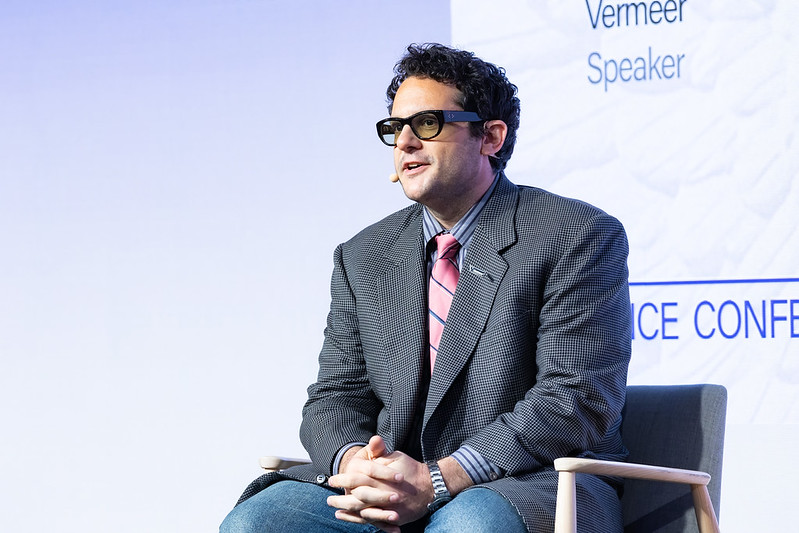
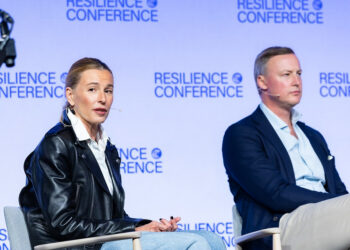
On stage at Resilience Conference earlier this month, Streem (pictured above) gave an at-times wry and funny, and ultimately very illuminating, recount of his unexpected move into defence tech.

Looking back at his company’s journey, Streem said it evolved from a project that had nothing to do with defence at the start.

The year was 2010, and Streem had graduated from New York University’s Tisch School of the Arts with a major in film production. At the same time that Streem was looking to make his way in the world of film, drones were also just starting to take off (so to speak).

Early efforts in drone technology were very much the domain of military research and development and DIY gadget hobbyists, yet 2010 was when that started to shift. It was in 2010 that Parrot in France launched the first ready-to-use model for the consumer market; and DJI (now the biggest drone maker in the world) came along a couple of years later with its first consumer model, the Phantom, in 2013. Alongside those hardware releases, commercial companies like Amazon were starting to play around with the idea of using drones for deliveries.

Amidst that push, Streem saw an opportunity to apply drones to cinematography. The idea was simple: take off-the-shelf drones and design camera technology that could be mounted on them for high-quality film shooting. Along with that, build some technology to improve how those drones could be navigated, using those cameras to bypass the inaccuracies of GPS.

Streem said that in 2014, he became one of the first certified drone operators in the US, and by 2015, he had founded Aerobo, a drone-as-a-service company. Aerobo had some momentum to it: it counted the Fast and Furious franchise and Steven Spielberg’s production company among its early customers, and Streem said it was, at the time, “the biggest drone cinematography service company in the world.” 

That work started to give Streem some profile in the industry, and he testified before Congress on drone regulation. In 2018, he rebranded the company to Vermeer from Aerobo to nail home the visual technology aspect, and by 2019, Streem was pitching his company to investors for backing to grow the business.

It was a comment from one of those investors that changed the course of where Vermeer was heading.

“I think the US Air Force would be very interested in this,” the investor told him. 

That might seem ironic now — drones were born in the military, after all — but as is the way with so much innovation, it’s often harder for large organisations to move it along than it is for smaller, fleet-of-foot startup.

Looking for more cutting-edge thinking, it just so happened that the US Air Force had set up an accelerator with Techstars in 2018, and so Streem applied and eventually got accepted to join its second cohort.

Drones may have had their origins in the military, but working with the military was very new territory for Streem, so he did what a lot of startup founders do when building products.

“I spoke to probably two thousand people at the Department of Defense” to understand their technological challenges, he recalled with his eyes widening.

He said he was surprised to learn that what his team had built as a side-feature to the image capture tech was exactly what the DoD lacked: “Everyone said: GPS-denied navigation.” 

Things started to accelerate after that for Vermeer.

Within the first 18 months after the accelerator, Vermeer raised $11 million, largely from the US Air Force. Then, geopolitics and — significantly — the new tools of technological warfare overtook whatever business plans he may have sketched out for his startup.

“As it so happens, a big war breaks out in Europe, and one of the first things that disappears is GPS,” said Streem. Thus, an instant market demand materialised nearly overnight for Vermeer and the wider ecosystem of drones and drone technologies that are now being used and developed for the battlefield against Russia.

Vermeer’s core focus these days is continuing to build out its visual positioning systems (VPS), which is what is drawing in new business at the moment.

With navigation based on visual observation, VPS has become one of the key ways to orient devices like drones in GPS-denied environments, since VPS requires no signal transmission, making it immune to jamming and spoofing.

Vermeer says it now has more than forty customers that include tier-one drone companies and US government agencies, which integrate its technology into third-party hardware and software stacks. The company now employs 60 people, including 10 in Ukraine, which is possibly its biggest market outside of the US.

In October 2025, Vermeer announced that it had closed a €10 million Series A round, led by Draper Associates and joined by a Czech fund Rockaway Ventures. The company is raising money again now, Streem confirmed, but he declined to give any details on the timeline, the size of the round, or investors.

Drawing lessons for defence-tech companies, Streem said that combat-testing solutions is the biggest hurdle. These days, “the only place you could really test this stuff and really see if it works is Ukraine,” he said. This gives his company an inherent advantage as it’s already actively working there, but it makes it less easy to broker new relationships.

But it is not impossible: another really informative panel at the conference of active Ukrainian servicemen said that it welcomes more input from startups, but that it has to be a working relationship where startups listen to and incorporate feedback rather than expect units to use tech that may not be up to scratch.

Tags: Brian StreemResilience ConferenceVermeer
Previous Post

Ukraine’s industry lacks parts to build interceptors, says D3 fund’s Eveline Buchatskiy

Stanislaw Naklicki

Stanislaw Naklicki

Ingrid Lunden

Ingrid Lunden

Ingrid is an editor and writer. Born in Moscow, brought up in the U.S. and now based out of London, from February 2012 to May 2025, she worked at leading technology publication TechCrunch, initially as a writer and eventually as one of TechCrunch’s managing editors, leading the company’s international editorial operation and working as part of TechCrunch’s senior leadership team. She speaks Russian, French and Spanish and takes a keen interest in the intersection of technology with geopolitics.

Related News

Ukraine’s industry lacks parts to build interceptors, says D3 fund’s Eveline Buchatskiy

Ukraine’s industry lacks parts to build interceptors, says D3 fund’s Eveline Buchatskiy

byStanislaw Naklicki
October 14, 2026

Ukraine is in desperate need for air defences, warned the managing partner of the D3 venture capital fund Eveline Buchatskiy....

Social networking apps like Snapchat are being used to recruit agents in grey-zone warfare, says Augur CEO

Augur takes new funding from Sovereign AI, inks deal to work on public safety with TfL

byIngrid Lunden
October 14, 2026

Augur, the UK startup that has developed a "privacy first" AI-based analytics platform that ingests video and other feeds to...

Kapta Space raises $24M Series A

Kapta Space raises $24M Series A

byJohn Biggs
October 14, 2026

Seattle-based space technology startup Kapta Space has raised $24 million in Series A funding and secured multiple classified contracts for...

Is there a defence tech bubble?

Is there a defence tech bubble?

byStanislaw Naklicki
October 13, 2026

Over the past few years, Europe has seen a remarkable growth of the defence tech sector, with several start-ups reaching...

Coders in Singapore embrace defence hackathons as America retreats from commitments abroad

Coders in Singapore embrace defence hackathons as America retreats from commitments abroad

byHarry Saunders
October 13, 2026

It’s a Sunday afternoon on the campus of Singapore’s national university, and Richard Xiong, chief pitchman for a startup that...

white red and green map

NATO Innovation Fund sets up a branch in Warsaw

byIngrid Lunden
October 13, 2026

The NATO Innovation Fund, one of the biggest investors into defence and resilience technology in Europe, is going local. Today,...

At Washington’s premiere defence show, the primes rule the roost

At Washington’s premiere defence show, the primes rule the roost

byJohn Biggs
October 12, 2026

Across the street from the Carnegie Library Apple Store, not far from the National Portrait Gallery, missile launchers are aimed...

Japan to acquire interceptors from Ukraine’s SkyFall

Japan to acquire interceptors from Ukraine’s SkyFall

byLuke Smith
October 12, 2026

Japan's Ministry of Defence has signed a contract to acquire interceptor drones from Ukrainian manufacturer SkyFall, Defence Minister Shinjiro Koizumi...

Load More

Top stories

white red and green map
European Defence

NATO Innovation Fund sets up a branch in Warsaw

October 13, 2026
Dark digital map of north-western Europe
European Defence

State of Defence Tech 2026: European defence startup funding to quadruple to $10.5B

October 5, 2026
UAV surveillance firm Monopulse raises over €2M to further expand its NATO markets
Drones & UAS

UAV surveillance firm Monopulse raises over €2M to further expand its NATO markets

October 12, 2026
Social networking apps like Snapchat are being used to recruit agents in grey-zone warfare, says Augur CEO
Cyber

Augur takes new funding from Sovereign AI, inks deal to work on public safety with TfL

October 14, 2026

Resilience Media is an independent publication covering the future of defence, security, and resilience. Our reporting focuses on emerging technologies, strategic threats, and the growing role of startups and investors in the defence of democracy.

  • About
  • News
  • Resilence Conference
    • Resilience Conference Copenhagen 2026
    • Resilience Conference Warsaw 2026
  • Guest Posts
  • Subscribe
  • Privacy Policy
  • Terms & Conditions
  • Mission Statement & Code of Practice
  • Press

© 2026 Resilience Media

No Result
View All Result
  • Home
  • About
  • Subscribe
  • Events
  • Guest Posts
  • Interview
  • News
  • Resilience Conference London 2026
  • Resilience Conference Copenhagen 2026
  • Resilience Conference Warsaw 2026

© 2026 Resilience Media

This website uses cookies. By continuing to use this website you are giving consent to cookies being used. Visit our Privacy and Cookie Policy.