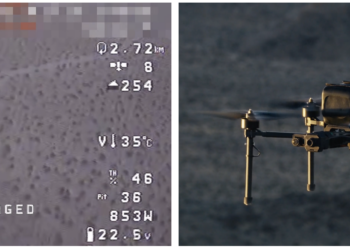
In October, a Portuguese special operations soldier on a military exercise in the country took less than five minutes to learn how to use a new drone autonomy system developed by Finnish defence startup Kova Labs. The soldier then used the system to plan and execute a drone mission autonomously, according to the company’s founder, Touko Rautiainen.
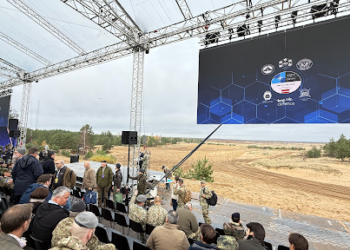
The demonstration was part of EU OPEX 2026, where Kova Labs was one of four companies to receive a €300,000 award through the BraveTech EU initiative.
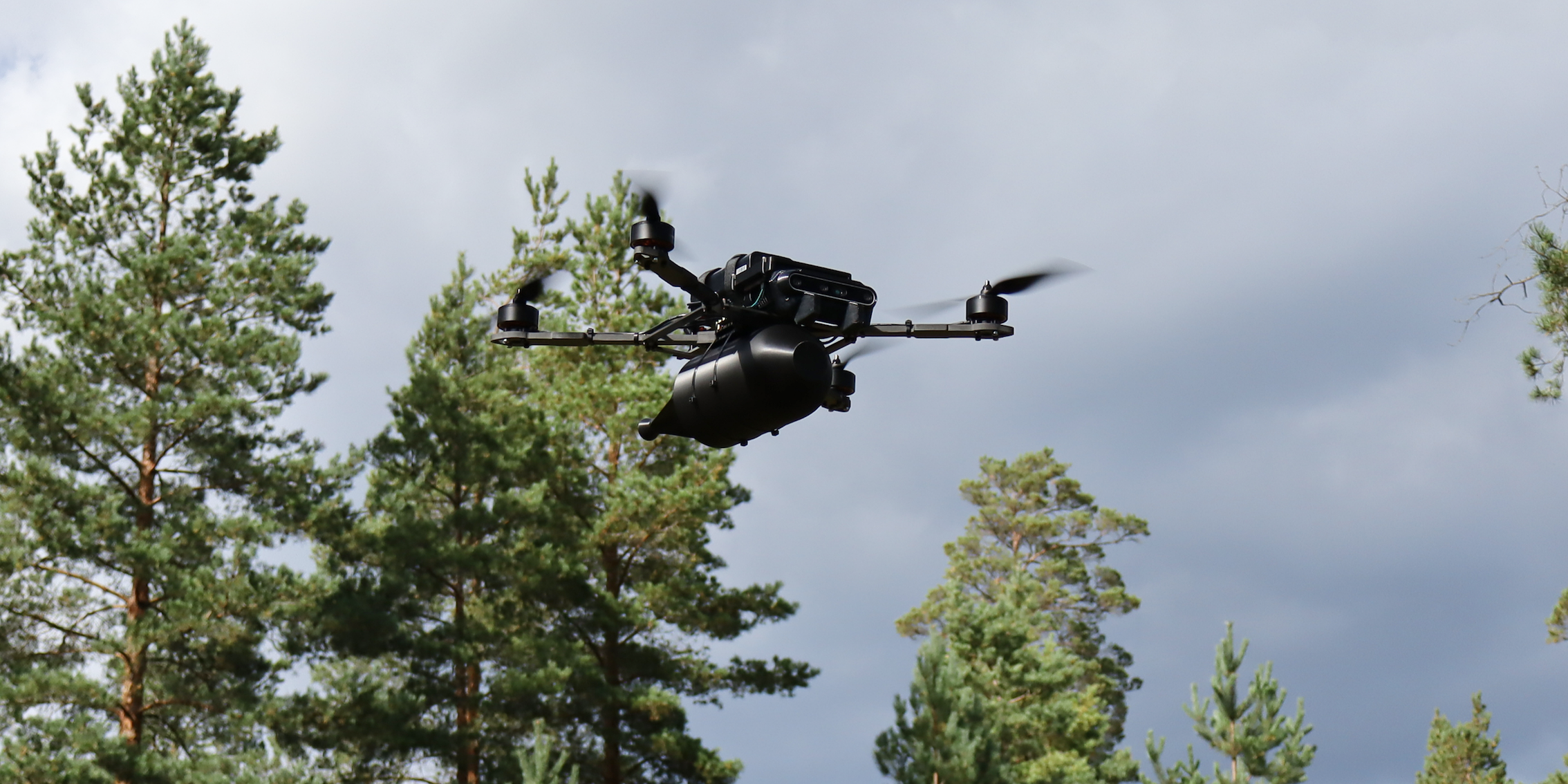
The company’s core product, Backbone, is designed to enable unmanned systems to navigate complex terrain without relying on GPS, continuous radio communications or pre-mapped terrain data.
Europe’s tree-dense flanks
A lot of drone technology has been developed for use at or near the frontlines of the war underway right now. Ukraine is known for its steppe, long flatlands where much of the combat of the current war takes place. Russian forces often have to advance over this open terrain with no cover.
These wide-open fields are easy hunting grounds for autonomous drones. Russian forces try to mitigate their exposure by advancing in small groups of two to four men or using motorcycles to minimize their time in the open. (The open landscape is also one of the reasons that usage of fibre-optic-tethered drones has skyrocketed in the war.)
The terrain of NATO’s Eastern Flank is different. Finland is approximately 70% covered in forests. Estonia and Latvia are more than 50% forested. This means that any NATO-Russia conflict would likely see major combat in woodlands.
Autonomous drones face greater navigation challenges in that terrain. Dense branches create numerous physical obstacles that drones must avoid, and which complicate target acquisition. Trees and terrain can also obstruct radio signals, interfering with the operation of remotely piloted drones.
This is the problem Kova Labs intends to solve.
“I realised that the environments we’re going to fight in across Europe are quite different from those in Ukraine,” said Kova Labs founder Touko Rautiainen.
Rautiainen said he and the team had to broaden their thinking. Based on their research, learning, and technology development, they decided to create an autonomy stack deployable on aerial and land platforms. “It would operate in very cluttered and complex places without continuous communications, GNSS, or pre-mapped terrain data,” he said.
Rautiainen’s path into defence technology was unconventional. At 18, a series of serious sports injuries forced him to abandon a demanding training schedule as a promising ice hockey player. With more free time, he started doing “whatever a 17- or 18-year-old with a laptop could do” — freelancing as a web designer and taking on other IT gig work, he said.
After a stint in the Finnish special operations forces, where he specialized in Electronic Warfare, he co-founded Kova Labs. “Kova” means hard or tough in Finnish.
The Backbone system and ‘inverse sensor fusion’
Although Kova initially developed its own drones, its core product is Backbone, a platform-agnostic autonomy stack that can be integrated into systems produced by different manufacturers. It enables unmanned systems to navigate complex terrain and complete missions autonomously.
“It handles everything from mission planning through execution and completion. You have GNSS-denied positioning, and it can continue operating with complete signal loss, so continuous communication isn’t required,” Rautiainen said.
Many autonomous systems use sensor fusion: cameras, LiDAR, radar and inertial measurement units (IMUs) work together to build a model of their surroundings and determine their position within it.
This approach is effective, but sensors are expensive, and adding multiple sensors drives up costs.
Kova Labs takes a different approach, which Rautiainen calls “inverse sensor fusion.”
“We have only one camera, and we feed the camera data into five to ten different algorithms that perform the computer-vision and machine-vision tasks onboard,” he explained. “With one camera, we get pretty much LiDAR-like performance. Obviously, it’s not as accurate as LiDAR because it’s one forward-facing camera with a fixed field of view. But with the software techniques we use, it’s accurate enough for us to do what we need with cameras alone.”
This allows Kova Labs to charge significantly less than more sensor-heavy autonomy stacks, according to Rautiainen.
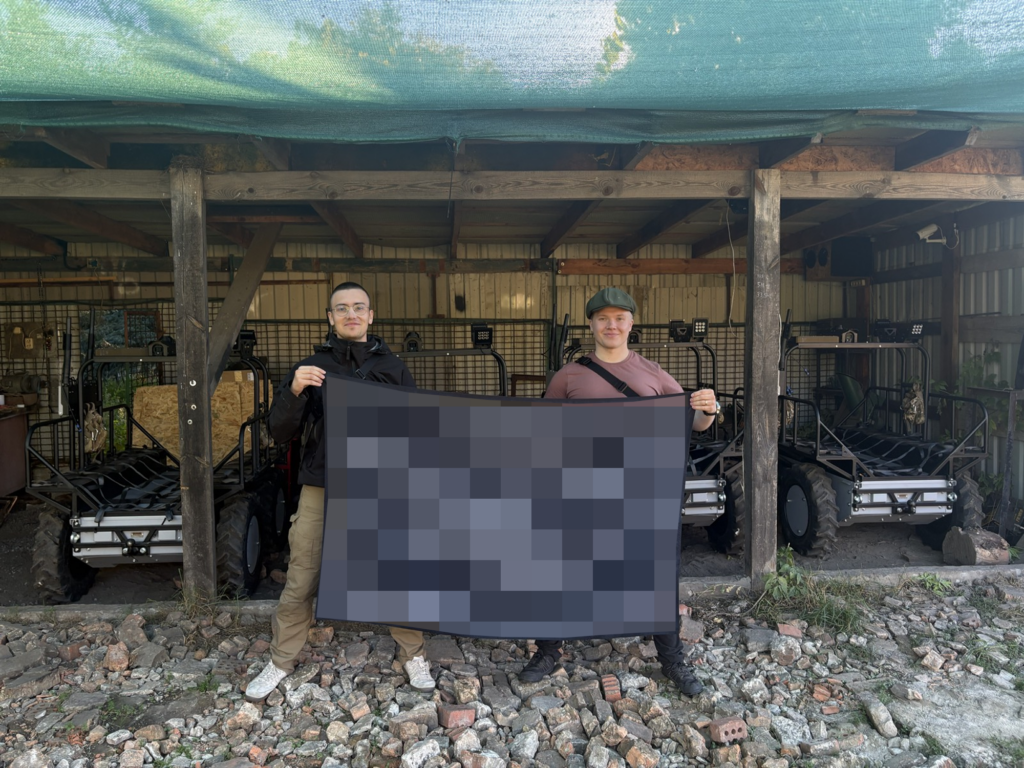
In Ukraine, Kova sells Backbone for between €2,000 and €3,000, including the camera, onboard compute and software stack (Rautiainen clarifies that the price in Europe may be higher, as the company seeks to keep prices as low as possible in Ukraine). In testing with Ukrainian units, Backbone is currently being used primarily on UGVs for logistics missions.
EU OPEX 2026 and the user experience
At OPEX 2026, Kova Labs demonstrated both Backbone’s autonomous capabilities and its ease of use.
Backbone is designed to be easy to learn and operate. As much cognitive load as possible is offloaded onto the software, with only essential information appearing in the user interface.
“At the end of the day, it comes down to simplifying things as much as possible. … [T]here may be a thousand things happening inside the software, but probably only three or five of those are relevant to the operator,” he said. “You have to simplify the interface so much that the platform becomes extremely easy to use.”
During OPEX 2026, Rautiainen said Kova was able to train a Portuguese special operations soldier to use Backbone in less than five minutes.
“For this mission, for example, you draw the route using waypoints and click one really big green button to start,” he explained. “It then turns into a really big red button that you can press if you want to cancel the mission. It comes down to simplifying and not overengineering things.”
The soldier used the command-and-control platform to plot a route, select a mission and initiate it. The drone completed the assigned mission autonomously.
Deals, markets and bottlenecks
Kova Labs is growing on relatively minimal funding as of now.
In addition to a total of €420K that it has secured through BraveTech EU, Kova has had backing from Finnish venture capital firm Lifeline Ventures along with a number of angel investors, including Tuomas Rasila, CEO of C-UAS company Sensofusion. The amounts it has raised from these other backers has not been disclosed.
The startup is currently not profitable, so it is likely that it will be looking for more investment down the line.
Kova Labs’ primary market at the moment is Ukraine, but the startup has also worked with the Finnish Defence Forces, by way of a paid engagement, Rautiainen confirmed. Hhe did not disclose the details of the programme nor how much the startup was paid.
It also has secured manufacturing partnerships in Finland and the UK and is looking toward NATO’s eastern flank more broadly for business development.
 Rautiainen said there are challenges to working across Ukraine and Europe.
“You can have systems working in Ukraine and be really valuable there,” he said. “Then we come back to Finland as a young and relatively new company, and we’re still not taken so seriously in the European defence sector.”
Rautiainen attributes this partially to institutional inertia. Although much of the discourse these days may be about defence modernisation and what it means to the future of military doctrine, the reality is that many European defence ministries have yet to figure out exactly what their vision for unmanned systems is or how best to work with smaller and younger startups beyond pilot projects. TOn top of this, the market remains largely dominated by established primes, with highly-capitalised “neo-primes” taking much of what is not scooped by their incumbent peers. All this makes it difficult for young companies to anticipate procurement needs and bid for work in existing tenders.
Rautiainen also said he feels skepticism about his age.
Rautiainen is 22 — the age of a junior NCO. “Everywhere I go in this industry in Finland, I’m the youngest guy there,” he said. “It’s like, why would a general talk to an NCO and take his ideas seriously?”
He clarifies that this experience is not universal, citing the paid program with the Finnish Defence Forces that showed some officials were willing to work with the company.
Another bottleneck is components. Like many companies in the defence technology industry, Kova Labs has difficulty completely eliminating Chinese-sourced parts.
For computing, the company uses Nvidia PCB boards, which Rautiainen said can be manufactured in Europe using mostly European components.
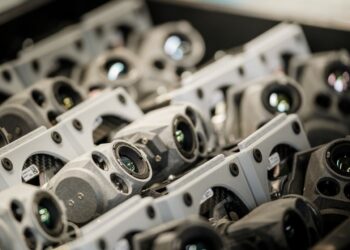
The cameras, however, are sourced from an American company that Rautiainen believes manufactures them in China (he would not disclose the name of the American company).
He is taking a pragmatic approach to the situation, similar to a position espoused elsewhere in Europe when it comes to other technology gaps: sometimes it’s a choice between sourcing technology from abroad, or not having anything at all.
“We want to use as many European components as we can,” he said. “But if there aren’t any available, and ramping up our own production would be too capital-intensive and inefficient at this stage, the alternatives are either not to do it at all or to use Chinese-made cameras for a while. Then, with what we’ve learned, we can start our own production line.”
Toward an autonomous land force
In the long term, Kova Labs’ ambition is to become “the Android of autonomous systems,” Rautiainen said, although to be clear, its software is proprietary, not open source like Android’s. (“That’s our thing!” he explained.)
Aiming for a ubiquitous operating system for autonomy is an ambition that others have espoused, perhaps most prominently, Auterion, whose autonomous military-focused tech has also been described as “the Android of autonomous systems.” The latter now builds for multiple domains, although it grew out of early work the founders did on open-source based operating systems for commercial aerial drones years ahead of the rise of defence tech.
The ultimate aim, he said, is to be a multiplier for smaller units. This has been a key point in Ukraine, one echoed elsewhere, since the country’s forces, on a very basic level, are outnumbered by the number of Russian forces.
“One commander and a couple of operators could command a company-level fleet of robots on the battlefield to perform the missions that need to be done…. These forces could operate together as one fully autonomous force, taking humans out of the front line and automating those functions.”