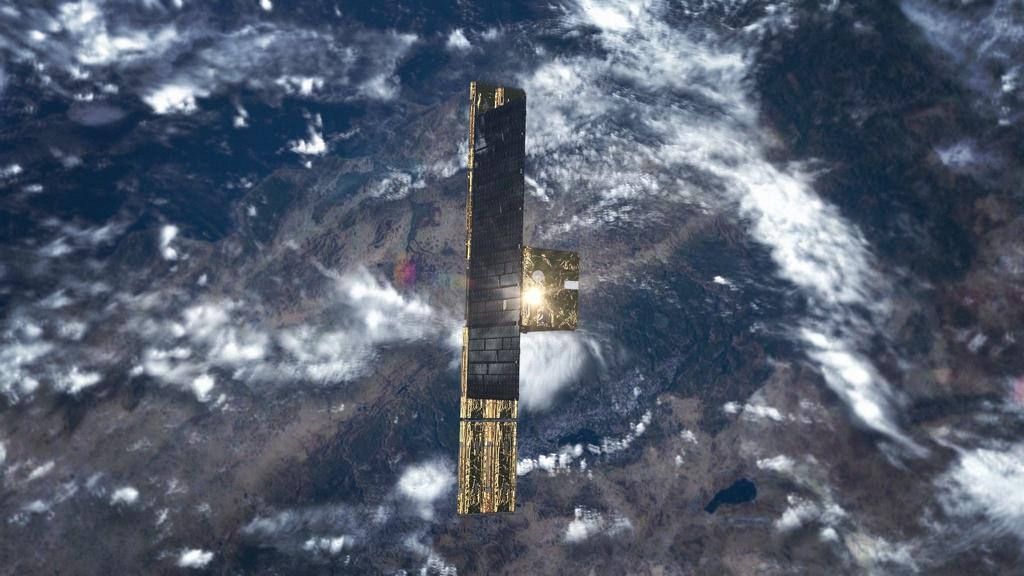
Some consolidation is taking place in the space race. Finland-based satellite maker/operator ICEYE has made an offer to buy Avio, a propulsion company out of Italy, for €2.05 billion.
The deal, if completed, would give ICEYE a chance at a vertical integration play. At a time when many in the space industry are complaining of the “launch bottleneck” — simply put, there are not enough rockets and launches to match the demand there is right now to launch more satellites and other systems into space — owning Avio would put rocket build and launch capability directly under ICEYE’s wing alongside its existing business designing and operating satellite constellations.
That would also bring ICEYE much closer to the kind of collaboration that Elon Musk has built between SpaceX and its subsidiary Starlink — precisely at a moment when Europe is looking to cultivate more home-grown alternatives to Musk’s empire.
“Governments need control of their critical space infrastructure, and Europe needs it most. Avio has built the launch and propulsion capability Europe relies on,” Rafal Modrzewski, CEO and co-founder of ICEYE, said in the bid announcement. “With ICEYE’s long-term capital behind it, we can integrate the supply chain, grow output and strengthen the European programmes that already depend on it. Together we can build, launch and operate sovereign space systems end-to-end, made in Europe for governments across the world.”
If the deal goes through, it raises some questions about what comes next for ICEYE and Avio.
ICEYE has a production facility in the US, and one question is whether it will choose to continue growth there, or sell that off to focus on its expanded European business, using the funds to further grow out its new launch and rocket operations.
On the part of Avio, it has a number of existing business lines and launch plans — some of which have had to be postponed due to technical issues. In comments today to media in Finland, Modrzewski said the plan would be to honour those service contracts.
“Avio today builds four to six rockets every year,” he said. “It’s actually a capacity that has a certain cadence. Our first target as a combined entity would be to increase that cadence in order to provide launch capability both for ourselves, but also for other European stakeholders and, potentially, for international stakeholders.”
He added that the plan would be to continue filling out contracts for systems, too, including solid-state motors, rockets and rocket launchers: “For now our very firm statement is that we are going to fulfil the current commitments of the company,” he said. “There are contracts outstanding, there are people that, that depend on this technology being, being provided. We are not going to disrupt that.”
Nevertheless he didn’t rule out what might get wound down going forward. “There is no decision on how we’re going to proceed with that part of the business,” he concluded.
The all-cash bid — coming via ICEYE’s Italian subsidiary Iris 2 — would be financed through balance sheet cash and acquisition debt, at €41 per share, a 21.3% premium over Avio’s closing price on 16 November 2026, ICEYE said in its statement today. ICEYE raised €1 billion at a €10 billion valuation in June of this year, and Avio is currently publicly traded on the Milan stock exchange. If the offer is approved, ICEYE said it intends to invest €1 billion in Italy over five years.
Five years and €1 billion would be the tip of the iceberg if the bigger plan is to build a Starlink competitor. SpaceX has spent eight years and nearly $50 billion so far in capex to build out its system (and that is not counting the costs of launches).
ICEYE said it intends to keep Italy as the heart of Avios operations, preserving the brand identity and creating up to 400 new skilled jobs in the country.
The deal remains subject to regulatory approvals, including clearance from the Italian government under rules protecting strategic assets. ICEYE must also secure at least two-thirds of Avio’s shares.
Additional reporting Fiona Alston