Agon, the London-based startup that emerged from stealth only four months ago with $30 million and a plan to build simulated worlds to train artificial intelligence models in defence, is ramping up rapidly — at least in terms of capital, if not products themselves. Today, Agon is announcing another $70 million in backing, a Series A that values the company at $450 million.
Agon has yet to launch any products publicly. And it has yet to disclose any customers. A spokesperson told Resilience Media that Agon is working in collaboration with unnamed defence industry partners and that its first products should be launched “by the end of the year” — that is, in the next month.
The funding will be used to continue developing its platform, for hiring and business development, the company said.
Agon’s ability to raise funds at a high valuation, even at this early stage, speaks to the triggered climate right now in defence.
There is an urgent feeling about the need to modernise defences and build more defence sovereignty in Europe, and everyone is either excited or scared (or both) about the role that AI will play in that modernisation.
And “training” AI — the crux of what Agon says it is building — is at the moment one of the most consequential details of how valuable and useful any AI platform is. Ukraine, in the midst of a war with Russia, is hoping to leverage its value as an AI training ground. Agon appears to be taking a slightly different approach. Leaning deep into the world of gaming, it says it is building “synthetic” data that it claims can improve AI.
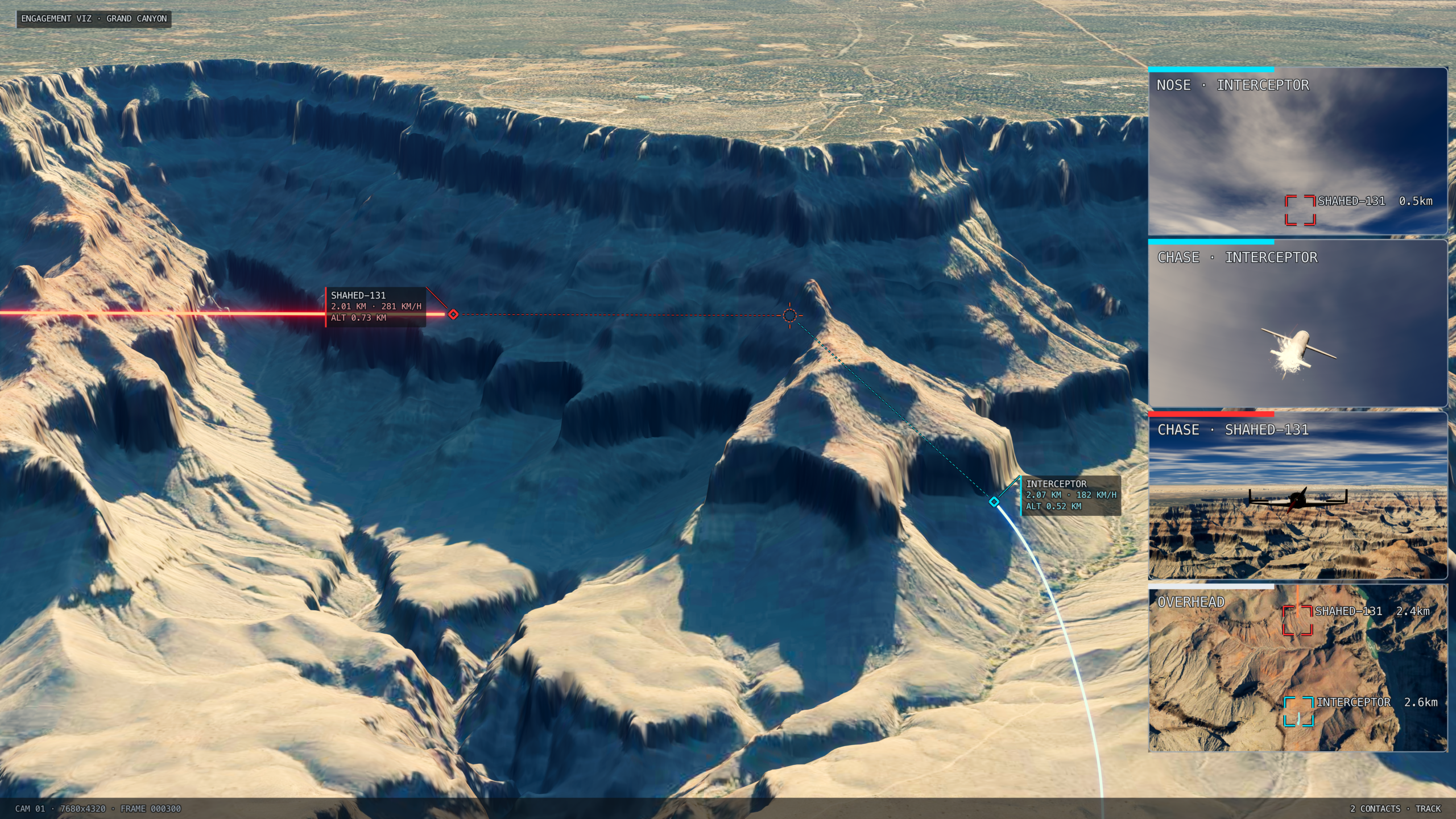
Specifically it describes the creation of a “synthetic battle arena.” It claims that its “Agon Engine” is a “safe, repeatable environment to train and test autonomous systems against thousands of demanding scenarios before deployment.” These include developing “virtual adversaries informed by live conflict intelligence,” simulating mass drone attacks, testing autonomy in communications-denied environments. Its argument is that AI training complements physical testing because it operates “at a scale and speed that cannot be replicated in the real world,” the company says.
“Agon was born out of a project to bring together a coalition of European founders, operators, researchers, veterans, investors, and governments to build what we collectively believe to be urgently needed for our sovereignty and safety,” said Tristam Constant, the CEO and co-founder, in a statement.
Can complex wargaming to build out autonomy and AI systems really, usefully be productised this way? Are adversaries already doing something along these lines? Investors can see the arbitrage opportunity at play here and are jumping in.
On the subject of investors, Agon may not be releasing any product yet, but it is is more forthcoming on who is in its Series A. The list underscores how both financial backers and strategic ones are taking a bet here.
Previous backer Northzone is leading the round, and the UK Sovereign AI Fund and NSSIF, both backed by UK government money, are coming in as first-time investors. Others in the round include previous backers Lakestar, XYZ, Lux Capital, Global Founders Capital and Speedinvest.
Agon makes a special note of the Sovereign AI Fund and NSSIF investing together for the first time here. This points to the UK Ministry of Defence and UK defence industry players being involved with Agon. It also shows how the UK is happy to promote the optics that it is taking threats seriously and leaning into working with a UK business to do that.
“The UK needs sovereign defence AI capabilities to bolster our national security in this new era,” said AI Minister Kanishka Narayan in a statement. “Britain is well-placed to lead efforts to ensure these technologies are reliable, trustworthy, and deployed responsibly.”
As we have noted previously, in addition to how Agon has identified the intersection of sovereignty in defence with sovereignty in AI, another reason why the startup is eye-catching at this early stage is because of its leadership.
Tristam Constant, the CEO and co-founder, has both industry and military experience. He previously headed up the European defence business for Applied Intuition. Before that he was a senior director for Europe at Anduril. He also spent 13 years before that in the British Army.
His co-founder, Junaid Hussain, is a serial entrepreneur and investor that some have jokingly described as the would-be Peter Thiel of Europe because of his growing ubiquity across multiple companies, where he sometimes is described as a co-founder. Hussain is also a co-founder of Cambridge Aerospace — the defence tech unicorn that closed a round of $300 million at a valuation of $3.4 billion (a story we scooped). He also co-founded the AI gaming company Iconic.
Agon’s chairman is David Helgason — the founder and ex-CEO of Unity Technologies, the blockbuster game engine company. As you can see from his PitchBook profile, he’s been a prolific investor into a range of startups, although Agon looks like it might be his first chairmanship of a defence tech company (the rest are all in gaming). He is upping his stake in Agon with this round.
Agon’s name references a minor diety in Green mythology, who represented struggle and came to mean competition and competitive gatherings — one more nod to the close link between gaming, AI and defence tech.