Friday 23 January, 2026
[email protected]
Resilience Media
  • About
  • News
  • Resilience Conference
  • Guest Posts
    • Author a Post
  • Subscribe
No Result
View All Result
  • About
  • News
  • Resilience Conference
  • Guest Posts
    • Author a Post
  • Subscribe
No Result
View All Result
Resilience Media
No Result
View All Result

Ark Robotics and the Future of Scalable Drone Warfare

One pilot/one drone is no longer sufficient.

John BiggsbyJohn Biggs
May 8, 2025
in News, Startups
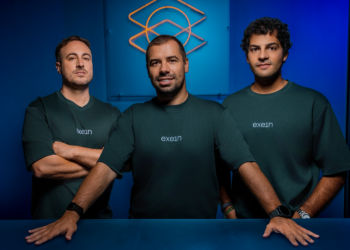
Courtesy of Ark Robotics

Courtesy of Ark Robotics

Share on Linkedin

In modern conflict, a new generation of defence startups is reshaping how militaries think about scale, autonomy, and control. Ark Robotics is one of them. Founded during the early phases of Russia’s full-scale invasion of Ukraine, the company emerged from a group of engineers building ground-based robots as a weekend project. What began as ad hoc experimentation has turned into a structured effort to solve one of the most pressing problems in military robotics: the pilot bottleneck.

You Might Also Like

Dispatch from Davos: Tech sovereignty looms large

Inside Dronamics bid to become the unmanned logistics carrier for future conflicts

AI in cybersecurity remains a tool for understanding, not response

“Yeah, so we basically started building a bunch of crazy Kamikaze UGVs that turned out more effective than we expected them to be,” said founder Achi Takagama. “It was literally a weekend project with friends, which escalated quickly to what is now Ark.”

Over time, Takagama and his crew learned what worked… and what didn’t.

“And really the tipping point for us as a company was when the first drones hit the battlefield and then we saw that the whole story is not about the drones, it’s about the pilots.”

“Because the pilots in the current concept of operations need to be by the soldiers and we send them to the very edge of the battlefield. They sit in trenches piloting the drones in basically line of sight operations. What we realised then was that the pilots are also the biggest bottleneck to scale the system.”

“If you want to send 100,000 drones, you also need to scale the number of pilots,” he said. “That doesn’t work.”

Ark’s solution is to multiply operator capacity. The company is building what it calls “collaborative autonomy”—a system that allows one pilot to operate multiple drones, with autonomy handling the low-level execution while humans retain control of critical decisions. This approach pushes autonomy out of the vehicle and into the network, allowing for faster decision-making without handing off lethal control to machines. The company’s architecture is designed to be modular, operator-centric, and flexible enough to support both small tactical missions and large coordinated swarm deployments.

“We have been working on the system that would allow us to achieve a key things. First, we take the pilots away from the battlefield to a safe place in the rear. And second is give them the operational leverage for one pilot to pilot multiple systems, . And this operator leverage is kind of the main metric that we are trying to scale with our different products, achieving more more autonomy both on the system level and on the network level. And the long-term vision for the company is really to build what we call collaborative autonomy.”

Beyond Ukraine

While Ark’s early deployments are tied to Ukrainian operations, the company’s ambitions are broader. Takagama is vocal about the strategic gap in European defence planning. “Europe doesn’t have the manpower to keep pace with high-scale drone deployments unless it adopts a different operational model,” he said. “One drone per pilot is a dead-end.”

In Ukraine, drones have shifted from tools of infantry support to independent assets conducting surveillance, jamming, and kinetic operations deep behind enemy lines. Ark believes this is only the beginning. Their technology is designed to anticipate a future where tens of thousands of autonomous or semi-autonomous drones operate simultaneously across an entire theater—something few countries are currently prepared to support.

The challenge, as Ark sees it, is not just technical. It’s doctrinal. European militaries still largely think in terms of incremental upgrades to legacy systems. But the shift toward drone-centric warfare requires an overhaul in logistics, command structure, and even force composition. Ark points to Ukraine’s decision to create a dedicated branch of unmanned systems as a model. The company is now engaging with governments and defence ministries across Eastern Europe to help accelerate this transformation.

Urgency and Scale

Ark recently raised to scale operations and expand across Europe. Their goal is not just to sell software and hardware, but to push governments to rethink how they approach defence autonomy. Takagama is blunt about the stakes: “If the West doesn’t move fast, it will be outpaced. You can have 1,000 drones in a warehouse, but without the systems and doctrine to operate them, they’re just dead weight.”

The threat isn’t theoretical. Russia is reportedly manufacturing tens of thousands of drones per month. Without scalable command and control, even a well-armed country will struggle to respond effectively to mass drone strikes—particularly those targeting infrastructure deep in the rear.

Ark’s warning is clear: the war of the future won’t be won by matching drone-for-drone. It will be won by building systems that can manage mass with intelligence and control. Collaborative autonomy, they argue, is the only way forward.

Ark Robotics represents a new kind of defence company: young, agile, and shaped by battlefield realities rather than procurement cycles. Its leadership has seen firsthand how quickly technology—and doctrine—must change. As the company expands from Ukraine into broader European markets, it brings with it not just tools, but a vision: one where defence autonomy is scalable, strategic, and controlled by humans—not constrained by them.


Tags: Achi TakagamaArk Robotics
Previous Post

MoD Expands Test Range Access for UK Startups and SMEs

Next Post

Latvian start-up unveils drone interceptor designed to take down deadly Shaheds

John Biggs

John Biggs

John Biggs is an entrepreneur, consultant, writer, and maker. He spent fifteen years as an editor for Gizmodo, CrunchGear, and TechCrunch and has a deep background in hardware startups, 3D printing, and blockchain. His work has also appeared in Men’s Health, Wired, and the New York Times. He has written nine books including the best book on blogging, Bloggers Boot Camp, and a book about the most expensive timepiece ever made, Marie Antoinette’s Watch. He lives in Brooklyn, New York. He runs the Keep Going podcast, a podcast about failure. His goal is to share how even the most confident and successful people had to face adversity.

Related News

Finland’s president, Alexander Stubb, at the 56th World Economic Forum in Davos.

Dispatch from Davos: Tech sovereignty looms large

byPaul Sawers
January 23, 2026

A recurring theme emerged from the chatter at the World Economic Forum (WEF) in Davos this week, with questions around...

Inside Dronamics bid to become the unmanned logistics carrier for future conflicts

Inside Dronamics bid to become the unmanned logistics carrier for future conflicts

byJohn Biggs
January 22, 2026

https://youtu.be/aYt1Av6ojwQ Dronamics started as a cargo drone company, and it is now betting that the same airframe can do much...

Laptop screen showing a search bar.

AI in cybersecurity remains a tool for understanding, not response

byCarly Page
January 22, 2026

Despite industry hype around autonomous defence, new research shows security teams spent 2025 using AI mainly to explain and contextualise...

view of Earth and satellite

Space could become the next battlefield

byPaddy Stephens
January 21, 2026

Future great power conflict is unlikely to be limited to the land, seas and skies. Great powers also rely on...

Rheinmetall and Auterion Announce New NATO-Wide Military Hardware-Software Partnership

Auterion conducts live fire swarm drone strike test

byJohn Biggs
January 20, 2026

Munich- and Virginia-based Auterion says it has completed what it describes as a first for the small drone space in...

blue and yellow striped country flag

Palantir and Ukraine’s Brave1 have built a new AI “Dataroom”

byIngrid Lunden
January 20, 2026

Palantir, the US data analytics giant, has been a regular presence in Ukraine helping with its defence against Russia since...

us a flag on pole near snow covered mountain

Dominion Dynamics raises $15M to build a new arctic defence prime in Canada

byIngrid Lunden
January 19, 2026

The US has become a somewhat unpredictable neighbour to Canada, with President Trump’s threats of annexation and spiking tariffs looming...

Twentyfour Industries emerges from stealth with $11.8M for mass-produced drones

Twentyfour Industries emerges from stealth with $11.8M for mass-produced drones

byIngrid Lunden
January 19, 2026

Make way for another drone startup in the European defence tech ecosystem. Twentyfour Industries is today emerging from stealth armed...

Load More
Next Post
Latvian start-up unveils drone interceptor designed to take down deadly Shaheds

Latvian start-up unveils drone interceptor designed to take down deadly Shaheds

Satellite mass-manufacturer Apex’ $200 million funding round to secure US dominance in space

Satellite mass-manufacturer Apex’ $200 million funding round to secure US dominance in space

Most viewed

InVeris announces fats Drone, an integrated, multi-party drone flight simulator

Harmattan AI raises $200M at a $1.4B valuation from Dassault

Twentyfour Industries emerges from stealth with $11.8M for mass-produced drones

Hydrosat raises $60M for its thermal satellite imaging tech

Palantir and Ukraine’s Brave1 have built a new AI “Dataroom”

Defense Unicorns lives up to its name: $136M round lifts valuation past $1B

Resilience Media is an independent publication covering the future of defence, security, and resilience. Our reporting focuses on emerging technologies, strategic threats, and the growing role of startups and investors in the defence of democracy.

  • About
  • News
  • Resilence Conference
  • Guest Posts
  • Subscribe
  • Privacy Policy
  • Terms & Conditions

© 2026 Resilience Media

No Result
View All Result
  • About
  • News
  • Resilence Conference
  • Guest Posts
  • Subscribe
  • Privacy Policy
  • Terms & Conditions

© 2026 Resilience Media

This website uses cookies. By continuing to use this website you are giving consent to cookies being used. Visit our Privacy and Cookie Policy.