
Europe is doubling down on defence and resilience, and now one of the earliest investors in Europe to back startups building for those goals is doubling down, too. Plural — the London frontier tech VC that has backed the likes of neo-prime Helsing, energy deep tech Proxima Fusion and security startup Augur — said on Monday that it has closed in on €1 billion for its third fund.
Over a year in the making (Dealroom notes that Plural filed the paperwork for it more than a year ago, in October 2025), Plural’s Fund III is one of the biggest private VC funds in Europe raised this year, and the biggest to focus strongly on sovereignty and resilience in their many forms — comparable in size to the government-backed NATO Innovation Fund. The firm plans to use around one-third of the fund to back existing portfolio companies, and two-thirds to make new bets.
And just as defence tech startups have upsized a lot in the last few years, so too have the VCs financing them. Plural’s Fund III is more than twice the size of the firm’s previous fund, and it was oversubscribed, Plural partner and co-founder Khaled Helioui said in an interview.
That’s a measure of heated climate at the moment for startups in defence and resilience, but also of the sums of money many of the founders in the category need to scale their ambitions.
“Europe’s founders have become far more ambitious, and what they’re building needs far more capital,” Helioui said. “Companies building fusion energy plants, hypersonics or new chip architectures are defining the continent’s strategic industries, and they need investors who can back them properly from day one and stay with them as they scale. We’ve raised a bigger fund in order to meet that moment.”
But it’s not a measure, necessarily, of how all investors view the European opportunity.
Earlier this month, Sequoia became the latest Silicon Valley VC to retreat from Europe, shutting down a prime London office that had been set up as a hub for the company to make a serious move into Europe, including by backing startups in defence and resilience. Those and future investments, it said, would now be managed out of its home base in the Bay Area.
Yet considering who is still around and building new funds, including this latest €1 billion from Plural, Sequoia’s hasty exit may not be the bellwether that it might seem.
“We don’t spend much time worrying about that,” Helioui said. “It’s one firm’s decision about its office, not about where great companies get built.” Founders like those at Helsing, Proxima Fusion and OLIX, he said, “are choosing to build global companies from Europe.”
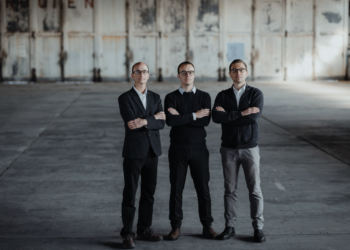
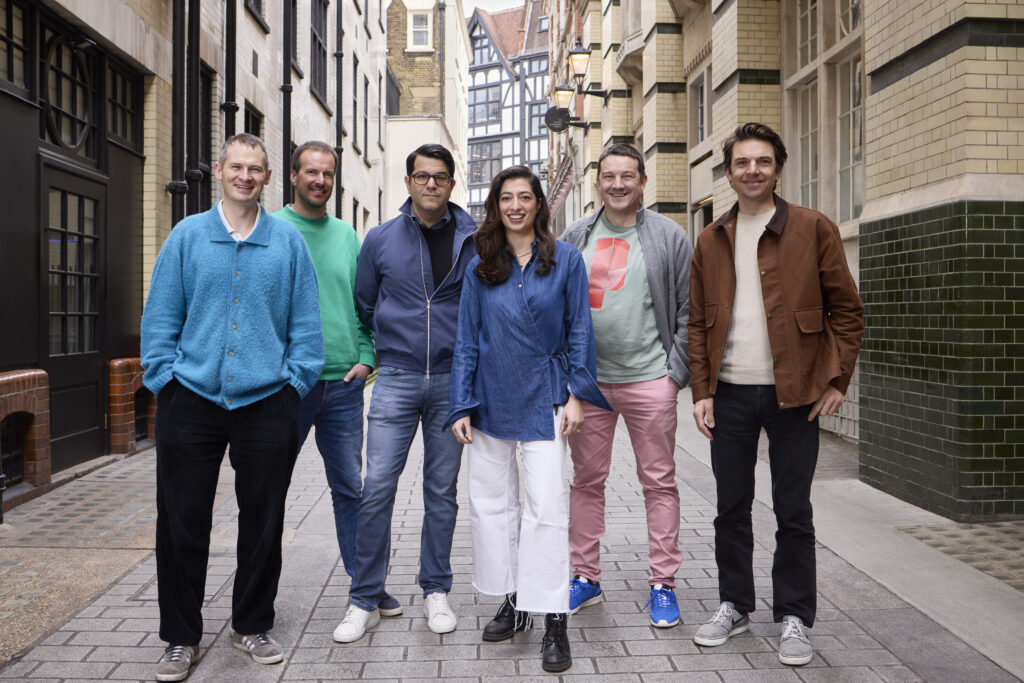 Plural burst on to the scene back in 2022, just a few months after Russia began its full-scale invasion of Ukraine. Co-founders Taavet Hinrikus, Sten Tamkivi, Ian Hogarth and Khaled Helioui described themselves then as a team of company builders with a keen awareness of the role that foundational technology plays in helping a nation or region keep a strong posture. (Carina Namih and Pierre-Dimitri Gore-Coty have since come on as additional partners in the same vein. The six are pictured above.)
In the years since, Plural has focussed on some of the bigger trends that we have seen in Europe that play into that original concept.
Most obviously, the war in Ukraine has pointed to the need to modernise, and likely expand, countries’ military profiles in the face of a persistent aggressor that has only gotten more emboldened over time. The war has also been an alarm bell to reassess national resilience across a wider range of areas. How does a state (or a wider, allied region) improve its industrial base and secure operations in critical areas like communications, energy, health and technology (including AI — which is largely the domain of the US and China today) so that society can continue to function in the event of ongoing, expanding, and unexpected conflicts?
Plural is essentially making investments in startups that aim to address many of these questions. Helsing, Hypersonica and Frankenburg Technologies are among the firm’s defence tech bets. They sit alongside AI and computing investments such as OLIX, Callosum, Oriole, Orbital Industries, Phasecraft, Metaview and Validio. Sovereign energy investments include Proxima Fusion, Rivan, Ore Energy and Molyon. Manufacturing investments include Monumental, Sunrise Robotics, CircuitHub, Gigaton. Space investments include The Exploration Company and Karman+. Healthcare startups in its portfolio include Robeauté, Teton, IXI and Everlab.
Crowded house
Alongside purpose-driven defence and resilience funds like Expeditions raising money, a number of big-name investors previously allergic to the category are getting used to the water and diving in. This has led to a record amount of investment in the defence, sovereignty and resilience — some $10.5 billion projected for 2026 — but according to Helioui, it’s still not enough.
“It’s great that more VCs are interested in these industries,” he said. “These are hard problems that need a lot of capital, and one fund alone can’t finance a continent’s entire defence and energy base.”
So far, Plural’s track record has kept it from getting crowded out, he added. “We’ve found we’re still able to back the companies we find most interesting, regardless of how many other investors are chasing them.”
So those are the positives in the market. But there are also challenges that Plural, along with other VCs investing in the same kinds of companies, still face.
Some portfolio companies, such as Helsing, already have product and revenues. But largely, procurement has come to be known as “the procurement bottleneck” because by and large, the primary customers for such products — defence ministries — are dragging their feet.
“Europe is 20 or 30 years behind the US” when it comes to how governments engage with innovation, Plural co-founder Taavet Hinrikus complained on stage at the Resilience Conference last month. Translation: governments are too slow to buy the products these startups are building, and sometimes they don’t buy them at all.
That is not the only challenge. Plural backs many startups in “deep tech”: ambitious, foundational, and worthy, but no product (and no sales) yet to show for it.
VC bets on companies like these have become more common in the last couple of decades as academic researchers turn into R&D employees and then founders after they are bitten by the startup bug and the promise of far more funding than mere university grants could provide to build out their life’s work.
It’s fair to ask if VCs — which once used to operate on exit timeframes of two to three years on investments — are evolving to be more and more patient overall or if they will, like Sequoia did with its light-filled office in Marylebone, one day when they’ve had enough, just walk away before the bubble pops.
“The challenge is underwriting risk before there’s anything conventional to measure – with no revenue or product-market fit to go on, you’re judging the science, the founders and whether there’s a credible path to commercialisation,” Helioui said.
He and Plural have a confident response to that issue: Plural has the in-house experience to identify which deep tech startups won’t fall off the deep end. “We can assess and accelerate a team’s ability to execute, so it’s not just down to the elegance of the technology,” he said.
All the same, Plura does not disclose what kind of returns it gives to LPs and it’s not clear if they have had any exits to date either.
Either they are actually okay, or the current climate is just too irresistible not to get more involved: Helioui said that existing investments put more than 125% of their Fund II commitments into Fund III and Plural’s largest LP group, accounting for over 30% by capital, is endowments and foundations, “investors with long horizons by design.”