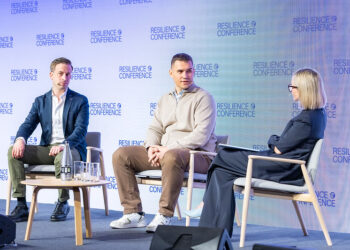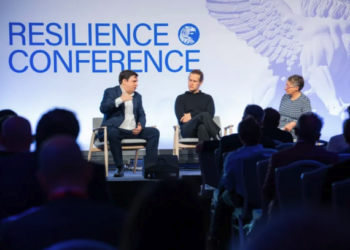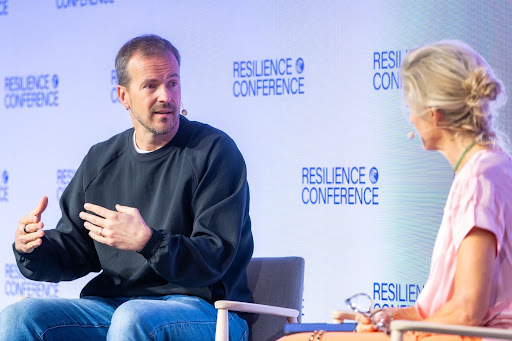
European governments are adapting to the outpour of defence start-ups on the continent, but are doing so too slowly, said Estonia’s Taavet Hinrikus, a partner at Plural Platform, at the Resilience Conference stage in London.
In a conversation with Lakestar’s Martha Lane Fox, Hinrikus asserted that “the defence sector really benefits from the entrepreneurial, innovation oriented attitude,” but admitted that European governments’ approach has so far been “radically different.”
According to Hinrikus, Europe does not lack talent. “The European founders are just as good as the American founders,” said the investor, claiming that “the third generation” of European tech start-ups, which we’re currently in, was the most impressive one so far.
The driving force behind European defence-tech have been repeat founders, said Hinrikus. This can be attributed to the shock of the Russian invasion of Ukraine, which changed how Europeans thought about defence. He gave an example of Helsing’s Torsten Reil: “He retires, and then he becomes obsessed with the state of defence in Europe, to a point where he can’t sleep and thinks: I have to build Helsing.”
While the founders and the urgency are there, it’s the underdeveloped ecosystem that is the main hurdle for European defence-tech start–ups. Hinrikus did not mince his words: in his view, “Europe is 20 or 30 years behind the US,” when it came to tech innovation culture.
That is not to say the shift among investors has not been seismic. “I would not have guessed five years ago that I would be investing in defence,” said Hinrikus, quipping that “looking at missiles was not his idea of innovation” back then.
The way forward for Hinrikus was more efficient pan-European partnership. “No country in Europe can do it alone — he said — so we need different configurations of countries that are working together and sharing capabilities and people.”
For the investor, European sovereignty could only be achieved with reliable alliances. He said that rather than strictly defining critical areas that required sovereign control, “the question comes down to who can we trust or not.”
“It’s very obvious that we need to have our own defence capabilities. But do we need to have our own payment networks?” asked Hinrikus.
Plural’s third fund is expected to be the largest to date, but the fund has not made any announcements yet. Last week Augur, Plural’s portfolio company, announced a partnership with UK Defence Innovation to develop an “ultra low-cost” C-UAS solutions.