From fighter jet cockpits to surgical theaters, humans remain a critical point of failure in high-stress, high-stakes environments. Cognitive overload, physiological strain, and sensory saturation can erode performance when it’s needed most, a challenge that persists even as machines become more technologically advanced.
Dutch deep-tech startup Touchwaves is striving to address that imbalance by turning the body itself into an intuitive feedback loop through wearable haptic systems that communicate information via touch rather than sight or sound.
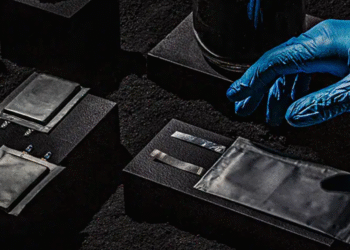
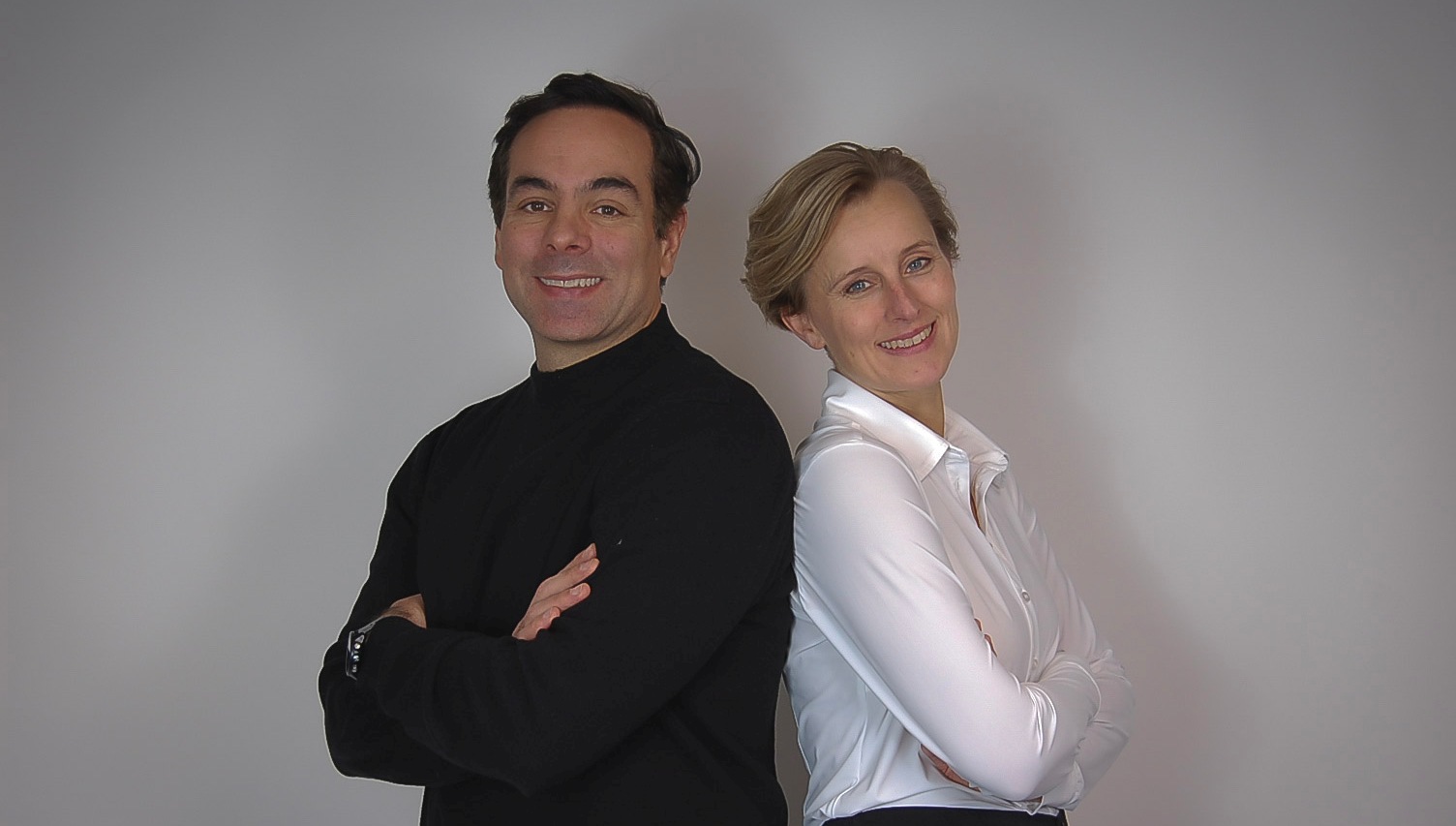
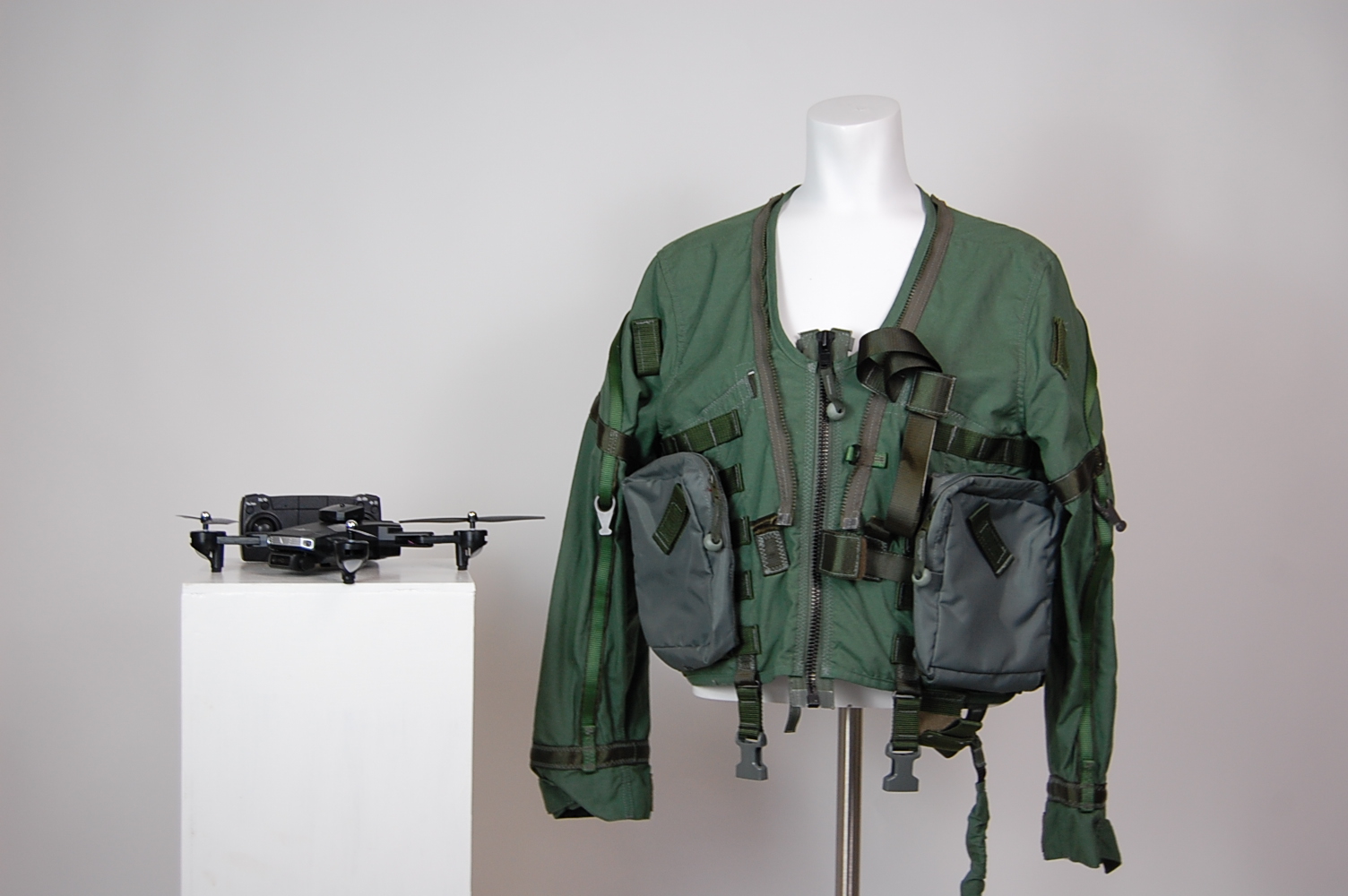
Founded out of Eindhoven in 2023 by Charlotte Kjellander and Martin Romero, Touchwaves is a spin-off from the Netherlands Organisation for Applied Scientific Research (TNO) and is rooted in research from the Holst Centre. Touchwaves’ systems deliver tactile cues through flexible electronics embedded in garments, communicating information directly to the wearer’s somatic sense.
By operating through touch, the approach is intended to reduce cognitive load and support faster, more grounded decision-making when milliseconds matter.
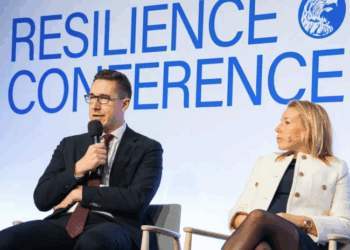
“In high-stress environments, visual and auditory channels tend to saturate first; screens, alarms, and radio traffic quickly become overwhelming,” Kjellander, Touchwaves’ CEO, explained to Resilience Media. “Tactile communication, however, remains remarkably robust under stress.”
For example, physiological changes, such as early signs of hypoxia detected through a drop in blood oxygen saturation (SpO₂), could trigger tactile alerts that prompt corrective actions like a specific breathing adjustment. The same mechanism can be used for spatial awareness, with vibration patterns indicating direction or signaling potential threats such as incoming missiles, allowing pilots to stay focused on the mission without shifting their gaze or attention.
Although NATO Air Forces represent Touchwaves’ core target user base initially, the underlying challenges extend across the defence realm and beyond.
“These use-cases are not limited to fighter jet pilots,” Kjellander continued. “Similar challenges exist for helicopter pilots, transport and cargo pilots, and other defence aviation crews operating in demanding, noisy, and cognitively loaded environments. Haptics allow us to create an intuitive ‘tactile language’ that supports decision-making and physiological regulation precisely when other channels are overloaded.”
Touching the battlespace
Touchwaves’ technology is yet to reach operational deployment, but it is currently being tested and validated with various defence partners, including the Royal Netherlands Air and Space Forces and the Center for Man in Aviation. This phase, ultimately, is all about ensuring the wearables function reliably before they’re put into battle.
“At this stage, the focus is on refining both the software and the hardware, validating human responses, and ensuring the system performs reliably under operationally relevant conditions,” Kjellander explained.
That work is now being supported by fresh capital, with Touchwaves today announcing €1.5 million in a pre-seed round of funding to accelerate development and move the technology toward broader deployment. The round was led by SecFund, a Dutch early-stage defence fund with a strong dual-use focus, with participation from TNO Ventures, Brabant Startup Fonds, Imec.istart, and Joanna Invests. Additional support came from the Dutch Research Council’s NWO Take-off 2 program.
SecFund’s emphasis on dual-use technologies reflects a growing interest in systems that can move between defence and civilian contexts, particularly where high reliability and human performance are critical. For Touchwaves, that means technology developed for the most demanding military environments can later be adapted for use in other high-stress domains.
“We see strong relevance for haptic technologies beyond defence, particularly in healthcare and elite sports, where stress regulation, workload management, and body awareness are equally critical,” Romero explained. “From an impact standpoint, dual-use means that technology developed for the most demanding environments, such as fighter jets, can later be deployed in other domains faster and more cost-effectively. Defence environments force extremely high standards for reliability, safety, and performance. Once those standards are met, adoption in civilian sectors becomes much easier. This approach accelerates innovation while ensuring the technology delivers real, measurable benefits across domains.”
Translating science into systems
Prior to Touchwaves, Kjellander completed a PhD in materials science and spent more than a decade at TNO working on wearable technologies at the intersection of materials, sensing, and human performance. Her work included contributions to the development of the Flight Sensing Shirt, a wearable system designed to monitor the physiological state of aircrew.
“Across these projects, the focus was always on translating scientific research into systems that could realistically be used by operators in demanding environments, an approach that continues at Touchwaves,” she said.
Prior to now, Touchwaves was largely supported through research grants, innovation subsidies, and its participation in the Imec.istart accelerator programme, which backed the company between 2023 and 2024. That funding supported its early development work and collaboration with defence partners. With an additional €1.5 million now in the bank, the company plans to grow its team from six to around ten people by March, with a particular focus on engineering hires.
Romero, meanwhile, brings a background in finance and business development, with experience scaling software companies in Europe and Latin America, including multiple exits. At Touchwaves, which he joined in late 2024, Romero sees a future in which military aviation is defined by the convergence of technologies such as AI, VR, and haptics.
“In a complex and increasingly challenging future battlespace, pilots need every possible advantage,” Romero said.