Wednesday 22 July, 2026
[email protected]
Resilience Media
  • News
    • Events
    • Interview
    • Startups
    • Venture
    • Weekly Digest
  • Resilience Conference
    • Resilience Conference Warsaw 2026
    • Resilience Conference Copenhagen 2026
    • Resilience Conference London 2026
  • About
  • Guest Posts
    • Author a Post
  • Subscribe
No Result
View All Result
  • News
    • Events
    • Interview
    • Startups
    • Venture
    • Weekly Digest
  • Resilience Conference
    • Resilience Conference Warsaw 2026
    • Resilience Conference Copenhagen 2026
    • Resilience Conference London 2026
  • About
  • Guest Posts
    • Author a Post
  • Subscribe
No Result
View All Result
Resilience Media
No Result
View All Result

Ukrainian MOD launches TrophyLab for partners to study captured Russian tech

The war effort gives a new meaning to the concept of "shared space"

Luke SmithbyLuke Smith
June 19, 2026
in Cyber, News, Ukraine
Share on Linkedin

While Ukraine is expanding the reach of its home-produced UAVs, it is also learning from the enemy.

You Might Also Like

Wes Streeting takes Defence brief and Healey moves to the Treasury

Anduril unveils Thunder, a new autonomous ‘attack rotorcraft’

Analysis: What Fedorov’s firing means for Ukraine and defence tech overall

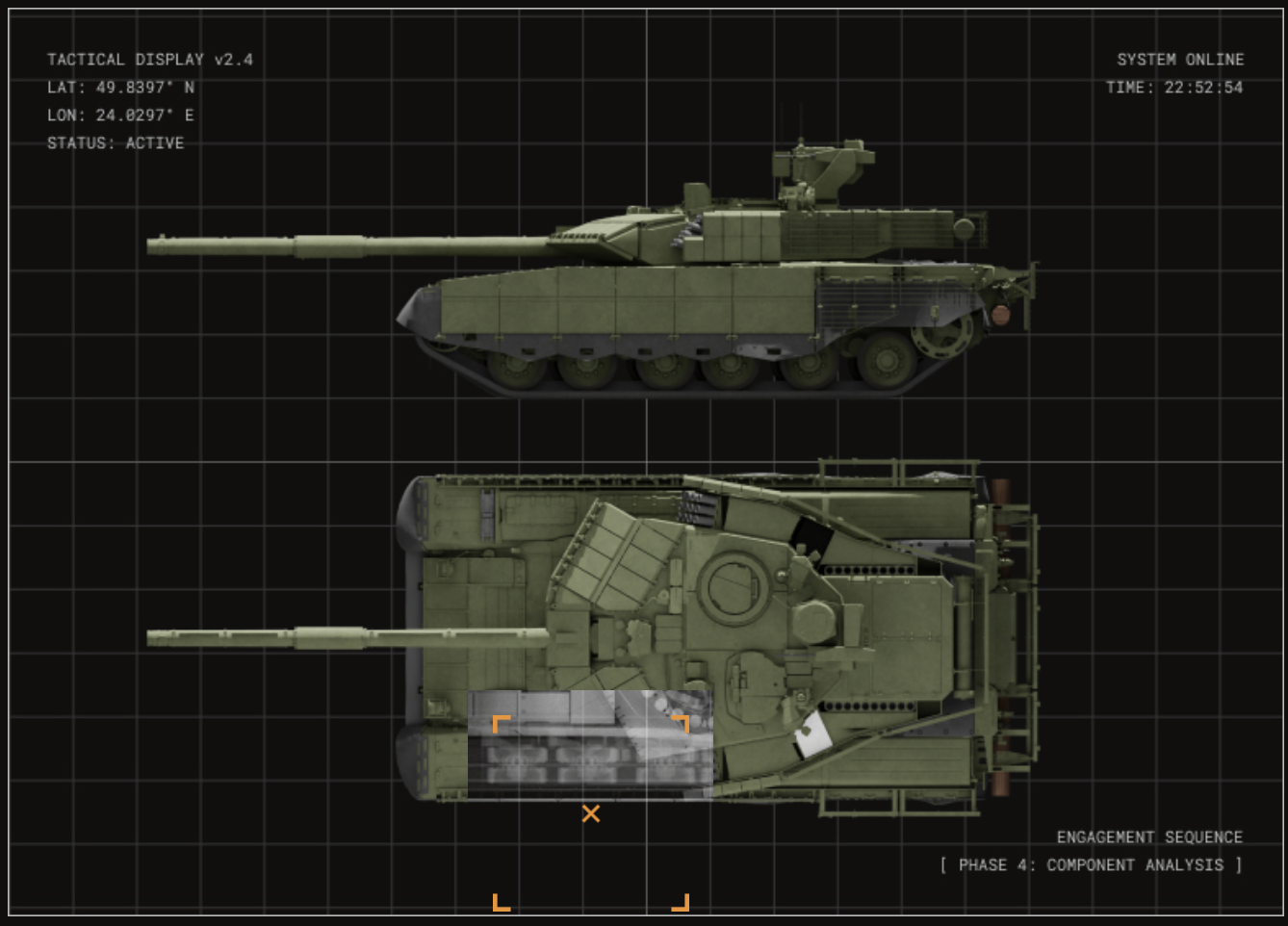
The Ministry of Defence has launched TrophyLab, a secure platform that it said will allow allied governments, research institutions, and defense manufacturers to study captured Russian military equipment recovered from the battlefield.

“Every missile, drone, and vehicle seized on the battlefield is now a source of knowledge for the free world,” the ministry said in its announcement. “Shared space for enemy weapons research,” is how it describes TrophyLab on its site.

This is not the first instance of Ukraine realising the opportunities of studying enemy equipment.

Ukraine forces (and their adversaries) already spend a lot of time reverse-engineering fallen drones and other systems in order to better understand how they work and to one-better the enemy. The country’s “Lightning” kamikaze drone, for example, was created from reverse-engineering Russia’s Molniya, and it has reportedly worked on reverse-engineering Russia’s mesh network used for electronic warfare and communications.

Capturing downed equipment was also already gamified to an extent: each piece is prized for helping to better understand how the adversary works (and to source components), giving rise to the term “trophy.”

Through crowdsourcing, TrophyLab is supercharging that kind of opportunity. Approved users will be able to access technical data, reports, vulnerability assessments, and other information on captured Russian systems. Partners will also be able to request access to physical samples for testing, giving engineers the opportunity to validate countermeasures against real enemy equipment.

“Companies, research institutions, and governments of the free world will be able to conduct in-depth studies of Russian missiles and other types of weaponry,” Ukraine minister of defence Mykhailo Fedorov said in a LinkedIn post announcing the platform. “This will help accelerate the development of effective countermeasures and strengthen joint efforts in support of Ukraine’s victory. We are convinced that knowledge about an adversary’s technologies should not remain restricted. It must be used by those building defense systems.”

Several modes of sample analysis will be available, ranging from non-destructive inspection to testing that involves full disassembly or destruction of the system. Partners will also be able to request physical access to captured equipment.

It is not clear if Ukraine will be charging for the service, or if the benefits of having better anti-Russian equipment is sufficient payment in-kind.

TrophyLab can shorten the cycle between identifying a battlefield threat and developing a practical response. Instead of relying only on reports, fragments, or assumptions about Russian systems, engineers can work from actual captured equipment and verified technical data.

And for the users of the platform, it might help them get their equipment closer to getting purchased by those looking to counter Russia.

TrophyLab is launching at the same time that Ukraine is seeing a number of its home-grown producers expanding the capabilities of their equipment. In one recent example, the attack on the Russian oil refinery was made using Fire Point-made kamikaze systems that have extended in range in recent months.

Ukraine is also already working on channels for international companies to test defense technologies in battlefield environments, through initiatives such as Brave1’s Test in Ukraine and the Dataroom project with Palantir to train battlefield AI models. It is not clear how far along either of those projects are; we are asking for an update.

TrophyLab is narrower in scope but potentially carries a lot of significance. It is focused specifically on captured Russian systems and the technical exploitation of enemy equipment.

That makes the platform another example of how Ukraine is turning battlefield experience into a both strategic asset and an export. Pre-registration is open now on the platform’s website.

 

Tags: Brave1reverse-engineeringRussiaTrophyLabUkraine
Previous Post

The war you don’t see

Next Post

Ukraine’s TrophyLab; Alta Ares, Comand AI, PDKinematics funding announcements; BAE Systems backs Expeditions, Lakestar

Luke Smith

Luke Smith

Related News

Wes Streeting takes Defence brief and Healey moves to the Treasury

Wes Streeting takes Defence brief and Healey moves to the Treasury

byCarly Pageand1 others
July 21, 2026

One of Whitehall's biggest jobs has landed with a former defence secretary, while a new face is now leading the...

Anduril unveils Thunder, an autonomous VTOL attack drone

Anduril unveils Thunder, a new autonomous ‘attack rotorcraft’

byIngrid Lunden
July 20, 2026

Anduril is adding another aircraft model to its range of autonomous and unmanned sea, land, air and space systems. Thunder...

Analysis: What Fedorov’s firing means for Ukraine and defence tech overall

Analysis: What Fedorov’s firing means for Ukraine and defence tech overall

byIngrid Lundenand3 others
July 18, 2026

Ukraine has been a trailblazer and pace-setter in the evolution from traditional defence to ‘defence tech’. Drones, AI, autonomous ground...

Singularity steps into the light with $80 million Series A to protect humans from cheap modern warfare

Singularity steps into the light with $80 million Series A to protect humans from cheap modern warfare

byFiona Alston
July 17, 2026

US defence startup Singularity has emerged from stealth with an oversubscribed $80 million Series A round at a $400 million...

Greenjets secures $40m Series A backed by NATO Innovation Fund

Greenjets secures $40m Series A backed by NATO Innovation Fund

byCarly Page
July 17, 2026

Greenjets has raised a $40 million (£30 million) Series A as the British aerospace company scales production of propulsion and...

Klaus Hommels

Lakestar closes $300M defence fund and warns Europe off US tech reliance

byPaul Sawers
July 17, 2026

Lakestar, one of Europe's largest venture capital (VC) firms, has announced a new $300 million (€262 million) fund dedicated entirely...

Ukrainian Defense Minister Fedorov resigns in cabinet change

Ukrainian Defense Minister Fedorov resigns in cabinet change

byJohn Biggs
July 15, 2026

According to an X report, Ukrainian Defence Minister Mykhailo Fedorov has resigned as part of President Volodymyr Zelensky's latest Cabinet...

UK MoD tests British-built anti-Shahed system in Jordan

SCOOP: Cambridge Aerospace is closing in on $300M at a $3.4B valuation

byIngrid Lundenand1 others
July 15, 2026

Defence tech investing continues to heat up in Europe amid strong calls for re-armament across NATO and the ongoing war...

Load More
Next Post
the statue of christ in the center of a city

Ukraine's TrophyLab; Alta Ares, Comand AI, PDKinematics funding announcements; BAE Systems backs Expeditions, Lakestar

Iceye, the Finnish satellite startup, nabs €1B at a €10B valuation amid growing demand for space intel

The New Defence Technology Stack: Orqa and NXP Leaders Join Resilience Conference London

Most viewed

InVeris announces fats Drone, an integrated, multi-party drone flight simulator

Uforce raises $50M at a $1B+ valuation to build defence tech for Ukraine

Auterion, the drone software startup, eyes raising $200M at a $1.2B+ valuation

Palantir and Ukraine’s Brave1 have built a new AI “Dataroom”

Twentyfour Industries emerges from stealth with $11.8M for mass-produced drones

Senai exits stealth to help governments harness online video intelligence

Resilience Media is an independent publication covering the future of defence, security, and resilience. Our reporting focuses on emerging technologies, strategic threats, and the growing role of startups and investors in the defence of democracy.

  • About
  • News
  • Resilence Conference
    • Resilience Conference Copenhagen 2026
    • Resilience Conference Warsaw 2026
    • Resilience Conference 2026
  • Guest Posts
  • Subscribe
  • Privacy Policy
  • Terms & Conditions
  • Mission Statement & Code of Practice
  • Press

© 2026 Resilience Media

No Result
View All Result
  • Home
  • About
  • Subscribe
  • Events
  • Guest Posts
  • Interview
  • News
  • Resilience Conference London 2026
  • Resilience Conference Copenhagen 2026
  • Resilience Conference Warsaw 2026

© 2026 Resilience Media

This website uses cookies. By continuing to use this website you are giving consent to cookies being used. Visit our Privacy and Cookie Policy.