In the wake of the 80th anniversary of the bombings of Hiroshima and Nagasaki, a new Hollywood film, A House of Dynamite, captures the panic and paranoia that can ensnare even those trained to respond to a nuclear emergency.
The trailer for the movie, directed by the award-winning Kathryn Bigelow and briefly released in cinemas before its debut on Netflix this month, shows leadership from the US political and defence establishment racing to figure out how to respond to a single, unattributed nuclear missile heading towards the US from the Pacific Ocean.
Тhe film, presented in three 18-minute segments that replay the same moments from different perspectives across the US government, paints a highly critical image of the ballistic missile defence capabilities of the US.
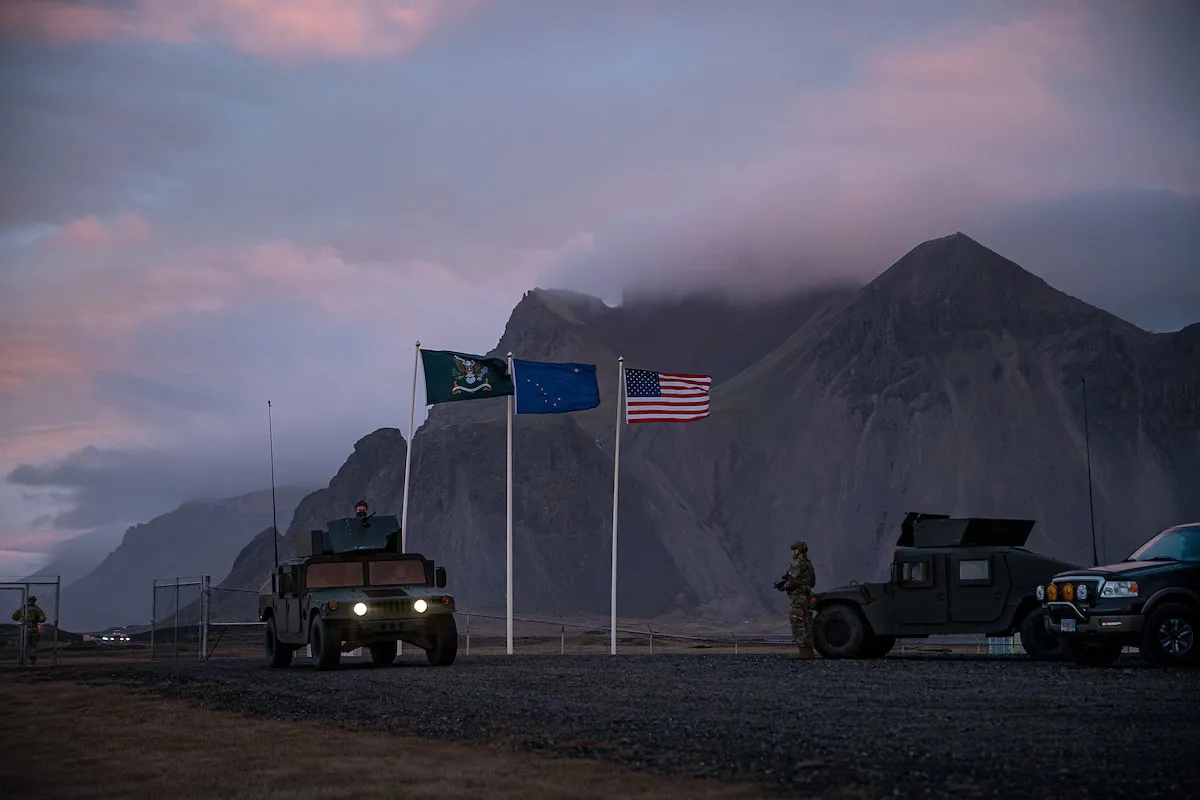
Each of these segments includes characters across a variety of groups: a team of young soldiers operating a Ground-Based Midcourse Defense (GMD) at Fort Greely in Alaska which can fire Ground-Based Interceptors (GBIs) at ballistic missiles; the White House Situation Room; Strategic Command (STRATCOM); the emergency response room at FEMA; and others.
The triangulation of perspectives, the timelines, and the steps each team takes were reportedly based on research around how events would actually play out in the real world. However, experts believe that the accuracy of the picture painted in A House of Dynamite is mixed.
Theodore Postol, a Professor of Science, Technology and National Security Policy at MIT, has helped others gaming out nuclear responses, including advising Annie Jacobsen on her 2024 book Nuclear War: A Scenario.
In an interview with Resilience Media, Dr Postol said he doesn’t see the film as being “intended to give a totally accurate technical picture” of how the US ballistic missile defence system operates. All the same, “the general momentum and timelines and sense that something has to be done quickly, is relatively realistic,” he added.
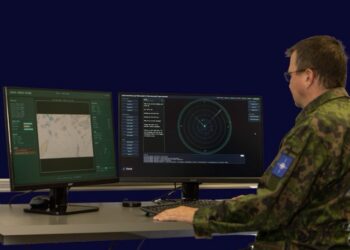
One of the first moments of panic in the film is when the Alaskan GMD team gets an alert that the sea-based X-band radar, referred to as ‘SBX-1’, has spotted a ballistic missile in flight, but satellites critically missed the origin of launch – meaning they can’t attribute blame.
The SBX-1 is an impressive-looking defence tech asset which looks like an oil platform with a series of giant golf ball-like antennas perched on top.
Dr Postol says the X-band radar could be useful for tracking a ballistic missile under the right conditions.
“We [do] have the sea-based X-band radar, which is not really big enough to do a full job, but if it was in the right location, it might actually be usable,” he said.
“It could see with about a 15cm resolution, along the length of the warhead, so it could see the nose, it could see the back end. If there were any seams along the warhead, it could see the seam.
“And it could see the wobble of the warhead, because as the warhead wobbles, the radar reflection from the target will be slightly modulated, and the way they try to tell what’s a warhead and what isn’t is from the wobble of the warhead when they’re looking In the X-band,” he said.

Satellite detectors miss the launch of a ballistic missile
An operative in the Greely operations centre in A House of Dynamite says: “DSP satellites missed the launch, floating rig [SBX-1] picked it up.”
The DSP (Defense Support Program) satellite constellation is the established system for using space-based infrared detectors to detect ballistic missile launches. It is gradually being replaced by the more modern SBIRS (Space-Based Infrared System).
The primary contractor for SBIRS (Space-Based Infrared System) is Lockheed Martin, while Northrop Grumman is a key sub-contractor. .
Lockheed says: “SBIRS uses infrared surveillance to provide early missile warning for the U.S. military and is considered one of the nation’s highest priority space programs… The system includes a combination of satellites and hosted payloads in Geosynchronous Earth Orbit (GEO) and Highly Elliptical Orbit (HEO) and ground hardware and software.”
According to Dr Postol, when SBIRS started operating in 2010, it was already 10 years behind schedule. However, despite production hiccups, he said SBIRS remains an effective early warning system today.
“It has the ability to see a launch of a missile through the cloud cover, because it looks in certain wavelength bands where the clouds are not absorbing infrared, and so it can tell the launch location, probably within a kilometer or so on the surface of the Earth,” he said. “It could tell that a launch was in progress, really within a few seconds of the ignition of the rocket.”
Talking about its failure to detect the missile launch in A House of Dynamite, he said: “It’s not correct that we wouldn’t know where it was launched from.”
Dr Postol added that SBIRS satellites can only see ballistic missiles in the stage of their flights where their rocket engine exhausts are burning hot, because SBIRS only sees in the infrared spectrum, detecting heat.
Dr Jeffrey Lewis, the director of the East Asia Nonproliferation Program at the James Martin Center for Nonproliferation Studies (CNS) at the Middlebury Institute of
International Studies, said SBIRS has a secondary ability to “revisit” launch data to fill in more information.
“SBIRS has a single sensor payload, but it also has a revisit time, which means it looks, and then a few seconds later it looks again, so it should see the missile boosting,” Dr Lewis told RM. There are six SBIRs satellites, he said, “so the coverage should overlap. If one satellite is malfunctioning, the other should see it, plus [there are] two sensors in highly elliptical orbits, which also ought to see it.”
In reality, he said he would “very much doubt all the SBIRS sensors would ‘miss’ a launch in this fashion – unless, as the film seems to speculate, there was a cyberattack or other common failure.”
Dr Lewis goes on to break down further the way the military in the film said it detected the missile.
“When asked whether he was sure the missile launch was underway, the STRATCOM Commander indicates that he has dual phenomenology on the track,” he said. “That means space and terrestrially-based radars, so that would indicate that the satellites do see it.”
He noted that the launch in the movie appears to have happened out of the ocean, “so that does raise the question of who did it.” However, he added, there is credible reporting that the US Navy can and does trail foreign SSBNs (ballistic missile submarines), “so you also have to assume that process let the Navy down” if you follow the movie’s plot.
“The screenwriter probably should have just stuck with ‘it was out of the water near Russia, China and North Korea,’” he added.
Multiple interceptors fail to hit their target
In the film, the Alaskan base launches two Ground-Based Interceptors (GBIs) at the ballistic missile in an attempt to destroy it. Both fail. Boeing Defense, Space & Security is the primary contractor for the GMD programme.
The way GBIs are supposed to work in two stages: firstly, a rocket stage that is similar to a ballistic missile in terms of the velocity it can achieve; and secondly, an exoatmospheric kill vehicle (EKV) stage, which delicately maneuvers at extremely high speeds, using kinetic energy to neutralise a warhead before it starts its terminal phase back down to Earth.
In A House of Dynamite, the Deputy National Security Advisor informs the convened National Security Council that GBIs have a 61% success rate.
There are only 44 GBIs in the US military’s arsenal today, but when presented with that figure, the Secretary of Defence’s reaction is meant to convey that he’s never been presented this probability: “It’s a fucking coin toss?” he screams into his video conference.
The likelihood of a Secretary of Defence not knowing this might depend on who’s running the show under a specific administration. But the probability of success, and maybe our surprise as viewers, may be more realistic here. Dr Laura Grego, a Senior Research Director of the Global Security Program at the Union of Concerned Scientists, told Resilience Media that just 20 tests of GBIs have been carried out in real life.
“The intercept test record shows 11 successful intercepts in 20 tests in our assessment. The Pentagon sometimes assesses a test record of 12/20 successes, which comports more with the 60%,” she said. “The discrepancy may come from a test in 2006 which the Pentagon considered a success, but in which the kill vehicle did not actually destroy the target. Instead it had a ‘glancing blow.’ We call that a failure in our analysis.”
However, she cautions against extrapolating from those numbers to build out a larger scenario.
“In any case, just doing statistics in this way isn’t an appropriate way to tell you what the effectiveness of any given interceptor is,” she said. “To do that you’d need many tests under many conditions.”
Intercept tests are expensive, about $200 million to $300 million each, she continued, “which is one reason there haven’t been that many.” Somewhat alarmingly, she added, “there isn’t really the staff and infrastructure to do a lot more.” It’s unclear how much of this is related to Trump’s various personnel and budget cuts, versus more longstanding issues: a report from the US Government Accountability Office noted that “MDA may encounter challenges obtaining the technical data and staffing levels necessary to manage this complex weapon system, which could ultimately affect its availability or readiness.”
Dr Postol is more scathing about the actual GMD system in the US.
“The current defense has catastrophically failed in every test where the target did not behave as expected,” he said. “When the target did not behave as expected, they always failed. My assessment is you’d have a zero probability of intercept in a real scenario, not 61%.”
“If the US fired all 44 interceptors, I presume one would get lucky,” Dr Lewis said. “One issue is that the system experiences degraded performance in poor weather, so a simple thing to do [in the film to make it more realistic] would have been to just make it rain on the day of the launch.”
US Government defends GMD system
Contacted for comment, a Pentagon official told Resilience Media that it was not consulted in the making of the film.
“The Department of War (DoW) is aware of a recently released film regarding the Ground-Based Midcourse Defense (GMD) system,” a spokesperson said.
“The DoW was not consulted in the production of this film, and it does not reflect the views or priorities of this administration. The GMD system remains a critical component of our national defense strategy, ensuring the safety and security of the American people and our allies.”