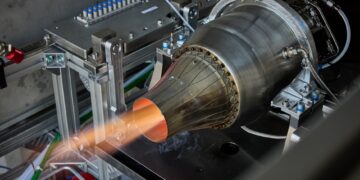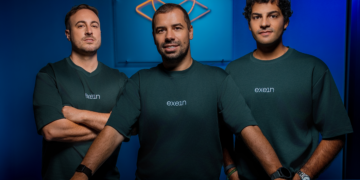
Europe’s defence tech sector is booming, with VC funding hitting a record €5.2bn in 2024. Innovation hubs like Helsing (Germany), Blackshark.ai (Austria), and Orbotix (Romania) are leading the charge, spurred by rising government interest amid geopolitical instability. The UK alone earmarked £400m for defence innovation this week, allocating 10% of its equipment budget to emerging tech like drones and AI.
Despite the momentum, Europe risks losing technological sovereignty. The sector lags five years behind the US, hindered by late-stage funding gaps, complex procurement, and a small domestic market. To stay competitive, European allies must collaborate and play to their strengths—or risk companies relocating to the US.
Breaking down silos
Europe’s fragmented defence ecosystem often confines startups to domestic markets. Pigeonholing companies in this way puts a ceiling on their growth potential.
Each European country has its own defence priorities, policies, and procurement systems. There is often a reluctance to pool resources or share sensitive materials as countries seek to protect their own strategic interests, but it is increasingly important that allied nations work together against mutual threats. Much more needs to be done to prevent fragmentation and promote collaboration across borders.
To fully capitalise on its growing innovation pipeline, Europe must streamline procurement and improve interoperability to ensure long-term strategic autonomy. Additionally, securing resilient supply chains is crucial to prevent dependency on non-allied nations for critical components, such as semiconductors, advanced materials, and rare earth elements.
Supplying the demand
Product-market fit is critical for any company—and defence is no exception. Today, there is a significant disconnect between the challenges faced on the battlefield and the technologies being developed to address them. Startups must focus on building solutions that directly solve specific, high-priority problems that militaries are willing to procure. However, achieving this alignment is particularly difficult in defence, where key information is often classified and vulnerabilities must be carefully protected from adversaries.
We are witnessing remarkable innovation across Artificial Intelligence, Sensing and Surveillance, and Advanced Materials. However, this innovation must be aligned with real end-user needs. Rather than isolated solutions, these fragmented advances need to be integrated into complete products that can be easily procured and deployed at scale—seamlessly fitting into broader NATO and national defence strategies.
At present, this integration is primarily handled by traditional defence primes. But the next generation of primes will be those capable of effectively sourcing, testing, and integrating cutting-edge technologies into fully integrated, mission-ready systems—or critical components thereof.
The only way to achieve this is by understanding the military’s envisioned system from the end-user’s perspective: clearly defining its purpose, how it will be used, and the operational environment. Only then can these technologies secure commercial contracts and be deployed at scale.
Anduril is a shining example of a company that has forged a path from startup to prime. It identified a significant problem and created numerous commercially viable and highly desired solutions. With revenues of $1bn a year the company is now valued at $28bn and is rumoured to be building a factory in the UK, expanding upon its current London office.
If Europe can create success stories like this, it will strengthen the wider defence tech ecosystem and bolster security across the continent. But access to funding, needs to be available at every stage to make this a reality.
Harnessing non traditional capital
Family offices in Europe represent a significant and often under-utilised pool of capital for early-stage dual-use companies. While venture capital remains a key component of the innovation ecosystem, many family offices are increasingly frustrated by the lack of visibility, limited control, and long lock-up periods associated with traditional VC funds—often accompanied by high fees.
Instead, they are looking for more direct opportunities to deploy capital into strategic sectors like defence, security, and deep tech, where they can back transformative technologies with both commercial and national security applications, while retaining agency over their investments. This shift presents a major opportunity to unlock fresh capital for Europe’s dual-use innovation landscape.
That being said, it is essential to ensure that the cap tables of companies supplying to the defence sector are clean and free from capital linked to hostile states, in order to safeguard sensitive technologies from espionage and prevent foreign influence over critical national security assets.
Europe is also home to 15 of the world’s top 50 universities and world-class talent. With strong EU and national non-dilutive funding—like Innovate UK and BPI France—startups can build dual-use technologies with extended runway and less pressure.
But compared to the U.S., Europe is much slower at deploying capital, and its VC investors tend to be more risk-averse. In contrast, U.S. investors are willing to take bold risks, which is exactly what’s needed to accelerate European progress and make a meaningful difference at scale.
Europe also suffers from a lack of growth capital, which prevents promising dual-use companies from scaling and discourages global investors—particularly from the U.S.—who are deterred by limited liquidity in European stock exchanges and low M&A activity in the sector. To change this, European pension funds and insurance companies must step up and take a more active role in backing strategic technologies and fuelling long-term innovation.
European pension funds are “punching below their weight” in venture capital, with just 0.024 per cent of pension fund AUM invested in European VCs in 2022. Compare that to U.S. state pension funds who have increased their allocation to alternative investments, including private equity, to 40 per cent of total assets!
With over $3.4 trillion in reported assets across the EU—double that when including the UK—even a small increase in allocation could transform the ecosystem. Yet perceived risk, lack of experience, regulatory constraints, and entrenched adviser networks continue to hold funds back.
Adapt to survive
Stimulating investment isn’t the sole aim here – strong ties with the US will undoubtedly contribute to the long-term success of Europe’s defence ecosystem. But removing information asymmetries in defence investment ensures that stakeholders—governments, contractors, and investors—have access to accurate and timely data. This transparency promotes better decision-making and fosters accountability. Ultimately, it leads to more efficient allocation of resources and improved national security outcomes.
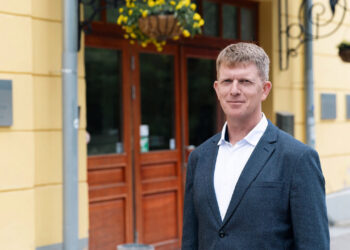
Sami Moughrabie brings over 18 years of experience in technology investments across Venture Capital and Family Offices. Recognised as one of the Top 100 University of Chicago Alumni in Tech, he specialises in the commercialisation of innovative technologies with a particular focus on core science, quantum technologies, AI and biotech. He began his career in New York at Goldman Sachs, working in derivatives, and later joined Bank of America, where he played a key role in building out their structured products and prime brokerage divisions, leading transactions exceeding $10 billion.
Sami founded ATMOS Ventures, a venture capital firm dedicated to the commercialisation of scientific R&D through global partnerships with universities, governments, and multinational corporations. The firm was honoured as the “European Venture Capital Fund of the Year” in 2019 by M&A Magazine. He is an advisor to the UK Government’s National Quantum Strategy and serves on the Advisory Boards of Imperial College’s Climate-Tech Pre-Accelerator and Cambridge Future Tech’s venture builder. Sami also serves as a key advisor to the UK Ministry of Defense and sits on the management board of NATO’s technology accelerator, where he helps provide companies with the resources, networks, and guidance needed to develop deep technologies addressing critical defense and security challenges.