Sunday 15 March, 2026
[email protected]
Resilience Media
  • About
  • News
  • Resilience Conference
    • Resilience Conference Warsaw 2026
    • Resilience Conference Copenhagen 2026
    • Resilience Conference London 2026
  • Guest Posts
    • Author a Post
  • Subscribe
No Result
View All Result
  • About
  • News
  • Resilience Conference
    • Resilience Conference Warsaw 2026
    • Resilience Conference Copenhagen 2026
    • Resilience Conference London 2026
  • Guest Posts
    • Author a Post
  • Subscribe
No Result
View All Result
Resilience Media
No Result
View All Result

Poland’s energy networks hit by ‘digital arson’ after basic firewall failures, report finds

CERT Polska’s technical analysis shows how attackers exploited weak remote access controls to disrupt wind, solar, and heat generation sites in a coordinated campaign last December

Carly PagebyCarly Page
February 2, 2026
in News
white windmills
Share on Linkedin

CERT Polska has described December’s cyberattack on Poland’s energy sector as an act of “digital arson.” A report from the government group, which provides emergency response to IT-related incidents, reveals that — contrary to earlier reports that attributed the cyberattack to sophisticated zero-day exploits — attackers gained access through a much more straightforward route: exposed firewalls with no multi-factor authentication.

You Might Also Like

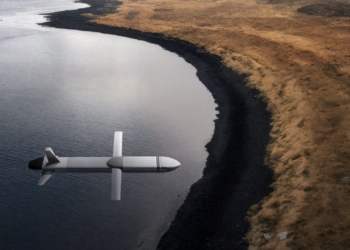
US and UK ballistic missile defence capabilities brought into focus as Iran lashes out against region

Scout Ventures raises $125 million to expand investment in defence and dual-use tech

The signal is the weapon: How mobile networks became infrastructure for modern war

The report offers the clearest technical account yet of what happened on 29 December, when multiple energy and industrial sites across Poland were hit in a coordinated campaign that prioritised destruction over disruption.

At least 30 wind and solar installations were affected, along with a large combined heat and power plant that supplies heat to hundreds of thousands of homes and a manufacturing company.

While electricity generation continued, operators temporarily lost remote visibility and control at several sites after attackers deliberately severed communications and damaged operational systems.

According to CERT Polska, the attackers didn’t weaponise a zero-day or exploit a supply chain; they walked in through internet-facing firewalls and VPNs that lacked multi-factor authentication and, in some cases, weak or reused passwords.

That access was sufficient to move laterally into internal systems and onward to operational technology that should never have been reachable from the public internet.

CERT Polska says the attackers moved quickly from access to damage, attempting to corrupt firmware, delete data, and disable remote terminal units responsible for monitoring and control. There was no indication of espionage or data theft, only deliberate destruction.

An analysis published by industrial cybersecurity firm Dragos provides additional context on the incident, particularly regarding the selection of targets.

Dragos researchers described the operation as “the first major cyberattack targeting distributed energy resources,” warning that wind farms, solar installations, and other decentralised assets present a growing and under-secured attack surface. Unlike traditional power plants, these sites are often designed for remote management at scale, using standardised hardware and configurations that make them efficient to run but easier to compromise en masse.

That assessment helps explain the attackers’ apparent focus. According to Dragos, once the adversary worked out how to access one site, the same approach could be replicated across many others using similar equipment. The result was a broad, coordinated impact that did not bring down the national grid but knocked out monitoring and control at dozens of locations simultaneously. Some equipment was damaged severely enough to require manual intervention and replacement, resulting in a longer recovery effort.

On attribution, CERT Polska diverges from some earlier assessments.

While ESET and Dragos linked the attacks to Sandworm, the Russia-backed group notorious for physically destructive attacks, CERT Polska’s analysis of the attack infrastructure found a high degree of overlap with activity publicly tracked under names such as “Berserk Bear” and “Dragonfly”, two other Russia-backed groups. It describes this as the first publicly documented case of destructive activity attributed to that group, which is better known for traditional cyberespionage.

Perhaps the most uncomfortable takeaway from the CERT Polska report is how preventable much of the intrusion appears to have been. The attack didn’t succeed because of sophisticated tradecraft, but because basic safeguards were missing. Multi-factor authentication, proper segmentation, and stricter controls on exposed devices would have significantly complicated operations, rather than leaving critical systems easy to reach.

We have reached out to industry sources for reaction and will update this post as we learn more.

Tags: cyberattackCybersecurityPolandRussiasandwormsecurity
Previous Post

The second valley of death

Next Post

The future of fuel: A conversation with Tim Böltken of Ineratec

Carly Page

Carly Page

Carly Page is a freelance journalist and copywriter with 10+ years of experience covering the technology industry, and was formerly a senior cybersecurity reporter at TechCrunch. Bylines include Forbes, IT Pro, LeadDev, The Register, TechCrunch, TechFinitive, TechRadar, TES, The Telegraph, TIME, Uswitch, WIRED, & more.

Related News

US and UK ballistic missile defence capabilities brought into focus as Iran lashes out against region

US and UK ballistic missile defence capabilities brought into focus as Iran lashes out against region

byTom Pashby
March 12, 2026

The ballistic missile defence capabilities of the US, UK and other allies have been put to the test as the...

Scout Ventures raises $125 million to expand investment in defence and dual-use tech

Scout Ventures raises $125 million to expand investment in defence and dual-use tech

byJohn Biggs
March 11, 2026

Scout Ventures has closed its fifth fund with $125 million in commitments, according to an announcement released March 10. The...

The signal is the weapon: How mobile networks became infrastructure for modern war

The signal is the weapon: How mobile networks became infrastructure for modern war

byJohn Biggs
March 11, 2026

Mobile World Congress (MWC) has been around since 1987. The conference, part trade fair, part consumer electronics expo, and part...

Hadean, the AI battle simulation startup, closes bridge round ahead of a Big B

Hadean, the AI battle simulation startup, closes bridge round ahead of a Big B

byIngrid Lunden
March 11, 2026

London-based Hadean began life several years ago as an AI gaming startup working on VR and video simulations, but it...

Hackathon-ing our way to a new defence ecosystem

Hackathon-ing our way to a new defence ecosystem

byFiona Alston
March 11, 2026

It takes a village to raise a child, but when it comes to building the next generation of defence in...

Lux Aeterna raises $10 million to build reusable, returnable satellites

Lux Aeterna raises $10 million to build reusable, returnable satellites

byJohn Biggs
March 10, 2026

Lux Aeterna, a Denver based space infrastructure startup, just raised a $10 million seed round led by Konvoy Ventures with...

Credit: Mcmurryjulie via Pixabay

Trojan force: Hidden backdoors may lurk inside AI models, report says

byPaul Sawers
March 10, 2026

What if an AI model carried hidden instructions that only activate when triggered by a particular input? That’s the subject...

The launch of Isembard’s innovative approach to manufacturing

Isembard raises $50M, plans to open 25 ‘AI-powered factories’

byIngrid Lunden
March 9, 2026

Isembard, a London startup that’s built a platform to help hardware makers in defence, aerospace and robotics manufacture components and...

Load More
Next Post
The future of fuel: A conversation with Tim Böltken of Ineratec

The future of fuel: A conversation with Tim Böltken of Ineratec

UK startup Refute secures £5M to take AI fight to disinformation campaigns

UK startup Refute secures £5M to take AI fight to disinformation campaigns

Most viewed

InVeris announces fats Drone, an integrated, multi-party drone flight simulator

Uforce raises $50M at a $1B+ valuation to build defence tech for Ukraine

Auterion, the drone software startup, eyes raising $200M at a $1.2B+ valuation

Twentyfour Industries emerges from stealth with $11.8M for mass-produced drones

Senai exits stealth to help governments harness online video intelligence

Palantir and Ukraine’s Brave1 have built a new AI “Dataroom”

Resilience Media is an independent publication covering the future of defence, security, and resilience. Our reporting focuses on emerging technologies, strategic threats, and the growing role of startups and investors in the defence of democracy.

  • About
  • News
  • Resilence Conference
    • Resilience Conference Copenhagen 2026
    • Resilience Conference Warsaw 2026
    • Resilience Conference 2026
  • Guest Posts
  • Subscribe
  • Privacy Policy
  • Terms & Conditions

© 2026 Resilience Media

No Result
View All Result
  • About
  • News
  • Resilence Conference
    • Resilience Conference Copenhagen 2026
    • Resilience Conference Warsaw 2026
    • Resilience Conference 2026
  • Guest Posts
  • Subscribe
  • Privacy Policy
  • Terms & Conditions

© 2026 Resilience Media

This website uses cookies. By continuing to use this website you are giving consent to cookies being used. Visit our Privacy and Cookie Policy.