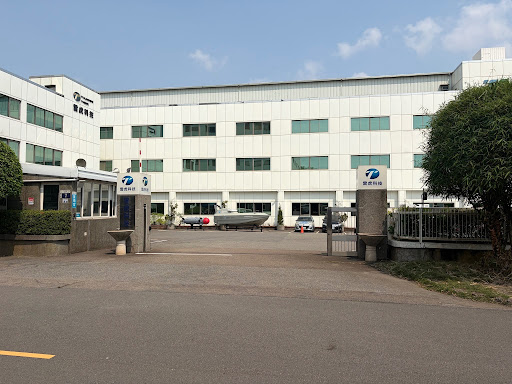
Among the low-rise offices and monochrome factories of Taichung – a sprawling industrial powerhouse in central Taiwan – nestled down a quiet street between LNG, insurance and electricals companies, one facility stands out for the bright red-tipped autonomous submarine model and silver unmanned surface vessel sat on its forecourt.
This is the headquarters of Thunder Tiger, one of Taiwan’s most important drone companies. Founded in 1979, the company began life making radio-controlled models for hobbyists. Publicly listed, now it makes military-grade drones certified by the US military.
Taiwan’s drone industry is currently in the spotlight – not just because of how it could be used to help the country defend itself against China, and not just as an example of how a new export industry is taking shape in the country. Also because, as China’s leader Xi Jinping prepares to meet with US president Donald Trump, China is expected to put a lot of pressure on the US to disengage with Taiwan as an arms supplier, and that, by extension, could impact a variety of companies working in the area of drones, just at a time when they are stepping up activity.
As the importance of drones to Ukraine’s defence has become clear, interest in autonomous systems has surged in Taiwan. Even local companies with no previous links to the drone industry are getting involved: I-Mei, a ubiquitous food brand, is now co-developing drones and robot dogs.
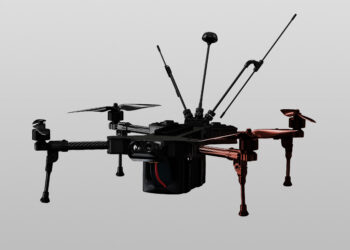
Thunder Tiger is also not entirely out of place among the traditional manufacturers in Taichung. The company’s other revenue streams come from making dental equipment and “injection molding” aseptic bottle caps. It pours the profits from these activities into R&D, specifically to work on drones. These range from underwater systems to FPVs and “helicopter” drones.
In its current ramp-up in production – with a new “megafactory” due to be operational by the end of the year in Chiayi, a key hub for Taiwan’s dronemakers – Thunder Tiger mirrors the overall boom in Taiwan’s drone industry.
Faced with Chinese threats of annexation, Taiwan is keenly aware of how Ukraine has leveraged drones to resist Russia, a much larger country. Following that paradigm, Taiwan has been working to build out its own drone industry since 2022.
But with funding for significant drone procurements by the Taiwanese military blocked by the legislature, Taiwan’s drone industry growth is driven by exports. Over 140,000 drones exported in the first quarter of this year, more than in the whole of 2025, and momentum continues apace. (And to put that figure into some context, at present, Taiwan’s armed forces have access to only around 5,000 drones in total, according to estimates by the Research Institute for Democracy, Society, and Emerging Technology.)
European markets are currently the destination for the vast majority of Taiwan’s drone exports, but Thunder Tiger is doing something slightly different: it has become the first Taiwanese drone maker on the US Department of Defence’s cleared UAS “Blue List”, allowing it to supply the US military. Now, it is taking that one step further and shifting to mass production there.
“If there’s not enough internal demand in Taiwan to scale up, then companies have to find a market in other places,” said Samara Duerr, a policy analyst at Taiwan’s government-funded DSET think tank. “They sell [abroad] and get feedback and expertise. It is one way to scale up and bring costs down.”
Partners elsewhere are clearly interested in buying Taiwan’s exports. A new proposed US Senate bill, the “Blue Skies for Taiwan Act”, would support UAS supply chain development in Taiwan. It states that “the vast majority of commercially available UAS contain PRC-sourced components, creating significant cybersecurity, supply chain, and operational risks for both Taiwan and the United States.”
Bill or no bill, US companies are already laying groundwork for more collaboration and development. Just on Wednesday, ahead of Trump’s arrival in China, US-based Shield AI announced an MOU to incorporate its Hivemind autonomy software across Thunder Tiger’s drone portfolio, starting with its unmanned surface vessels.
And Auterion, which makes operating systems for autonomous and unmanned drones and other devices, has been working with the Taiwanese government to power its military’s defence drones since last year.
Reducing the ‘red’ supply chain while growing resilience
Taiwan’s growth is, ironically, in direct competition with its chief adversary. China today dominates drone supply chains, accounting for 70% to 90% of the global commercial market. It is thus an indispensable supplier of drone components to producers both in Russia and Ukraine (and Iran, despite efforts to block this).
Taiwan, in contrast, is trying to position itself as a key node in a ‘non-red’ (China-free) alternative supply chain. This fills a gap in the market: Western-aligned militaries are preparing for the world of drone warfare, and they want non-Chinese drones and parts. Now, Taiwan is applying its manufacturing prowess to meet some of that demand.
‘If Taiwan’s under blockade or quarantine [and has developed a resilient supply chain], we have that capability to produce [drones] ourselves.’
Czechia and Poland are the top two export markets. Typically, said Duerr, Taiwan hardware and parts are procured by NGOs or other third parties in these two countries and then sent on to Ukraine.
When it comes to imported full drones, it remains unclear exactly how they are subsequently used in Ukraine. Catarina Buchatskiy, director of analytics at Ukraine’s Snake Island Institute, confirmed to Resilience Media that imported drones are often “stripped down for parts,” though she was unable to comment specifically on drones from Taiwan.
These typically come from the long tail of drone makers in the country. There are reports of Thunder Tiger drones being ‘field tested’ in Ukraine; however, reportedly they have not been purchased at scale because they are too expensive, she said.
In the case of imported components, Taiwan is growing its position as a supplier to Ukrainian manufacturers, although it’s still a minority supplier. According to a new report by the Taiwanese think tank DSET, out of 61 UAV-related companies in Ukraine, 7 Ukrainian companies source components from Taiwanese suppliers. These include airframes, battery cells, flight controllers, motors, and other microelectronics.
All of this, longer term, is helping Taiwan further develop supply chains, and ultimately resilience, around drone components.
“I think the ultimate aim of Taiwan’s drone supply chain is to shift from peacetime capacity to wartime, to have a resilient supply chain in wartime,” said Ting-Wei Lin, a non-resident fellow at DSET.
“If Taiwan’s under blockade or quarantine [and has developed a resilient supply chain], we have that capability to produce [drones] ourselves,” said DSET’s Cathy Fang at an event in Taipei last month.
But various challenges remain in developing a secure supply chain. Taiwan remains reliant, for example, on foreign sources for certain kinds of advanced chips needed in drones.
Another issue, Lin said, is the challenge of reducing dependence on Chinese critical materials, used in motors and batteries.
“To achieve a non-red supply chain, there’s still a lot of work to do, but our ultimate goal is to make this supply chain as resilient and as autonomous as we can,” she added.
The likely next steps will be gradual transformation.
“What we’ll see in reality is probably similar to what we see in Ukraine: a phase-out of which systems you can manufacture locally,” said Duerr. “The easy components – things that can be 3D printed, or things that are very easy to manufacture – should be non-red first. And then where there are bottlenecks, those will come later.”
Some of Taiwan’s major drone manufacturers, meanwhile, are setting up production abroad, such as Thunder Tiger’s new facility in the US and Ahamani’s in Europe.
Through overseas production, “they are gaining battlefield experience [from Ukraine] or knowledge from foreign countries that can ultimately benefit Taiwan,” noted Lin. Scaling up production overseas also could potentially bring down overall costs, she added.
Yet major obstacles to further growth remain. One is cost-competitiveness.
“For the international market, how do you persuade other foreign governments to use Taiwanese-made drones two or three times more expensive than DJI’s?” said Lin, referring to the Chinese company, which is currently the world’s largest drone manufacturer.
Another issue is regulation. Despite interest from EU partners, “no EU-wide policy language names Taiwan as a partner, and procurement and certification rules can differ across countries and even agencies,” noted Lin, whose new report makes proposals for how to boost Taiwan-Europe drone cooperation.
From industry growth to national security resilience
And perhaps the broader question is whether Taiwan can translate its drone industry into national defence capability.
Taiwan’s generally conservative military – which only announced an end to bayonet training in 2024 – will need to adapt and incorporate new doctrines for using drones.
As retired Australian major general Mick Ryan told a conference last month: “The drones by themselves can’t be successful.” He noted the importance of experimenting with new tactics and organisation to use drones well.
“In Taiwan, everyone is talking about drones,” a Ukrainian combat veteran said during a panel event in March in Taipei, “but the question is: how do you integrate them in the armed forces? You can have millions of drones, but if you don’t use them correctly, you will fail.”
Regardless, how to use an abundance of drones is not a challenge the Taiwanese military is currently facing.
Taiwan’s armed forces stock of just 5,000 drones is an improvement on the mere “hundreds” it had in 2023. But it is clearly inadequate for the demands of modern drone warfare. Ukraine uses almost twice that many in a single day.
Recent events do not inspire confidence of large-scale drone purchases in the near-term. Last week, Taiwan’s opposition-controlled legislature approved a reduced version of the proposed special defence budget, slashing more than a third of proposed funding, including portions for supporting the domestic UAV industry and purchasing 200,000 drones.
The opposition justified the move saying it was concerned about corruption, and that funding drones through an annual defence budget next year would give more legislative oversight. In response, Defence Minister Wellington Koo has argued that funding drone purchases through the annual defence budget will not support the long-term development of local drone makers.
Fang stated last month that the drone portion of the special defence budget funding offered a “critical demand signal” for the drone industry to ramp up production capacity.
Duerr said that with that blocked, “the drone industry then becomes reliant on war-driven demand in Ukraine, and if the war ends, then the demand drops”.
Speaking to Nikkei Asia ahead of the vote, legislator Chen Kuan-ting, whose constituency is a key drone centre, expressed his frustration at the opposition proposal to slash drone spending.
“Doesn’t this imply a lack of commitment?” he argued. “From the war in the Middle East to Russia’s invasion of Ukraine, no country can dismiss the importance of drones on the battlefield.”
He highlighted the importance of Taiwan having its own drone industry – rather than purchasing from abroad – in case of a quarantine or blockade.
But even if Taiwan can boost production, questions remain about whether it could be translated into national security quickly enough in a crisis. The available mechanisms for managing procurement and logistics under wartime conditions are unclear. Still more questions remain about how vulnerable Taiwan’s drone manufacturing facilities would be in a conflict scenario.
Back at Thunder Tiger’s facility in Taichung, speaking before the vote on the defence budget, the company’s CTO remained hopeful that, in time, domestic demand would grow. The Taiwanese government is not buying many drones, he acknowledged, adding: “not yet.”