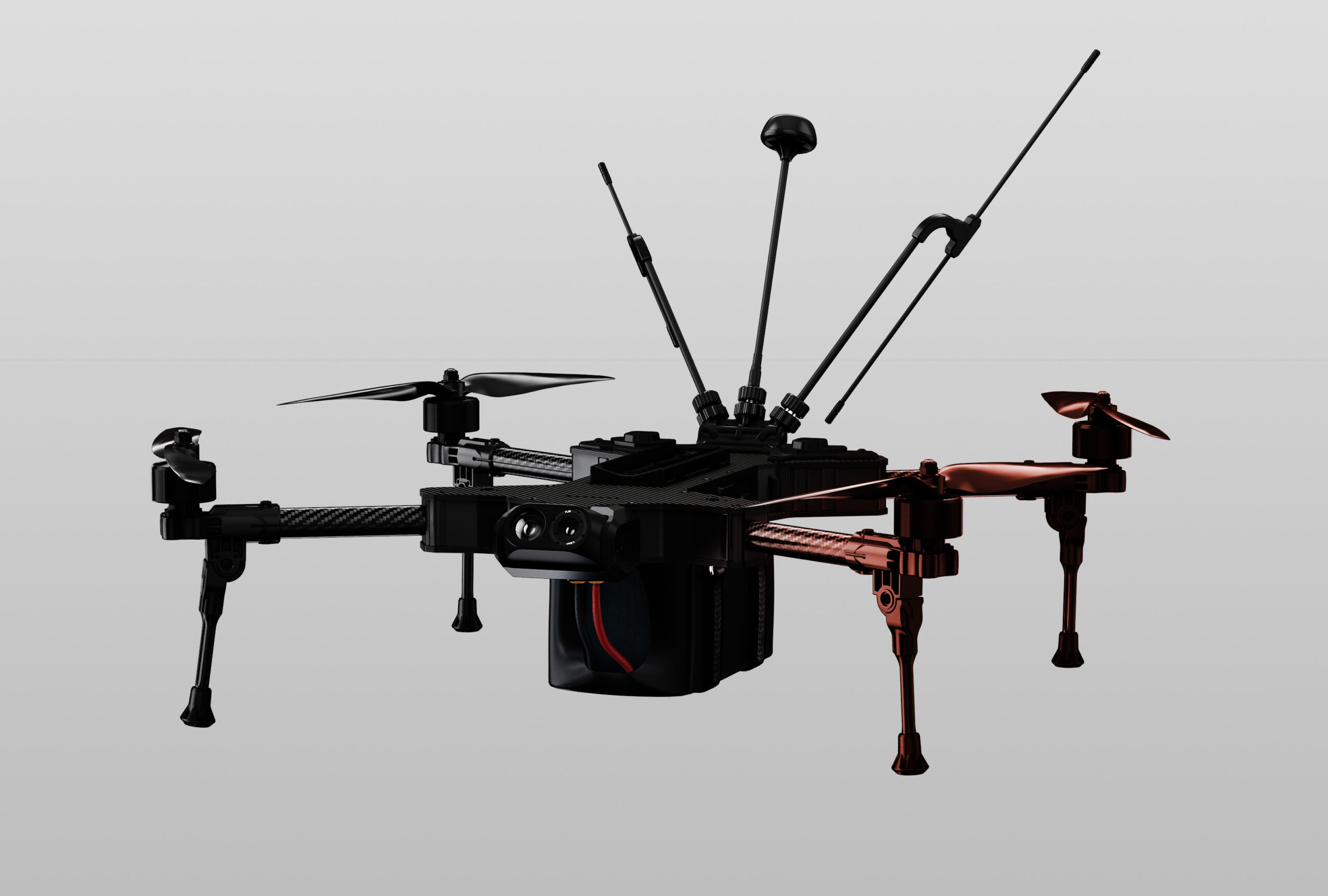
Croatian drone manufacturer Orqa has announced the launch of their latest tactical drone, the MRM2-10AI, a hybrid Unmanned Aerial Vehicle (UAV) that supports both radio control and fiber optic connectivity.
“As the nature of warfare continues to evolve, drone operators require systems that can remain effective in contested spaces,” said Srdjan Kovacevic, CEO of Orqa. “The MRM2-10AI combines resilient communications, onboard intelligence, and autonomous capability in a platform designed to keep missions moving. It represents the next step in tactical drone capability for today’s armed forces.”
The platform features two communication methods, onboard AI processing, and vision-based navigation in an effort to maintain mission effectiveness when conventional systems are disrupted.
The most notable feature is the aforementioned drone’s hybrid communications architecture. The MRM2-10AI integrates Orqa’s “IRONghost” radio control system along with fiber-optic connectivity. This allows operators to switch between the two without reconfiguring the aircraft. If the fiber-optic link is severed, the system automatically transitions back to radio communications.
Given the frequency of GPS/GNSS and frequency jamming, the fiber optic link adds a layer of safety and control to the drone. Further, the drone uses computer vision to manage so-called “terminal guidance” in case an enemy jams location services, essentially allowing the drone to hit its target without outside location data.
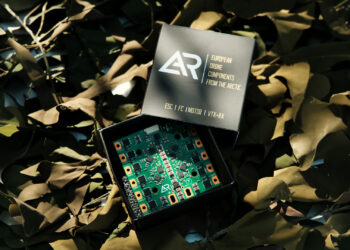
The launch also continues a broader effort by European manufacturers to reduce reliance on Chinese drone supply chains. Orqa has positioned itself as a producer of drone systems built without “Chinese components,” an increasingly important consideration for defence organisations seeking greater supply chain security.
The result is a drone built not just to fly in contested airspace, but to keep operating when the battlefield itself becomes hostile to the technologies that drones have traditionally relied upon. It’s an interesting move from a NATO manufacturer, and the hybrid communications model seems to solve many battlefield problems at once.